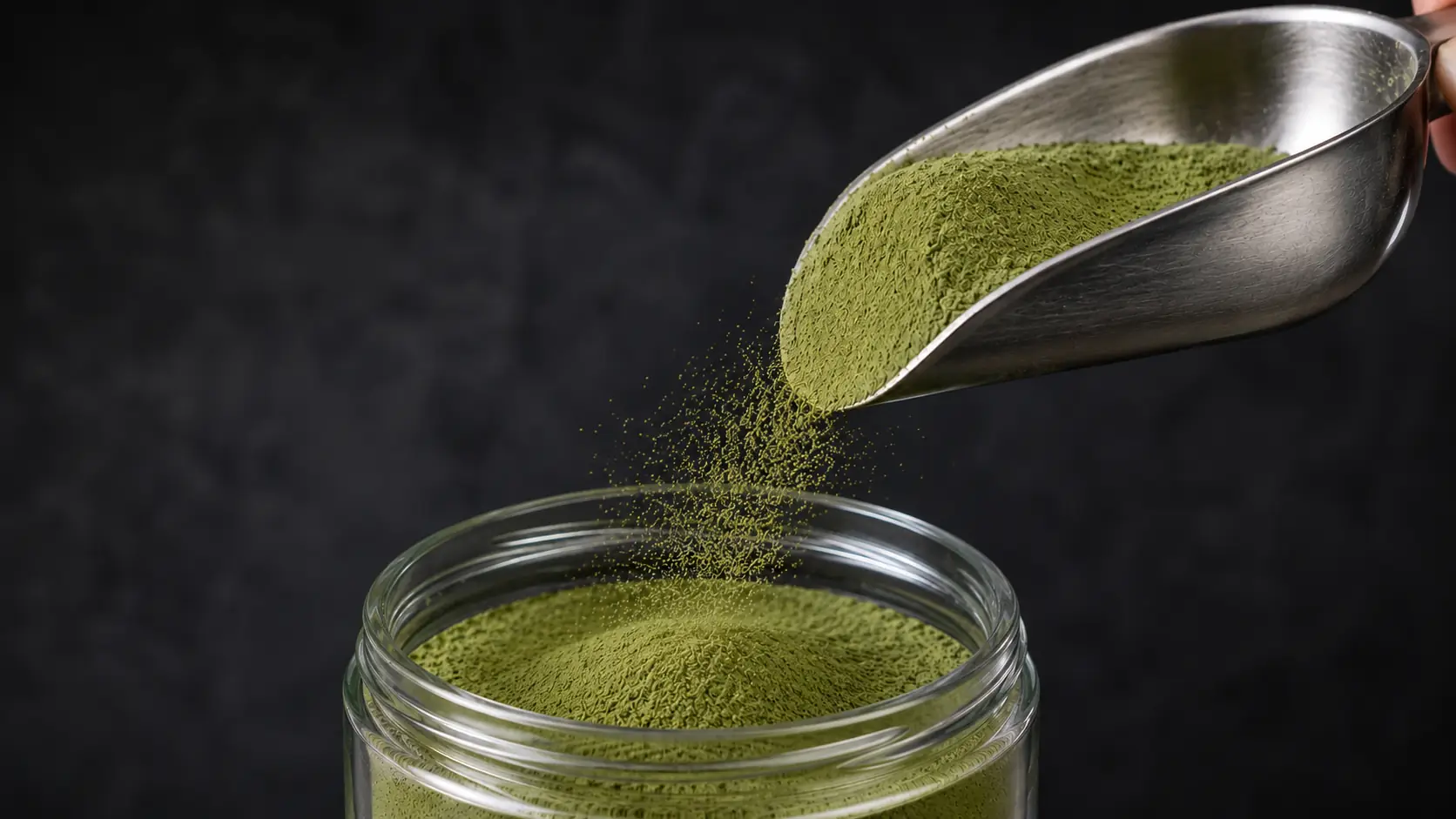
For many kratom enthusiasts seeking a smoother and more convenient experience, refined processing methods have opened up new options. One increasingly popular choice involves taking traditional kratom leaves and grinding them into exceptionally fine particles. This results in what is known as nano kratom powder, a form that stands out for its ultra-fine texture and improved usability compared to standard varieties.
This processing does not alter the plant’s natural alkaloids or introduce any new compounds. Instead, it focuses solely on reducing particle size, often down to the micron or sub-micron range. The outcome is a lighter, more easily integrated powder that mixes well into liquids and reduces the gritty sensation many users encounter with coarser options. People turn to this format primarily for practical benefits that make daily routines simpler and more enjoyable while keeping the core botanical material unchanged.
The Science of Particle Size in Kratom Processing
Particle size plays a central role in how any powder behaves. In nano kratom powder, manufacturers employ high-precision mills or similar technologies to break down the plant matter beyond typical micronization. Reports from various producers indicate particle sizes ranging from 1 to 10 microns on average, with some processes claiming even smaller dimensions approaching nanoscale.
To put this in perspective, a human hair measures roughly 50 to 100 microns thick. Standard kratom powder particles often fall in the 50-200 micron range, appearing somewhat granular under magnification. Nano versions reduce this dramatically, creating a talc-like or flour-like feel that disperses readily in water or other beverages. This physical change increases surface area without any chemical modification to the mitragynine or other alkaloids present in the leaves.
The term “nano” draws from nanotechnology principles, where materials gain new properties at extremely small scales. In kratom applications, the goal remains practical: better suspension in liquids and reduced residue. Processors use equipment such as jet mills, ball mills, or air classification systems to achieve this consistency while maintaining the powder’s natural composition. No solvents or synthetic additives enter the equation in pure nano kratom powder products, preserving the leaf’s original profile.
How Nano Kratom Powder Differs from Other Forms
Kratom powder exists in several categories based on processing level. The distinctions become clearer when examining each type individually.
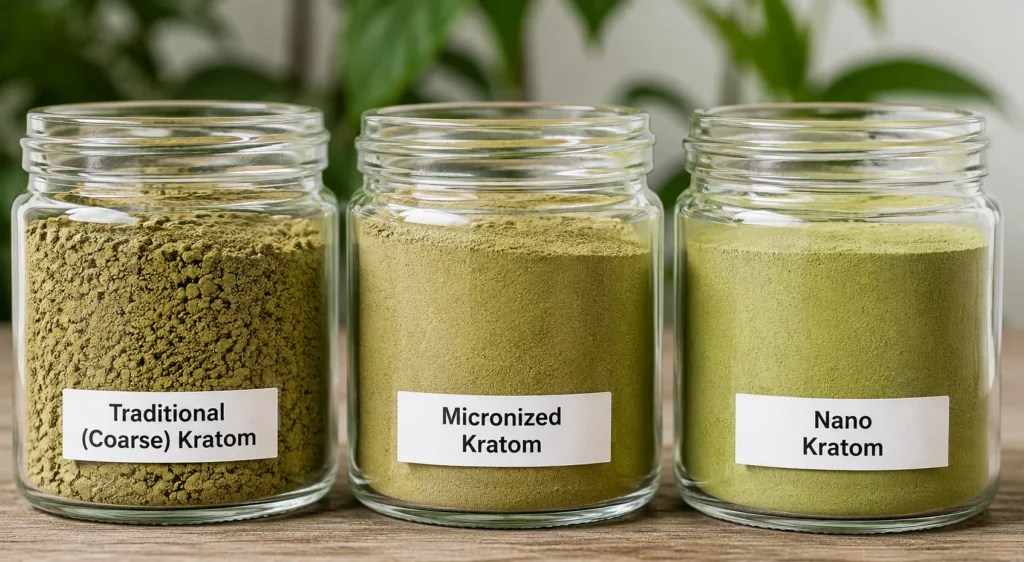
Traditional Kratom Powder
Traditional or regular powder retains more of the leaf’s fibrous structure after initial grinding and sifting. It may feel coarser, require more stirring to mix, and sometimes leave sediment at the bottom of a glass. Many long-time users appreciate this form for its straightforward production and familiar characteristics.
Micronized Kratom Powder
Micronized kratom sits in an intermediate category. It undergoes secondary grinding to reach finer particles than basic powder, often resembling confectioner’s sugar. This version improves mixability but stops short of the ultra-refinement found in nano kratom powder. The distinction lies in the degree of processing and resulting texture.
Nano Kratom Powder
Nano kratom powder pushes refinement further. Its particles are so small that the powder appears almost weightless and integrates seamlessly. Users often note it dissolves or suspends with minimal effort, creating a smoother drinking experience. Importantly, this form retains the same vein colours and regional origins as other kratom products.
Extract-Enhanced Powders
Extract-enhanced powders represent another category entirely. These incorporate concentrated alkaloids added back to base powder for higher strength. Nano kratom powder, by contrast, remains full-spectrum ground leaf material, just processed differently. This keeps it distinct from extracts while focusing on physical enhancements.
Production Methods Behind the Refinement
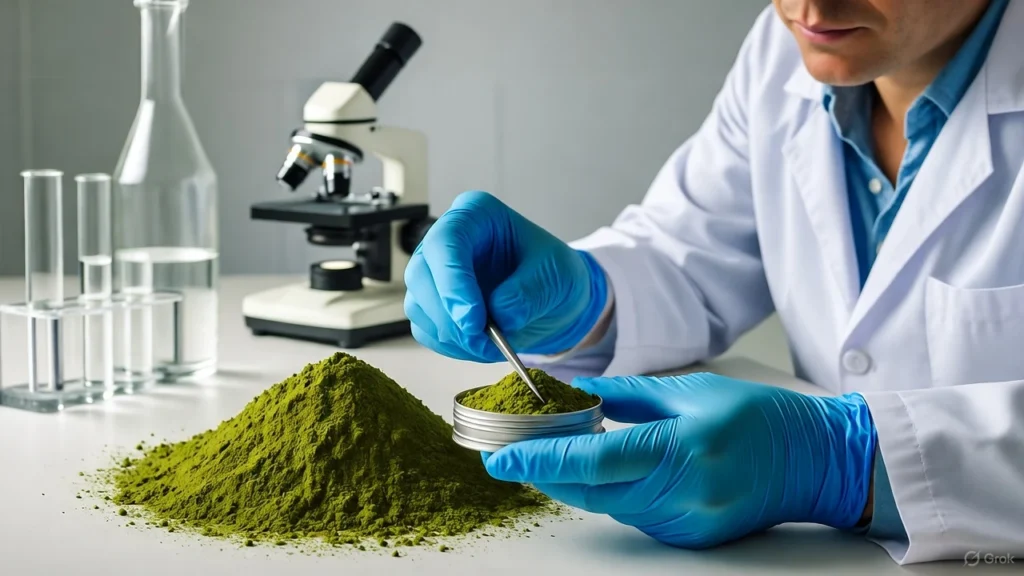
Creating high-quality nano kratom powder begins with premium dried leaves selected for low moisture and consistent alkaloid content. Processors first create standard powder through mechanical grinding and sieving. They then feed this material into advanced milling systems designed for ultra-fine output.
Airflow classification helps separate particles by size, ensuring uniformity. Some facilities use cryogenic grinding, cooling the material to make it more brittle for cleaner fracturing. Throughout production, strict quality controls prevent contamination. Facilities maintain clean environments, use food-grade equipment, and test for heavy metals, microbes, and residual solvents where applicable.
Drying plays a crucial role before grinding. Leaves dried too quickly or unevenly can develop inconsistencies that affect final particle quality. Proper curing and fermentation steps, common in traditional kratom preparation, influence colour and aroma but remain separate from the nano-sizing stage. The nano process adds a mechanical step focused purely on size reduction.
Batch testing ensures consistency across production runs. Reputable sources provide lab results showing alkaloid profiles remain comparable to non-nano versions of the same batch. Variations stem from natural leaf differences rather than the milling itself.
Practical Advantages in Everyday Use
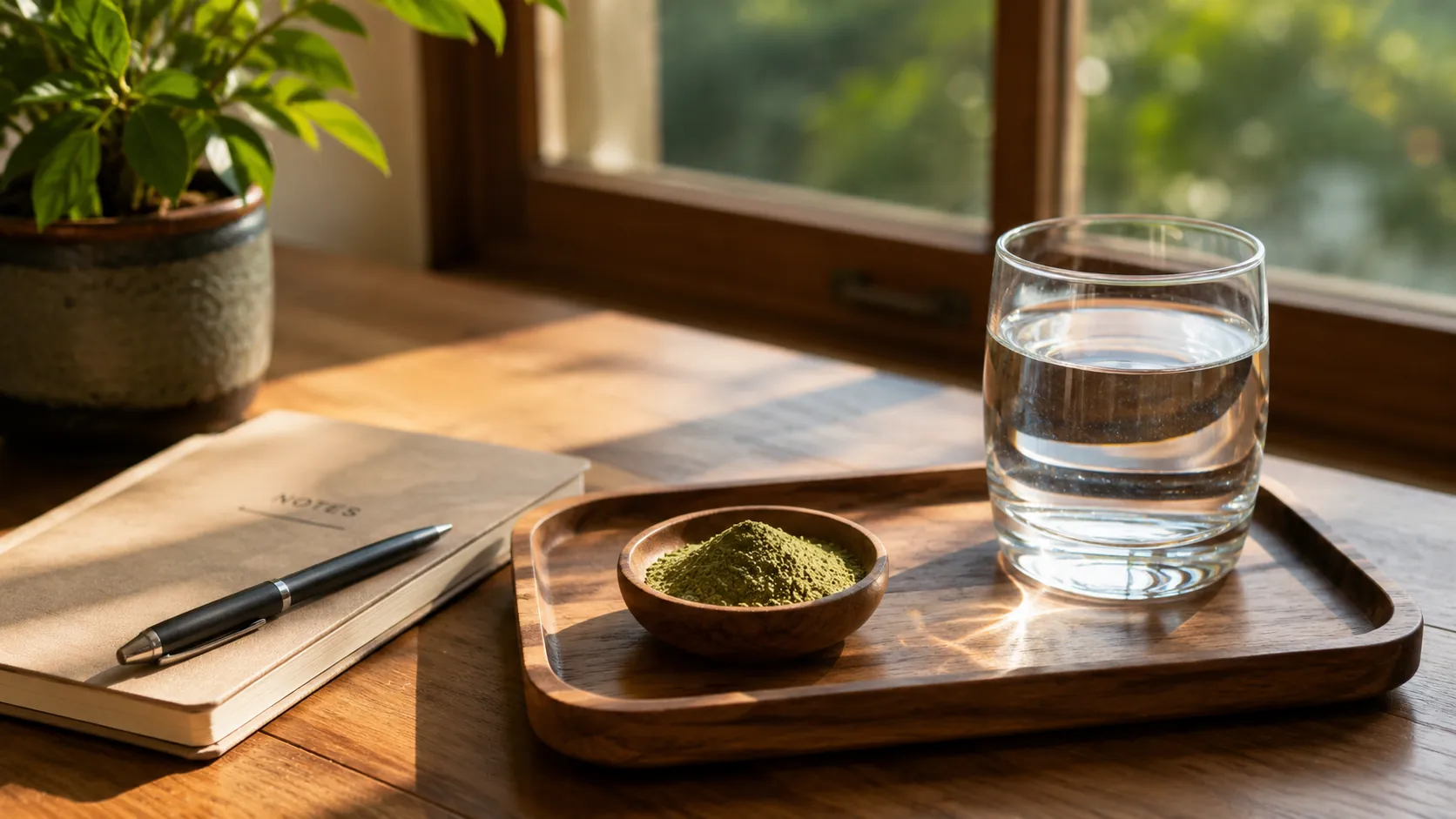
Many people turn to nano kratom powder for its handling properties. The fine texture reduces the chalky mouthfeel associated with coarser powders. When mixed into water, tea, or smoothies, it disperses quickly and stays suspended longer, minimizing the need for constant stirring or shaking.
This can make preparation faster and more enjoyable, especially for those incorporating kratom into busy schedules. Some users report measuring feels more precise because the powder flows evenly from scoops or funnels. In capsule filling, the uniform particles pack consistently, potentially leading to more reliable dosing by volume.
Storage considerations remain similar to other kratom forms. Keep nano kratom powder in airtight containers away from direct light, heat, and moisture to preserve freshness. The increased surface area from fine particles may theoretically accelerate oxidation if exposed, so proper sealing matters. Shelf life typically matches standard powders when stored correctly, often 1-2 years or more.
Travelers and on-the-go users sometimes prefer it for minimal mess. The lightweight, non-clumping nature fits well in portable containers without leaving residue. However, its fineness requires careful handling to avoid airborne dust during transfer.
Exploring Different Varieties Available
Nano kratom powder comes in the same range of vein types as traditional options. Red vein varieties, often associated with evening routines, maintain their characteristic profiles after nano processing. Green vein options provide balanced characteristics, while white veins suit morning preferences for many enthusiasts.
Regional distinctions persist. Powder sourced from Indonesian islands may carry earthy notes, while Malaysian or Thai origins offer unique aromatic qualities based on growing conditions and harvesting practices. Blends combine multiple sources for customized experiences, and nano processing applies equally across these.
Seasonal harvests influence supply. Kratom trees produce leaves year-round in tropical climates, but optimal collection times affect quality. Processors select mature leaves for best results, regardless of final particle size.
Addressing Common Questions About Nano Kratom Powder
One frequent inquiry concerns whether nano processing makes the product stronger. The answer lies in basic science: smaller particles increase surface area, which can support better interaction with solvents like water or stomach fluids. This does not amplify alkaloids but may contribute to more efficient dispersion. Individual responses vary based on metabolism, tolerance, and other factors. Effects remain tied to the leaf’s natural content, not the grinding method alone.
Another question involves safety and purity. High-quality nano kratom powder undergoes the same rigorous testing as other products. Look for vendors providing certificates of analysis for each batch. The process itself introduces no new risks when performed correctly with proper equipment.
Some wonder about cost differences. Advanced milling requires specialized machinery and additional quality steps, often resulting in higher prices than basic powders. Users weigh this against potential conveniences in daily use. Comparisons to instant kratom or toss-and-wash methods also arise. Nano versions can enhance toss-and-wash by reducing grittiness, though many still prefer mixing with liquid. Instant products use different extraction or drying techniques, distinct from particle size reduction.
Tips for First-Time Users of Finer Powders
- Start with familiar strains in nano form to compare directly with your previous experiences.
- Measure carefully using a precise digital scale for accuracy, as finer powders can settle differently in scoops.
- Mix thoroughly in room-temperature or warm liquids to optimize suspension.
- Observe how your body responds, noting preparation method, timing, and personal factors.
- Stay well hydrated, as this supports overall wellness when using any botanical powder.
- Rotate varieties to maintain balanced routines, a common practice among regular users.
- Store small amounts in daily-use containers while keeping bulk supplies sealed to minimize air exposure.
- Clean utensils promptly to prevent residue buildup from the fine particles.
Broader Context Within Plant Medicine Traditions
Kratom belongs to a long history of traditional plant use in Southeast Asia. Indigenous communities have prepared leaves through chewing, tea-making, and other methods for generations. Modern powder forms, including nano variants, represent technological adaptations of these practices.
Understanding this heritage adds appreciation for the plant’s journey from forest to refined product. Each processing step builds upon natural foundations without replacing them. Nano kratom powder honours this by enhancing usability while preserving the leaf’s integrity. Enthusiasts often connect with others through forums and gatherings to share knowledge about different formats. These discussions emphasize personal responsibility, education, and respect for the botanical’s origins.
Frequently Asked Questions
Q: Is nano kratom powder more potent than regular kratom powder?
A: No. Nano processing only reduces particle size and does not increase or concentrate the natural alkaloids in the leaves. Any perceived differences in experience usually come from better mixing and dispersion rather than higher strength. The effects depend primarily on the original leaf material, vein colour, and individual factors.
Q: How long does nano kratom powder stay fresh?
A: When stored properly in an airtight container away from heat, light, and moisture, nano kratom powder typically maintains quality for 1 to 2 years or longer. Its finer particles have more surface area, so sealing it well is especially important to prevent oxidation and preserve aroma and colour.
Q: Does the nano grinding process change the taste or aroma?
A: The taste and aroma remain very similar to the original leaf material because the process involves only mechanical grinding. Finer particles may release flavours more quickly when mixed with hot liquids, sometimes making the bitterness slightly more noticeable at first, but the overall profile stays consistent with the specific strain and region.
Q: Is nano kratom powder suitable for capsule filling?
A: Yes. Its uniform, ultra-fine texture often packs more consistently into capsules than coarser powders. This can lead to more reliable fill weights. Many users prefer it for this reason, though a capsule machine or careful manual filling works best due to the powder’s light and airy nature.
Q: How does nano kratom powder compare in price to regular powder?
A: Nano kratom powder generally costs more because of the additional advanced milling equipment, quality control steps, and lower production yields involved. The higher price reflects the enhanced convenience and texture rather than superior alkaloid content.
Q: Can nano kratom powder be mixed with food or drinks without clumping?
A: One of its main advantages is excellent dispersibility. It mixes smoothly into water, juices, smoothies, or herbal teas with minimal stirring. The fine particles reduce clumping and floating compared to traditional grinds, creating a better preparation experience.
Q: What should I look for when buying nano kratom powder?
A: Prioritize suppliers who provide recent lab tests for purity, heavy metals, and microbial safety. Look for consistent colour, pleasant earthy aroma, and clear information about the strain origin. Transparent processing details and proper packaging are also strong quality indicators.
Conclusion: Appreciating Refinement in Natural Products
Nano kratom powder exemplifies how traditional botanicals adapt to contemporary needs through thoughtful processing. Its ultra-fine particles deliver practical improvements in texture and mixability while maintaining the same natural foundation as other kratom forms. By focusing on particle size rather than chemical alteration, this format offers enthusiasts another option in their exploration of Mitragyna speciosa.
Whether seeking smoother preparation or simply curious about innovations in plant powders, understanding nano kratom powder clarifies its role. It bridges ancient leaf traditions with modern manufacturing precision, providing a refined yet authentic experience for those who appreciate the details.
As interest in plant medicines grows, formats like this highlight ongoing evolution. They remind us that small changes in presentation can enhance enjoyment without compromising the essence of the source material. Continued education and quality focus ensure users can make informed choices aligned with their preferences and values.