In the rich tapestry of Indigenous American cultures, the uses of tobacco stand out as one of the most profound connections between people, the natural world, and the spiritual realm. Long before European contact, communities across North, Central, and South America cultivated and employed this plant in ways that wove it into the fabric of daily life, ceremonies, and relationships. Far from a casual habit, traditional practices treated tobacco as a sacred gift, a medium for prayer, a marker of respect, and a bridge to the unseen.
Historical Origins of the Uses of Tobacco
The story of tobacco begins in the Americas, where wild species of Nicotiana grew and were later cultivated by Indigenous peoples. Origin stories vary by nation, yet many share a common theme: the plant arrived as a deliberate gift from the Creator or spirit beings. Among the Prairie Band Potawatomi, one account describes a man named Wakusha who received instructions in a vision to dry the leaves, burn them as incense, and smoke them in a pipe.
The Great Spirit directed that tobacco serve as the principal offering at every feast and sacrifice. Similar narratives appear among Anishinaabe communities, where tobacco ranks as the first of the four sacred medicines, followed by sage, cedar, and sweetgrass. These stories establish the plant’s primary role as a communicator, something spirits themselves desired and could receive only through human hands.
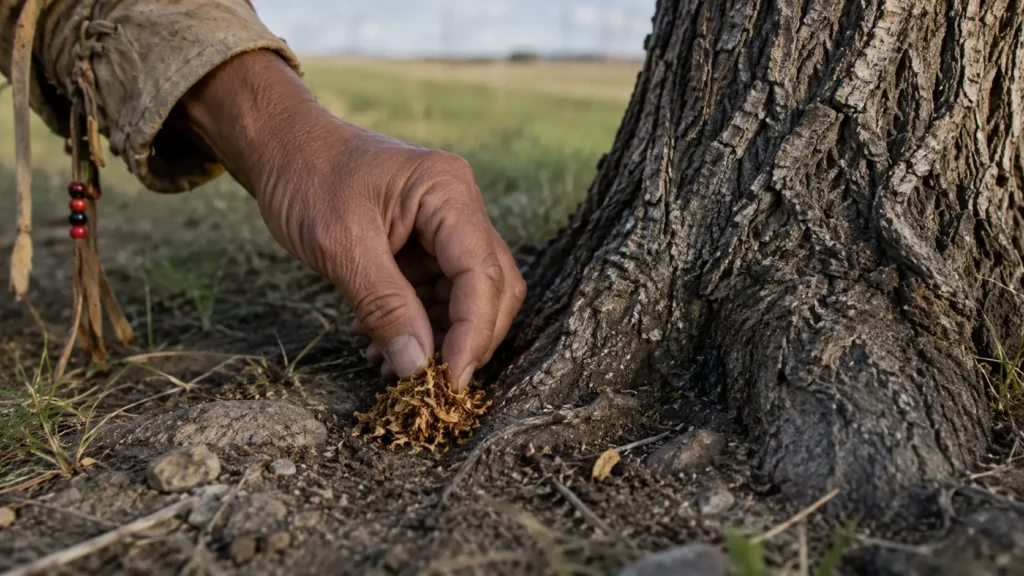
Across the Woodland regions of the eastern United States and Canada, early practices already centered on careful placement and intentional offering. People set dry leaves at the base of trees or shrubs before gathering other medicines, speaking their purpose so the plants would understand and cooperate. A pinch thrown into water before wild-rice harvests sought calm weather and abundance. Travelers offered tobacco on lakes or rivers before launching canoes, asking for safe passage. In these contexts, tobacco functioned less as a substance to be consumed and more as a token of reciprocity that maintained balance with the spirit world.
Ceremonial Uses of Tobacco in Pipe Rituals
Pipe ceremonies formed a cornerstone of traditional practice among many Plains and Woodland nations. The pipe itself carried deep symbolism and structured how people prayed, made offerings, and sealed important words.
The Sacred Pipe and Prayer Smoke
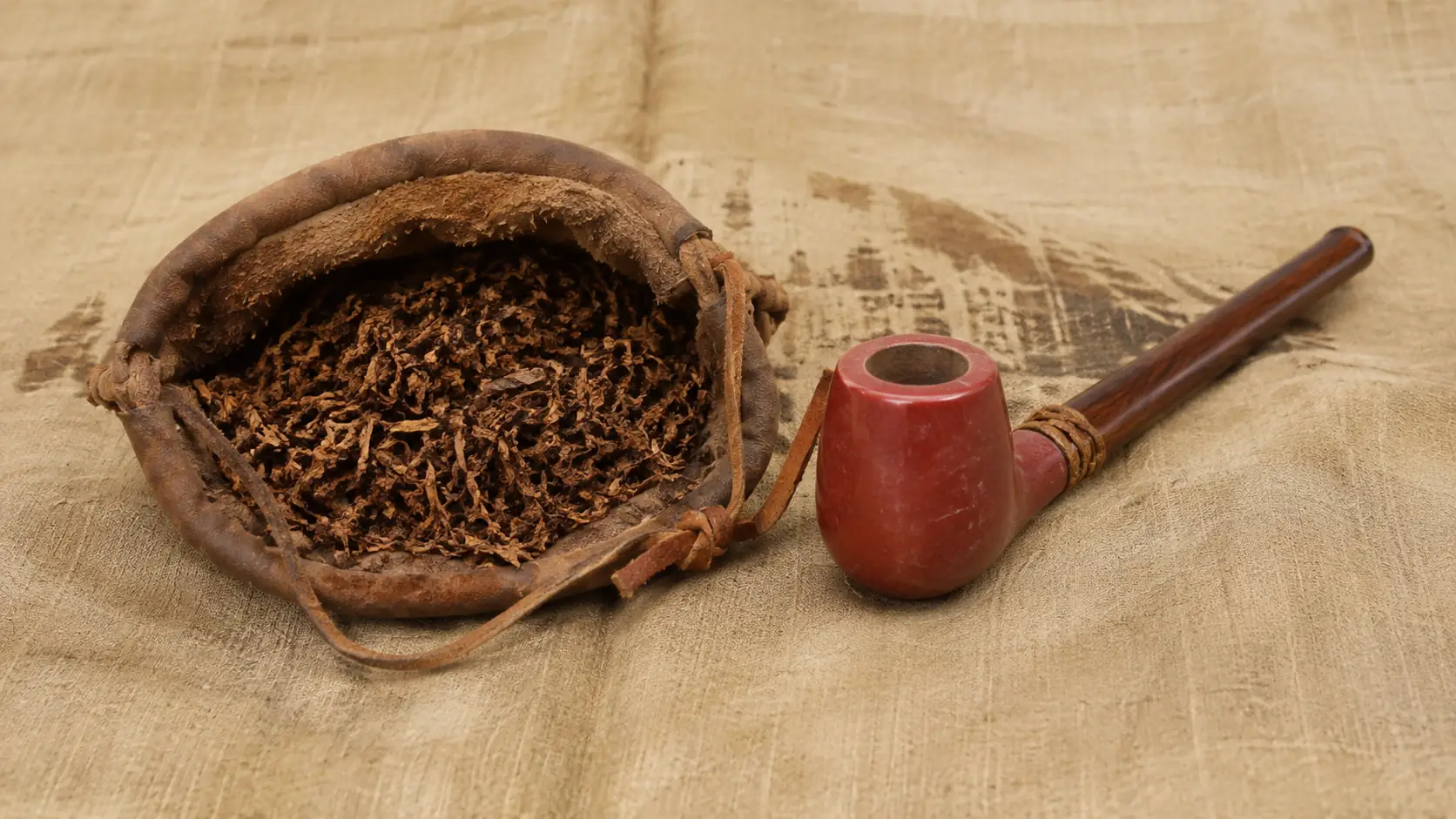
The pipe was often carved from red pipestone, especially from quarries in what is now Minnesota. When the bowl and stem were joined, the instrument became whole and sacred. Tobacco or a carefully prepared mixture filled the bowl. Smokers did not typically inhale the smoke into the lungs. Instead they held it in the mouth and released it upward, believing the rising plume carried prayers, intentions, and spoken words to the Creator or spirit helpers.
Among the Lakota, the sacred pipe known as the chanunpa appears in seven foundational rites. These include the keeping of the soul, purification in the sweat lodge, crying for a vision, and the Sun Dance. According to tradition, White Buffalo Calf Woman brought the pipe and these rites, restoring connection between the people and the divine at a time of hardship. The smoke released from the pipe was understood as a direct means of communication rather than a casual act.
Anishinaabe Asemaa in Ceremony
In the Great Lakes region, Anishinaabe people refer to sacred tobacco as asemaa. It occupies the eastern doorway among the four sacred medicines and enables communication with the spirit world. Before any ceremony begins, tobacco is offered. Small amounts accompany invitations to feasts, carried by runners who notify participants. When a healer accepts a case, that acceptance is marked by taking the offered tobacco. These gestures place asemaa at the center of respectful request and spiritual exchange.
Mixtures, Invitations, and Sealed Agreements
Mixtures known as kinnikinnick often combined tobacco with sumac leaves, the inner bark of dogwood or red willow, and other local plants. These blends moderated the intensity of pure tobacco while preserving its ceremonial purpose. Hunters left pinches at distinctive landscape features such as waterfalls or oddly shaped rocks to honour the spirits residing there.
Pipe rituals also sealed agreements between individuals or nations. Sharing the pipe transformed spoken promises into lasting bonds, with the smoke serving as witness before the ancestors. The act of preparing and offering the pipe created a shared moment of focus that strengthened community ties and individual spiritual awareness.
Spiritual Offerings and Everyday Practices
Beyond formal ceremonies, the uses of tobacco extended into many everyday acts of respect and protection. Dry tobacco was placed as an offering in a wide range of ordinary and significant moments. Common contexts included:
- Before gathering plants, entering certain places, or beginning important tasks
- At the start of councils and the conclusion of successful hunts
- When neighbouring parties met in the field, to demonstrate peaceful intent
- As a gift expressing gratitude, respect, or a request for assistance
- When asking elders or medicine people for stories, knowledge, or guidance
- At naming ceremonies, marriages, vision quests, and funerals
- Before journeys or when storms threatened, as a link to protective forces
In some records, a handful of traditional tobacco held significant value in trade and exchange, reflecting its cultural importance rather than any commercial market. These repeated gestures created a continuous thread of relationship between human communities and the larger living world. The smoke or the offering itself became the prayer, carrying thoughts and intentions beyond ordinary speech.
Uses of Tobacco in Mesoamerican Cultures
Moving southward into Mesoamerica, the uses of tobacco took additional forms while retaining spiritual weight. Among the Maya of highland Chiapas and surrounding regions, ground tobacco mixed with lime produced a snuff carried in small gourds. Known by names such as “elder brother” or “angel,” this preparation protected against meteorological threats, including lightning and destructive winds. Parents tied small packets of tobacco with garlic and chile around infants to shield them from envy or unwanted spiritual attention. Healers applied tobacco in pastes or juices according to local knowledge for bites, stings, and various discomforts.
Classic-period vessels have yielded residues suggesting liquid preparations of tobacco used in controlled ritual settings. Aztec sources describe priests carrying tobacco gourds as insignia during sacrificial rites. Tobacco appeared in offerings to deities associated with earth, war, and the moon. In these cultures, the plant could be smoked in cigars or tubes, chewed, snuffed, or applied externally, always within frameworks of protection, healing, and divine communication. The consistency of these practices across different Mesoamerican groups points to a long-shared understanding of the plant’s power as both protector and communicator.
Amazonian Traditions Involving the Uses of Tobacco
Further south in the Amazon basin, Indigenous nations developed distinct preparations that underscore the plant’s role in governance and personal responsibility. Among the Uitoto and related peoples of the Colombian Amazon, known collectively in some contexts as the People of the Center, tobacco is cooked slowly with alkaline plant salts to form a thick, dark paste called ambil or yera. Practitioners take minute amounts by touching the paste to the gums. In local cosmology, tobacco seals the spoken word while coca organizes thought. Together they undergird the Circle of the Word, a space for careful deliberation about family, territory, and conflict. The paste grounds the body, sharpens presence, and ensures that speech carries accountability.
Similar principles appear in the preparation of rapé or hapé, a fine snuff of tobacco and plant ashes blown into the nostrils to clear the mind and center attention before or after other ceremonial work. These practices treat tobacco as a master plant that teaches discipline rather than a recreational item. In lowland South American societies more broadly, ethnographic descriptions frequently link tobacco with shamanic activity. Practitioners used various methods of application, including smoking, snuffing, and paste forms, to facilitate healing or communication with spirit beings. The plant was regarded as capable of cleansing and clarifying, always approached with respect for its potency.
Cultivation, Social, and Political Dimensions
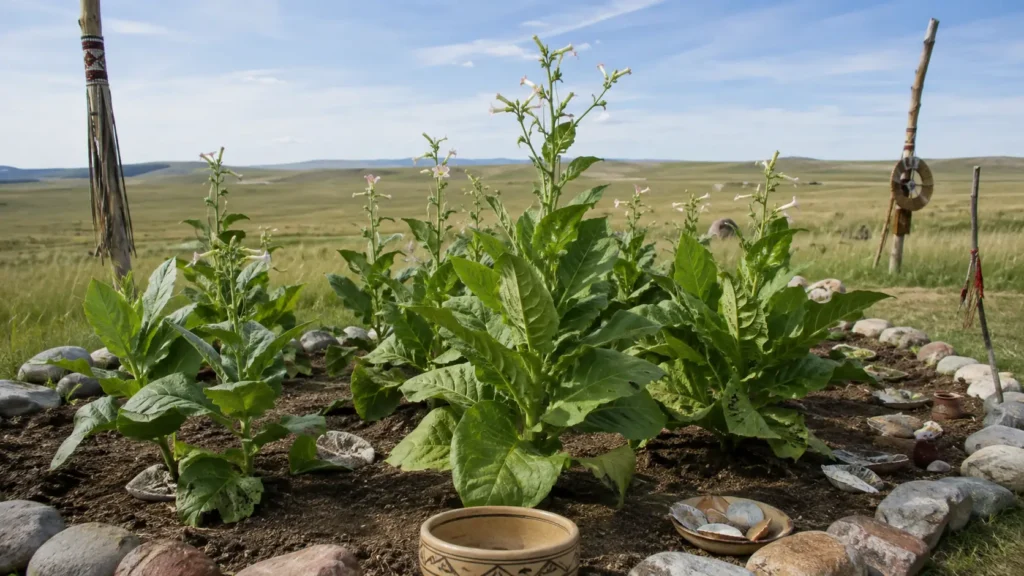
Cultivation itself carried ritual significance. On the Plains, specialized tobacco societies controlled the planting of sacred varieties. Initiation into these groups involved sweat-lodge ceremonies and careful selection of seed. The Blackfoot and Crow, despite their nomadic hunting lifestyle, maintained small plots devoted exclusively to ceremonial tobacco. Elsewhere, communities mixed cultivated Nicotiana rustica with wild relatives or other botanicals according to precise formulas. The act of growing, harvesting, drying, and preparing the plant demanded good thoughts and respectful conduct, reinforcing the understanding that tobacco responds to human intention.
Social and political dimensions further illustrate the plant’s reach. It sealed peace treaties and personal agreements. It marked transitions of seasons and important life events. Regional variation enriched the overall picture. California groups sometimes diluted tobacco with manzanita leaves. Southwestern Pueblo communities compounded mixtures according to the distance plants travelled, valuing distant sources highly. In the Pacific Northwest and Oregon coast, historical accounts describe smoking and the gathering of complementary plants for ceremonial blends. Arctic peoples generally did not incorporate tobacco in the same way, highlighting that practices were never uniform across the entire hemisphere.
Throughout these diverse settings, a consistent principle emerges: traditional uses of tobacco emphasized reciprocity, intention, and relationship. People approached the plant with clear purpose, whether offering it on the earth, releasing its smoke skyward, or placing a small amount on the tongue. Preparation methods reflected local environments and cultural priorities. Some groups preferred pure leaves; others created complex blends. Drying techniques, storage in pouches or gourds, and the timing of harvest followed protocols that treated the plant as a relative rather than a commodity. This relational approach remains one of the most distinctive features of traditional practice.
Frequently Asked Questions
Q: What made traditional uses of tobacco different from later commercial smoking?
A: Traditional uses centered on intention, reciprocity, and relationship. Tobacco was offered, gifted, or smoked in limited ceremonial ways, often without inhaling the smoke into the lungs. The primary purpose was communication with the spirit world, sealing agreements, or showing respect rather than habitual consumption.
Q: Why was the smoke from the pipe not usually inhaled?
A: In many North American traditions the smoke was held in the mouth and released upward. People understood the rising plume as the carrier of prayers, words, and intentions to the Creator or spirit helpers. The act itself was the offering.
Q: Did every Indigenous nation in the Americas use tobacco the same way?
A: No. Practices varied widely by region and culture. Plains and Woodland nations emphasized pipe ceremonies and dry offerings. Mesoamerican groups used snuff, pastes, and liquid preparations. Amazonian peoples developed forms such as ambil and rapé connected to speech, responsibility, and ceremonial clarity. Some northern regions used tobacco little or not at all.
Q: How was tobacco connected to origin stories?
A: Many nations describe tobacco as a deliberate gift from the Creator or spirit beings. These stories explain why the plant holds a central place among sacred medicines and why it is treated with care and respect in both ceremony and daily life.
Q: What role did tobacco play outside formal ceremonies?
A: It appeared in everyday acts of respect and protection. People placed it before gathering plants, beginning journeys, or seeking knowledge from elders. It marked life events, demonstrated peaceful intent, and served as a tangible link to protective forces.
Conclusion
The traditional uses of tobacco in Indigenous American cultures reveal a sophisticated and enduring system of knowledge. Across North America, Mesoamerica, and the Amazon, the plant served as an offering, a carrier of prayer, a marker of respect, and a means of sealing words and relationships.
From origin stories that describe it as a deliberate gift to the careful protocols that guided its every application, tobacco helped structure communication with the spirit world, social bonds, and daily life. Approached with intention and reciprocity, it remained a central element of cultural practice rather than a peripheral one. The depth of these traditions continues to offer insight into the ways Indigenous nations understood connection, responsibility, and the living world.
Disclaimer
The information presented in this exploration of traditional Indigenous uses of tobacco is provided solely for educational, historical, and cultural purposes. It does not constitute medical advice, endorsement, or recommendation of any form of tobacco use. Tobacco contains nicotine, a highly addictive substance, and its consumption, whether smoked, chewed, snuffed, or otherwise ingested, carries significant health risks, including but not limited to increased likelihood of lung cancer, other cancers, heart disease, stroke, chronic obstructive pulmonary disease, respiratory illnesses, and adverse effects during pregnancy.
Commercial tobacco products and even traditional preparations can be harmful when used outside carefully controlled ceremonial contexts under the guidance of knowledgeable cultural practitioners. Individuals should never attempt to replicate or experiment with any tobacco-related practices described here without proper cultural authority and instruction, as misuse may pose safety hazards, including nicotine toxicity, respiratory irritation, or other medical complications. Anyone considering tobacco for any purpose is strongly advised to consult qualified healthcare professionals for personalized medical guidance.
This content respects the sacred role of tobacco in Indigenous traditions while underscoring that modern public-health knowledge clearly establishes the dangers of tobacco exposure; cultural reverence and physical well-being are not mutually exclusive, and the historical practices outlined should not be interpreted as safe or appropriate for contemporary recreational or self-administered use. The author and publisher assume no liability or responsibility for any injury, loss, damage, or adverse outcomes that may result from the use, misuse, or interpretation of the information contained herein.