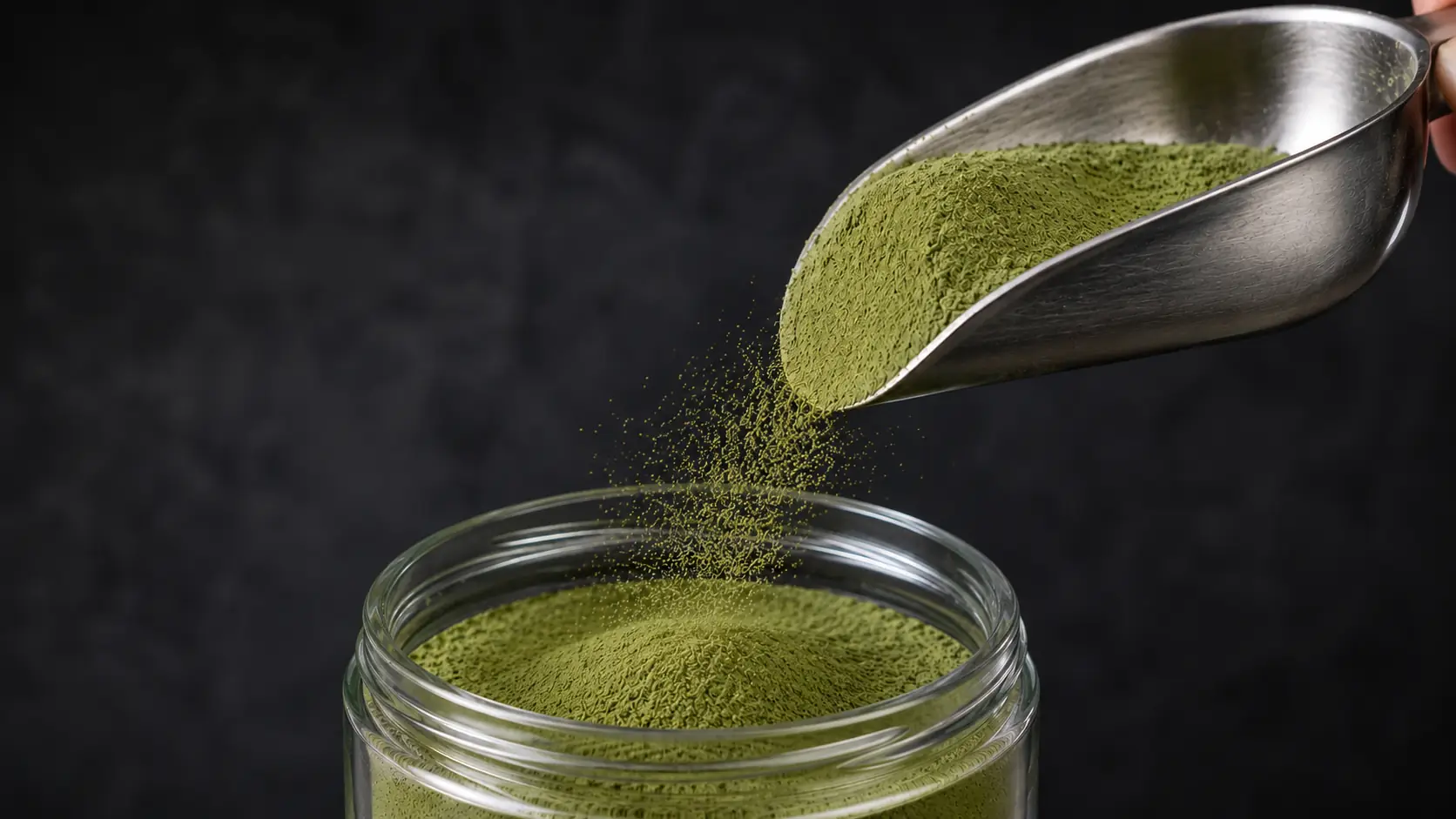
Open a dry bag, tilt it toward a scoop, and the powder may climb the liner, jump toward the spoon, or gather in light clumps that collapse as soon as you press them. This is a potential challenge you may face with kratom powder and static charge. It looks strange at first, but it is ordinary physics, the same cling people already know from flour, coffee, spices, and other fine dry powders.
The colour can look normal, the smell can be familiar, and the powder can feel dry, yet it still coats a pouch like a magnet. That does not mean the leaf went bad. It means small insulating particles rubbed against other surfaces and kept an electrical imbalance long enough for you to see it.
What the charge looks like in real life
Static rarely announces itself with a spark in a kitchen. It shows up as movement that seems a little too lively for a pile of ground leaf.
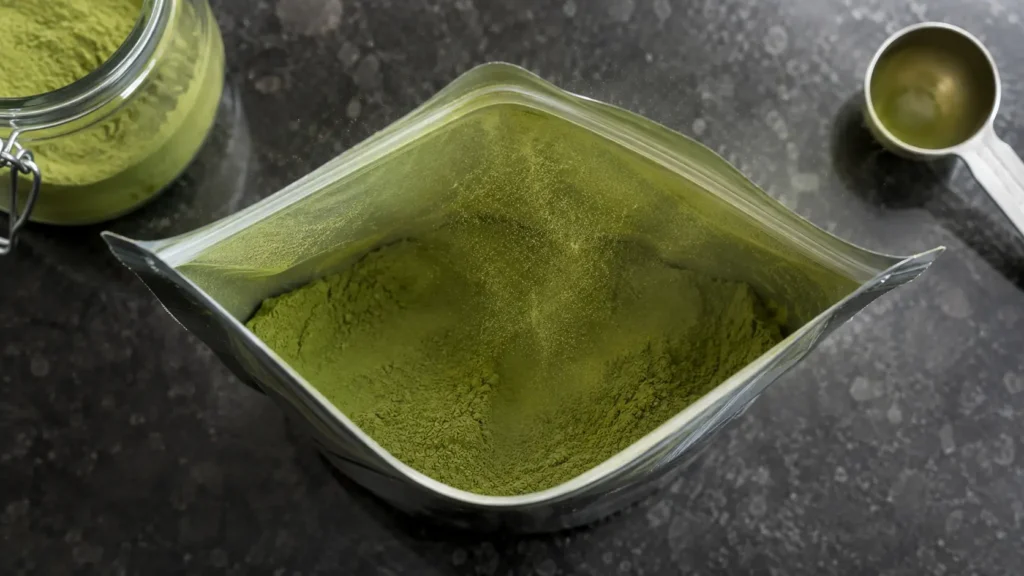
- Powder clings in a thin film to plastic.
- It jumps from the bag toward a scoop before you touch it.
- It forms fluffy clusters that look like clumps, then fall apart into loose dust.
- It stays airborne a little longer when a bag is opened quickly, because charged particles push away from one another.
Fine dry solids pick up charge whenever they rub, slide, pour, or bounce. The finer and drier the powder is, the more obvious that motion becomes.
A plain-language picture of static electricity
Atoms contain electrons, which carry a negative charge. In ordinary conditions those charges stay balanced. When two surfaces meet and then separate, electrons can move from one surface to the other, leaving one side with extra electrons and the other side short.
That imbalance is static electricity. “Static” only means the charge is sitting on a surface instead of flowing away as a current. If a material conducts electricity well, the imbalance fades quickly. If it is an insulator, the imbalance can linger.
Dried plant tissue is a poor conductor, and so are many bags, scoops, and lids. Charge that forms on the powder has nowhere easy to go. Opposite charges attract, so the powder sticks to a liner or a spoon. Like charges repel, so particles puff, jump, or refuse to settle. The same exchange explains a balloon sticking to a sweater or packing peanuts clinging to a box. The setting is different, but the mechanism is not.
How powders pick up charge
The usual path is contact and separation, and powder handling is full of both. Leaves are dried, crushed, and milled. Particles strike grinder surfaces, strike one another, and pass through screens. Later they slide into liners, vibrate in transit, and get shaken when a bag is opened. Each contact is a chance for electrons to move.
This is often called the triboelectric effect. The action is simple: touch, rub, separate, charge. Pouring powder from one container into another is enough to start it.
Particle size matters. A coarse grind has less surface for its weight, while a fine grind packs a huge amount of surface into a small mass. Electrostatic forces act at surfaces, and when particles are tiny and light those forces can compete with gravity. That is why a film of powder can hang on a vertical wall instead of falling.
Shape matters too. Irregular fragments from crushed leaf have edges that bump and scrape more than smooth beads would, and more contact usually means more chance to exchange charge. By the time a pouch is opened, milling and shipping have already done most of that rubbing. Scooping only tops it up.
Why a dried leaf powder shows it so easily
Kratom usually arrives as a dried, milled botanical. That form is compact and easy to portion, and it is also the form most likely to hold a charge. Fresh leaves contain moisture, and water helps charges move and fade. Drying removes that pathway on purpose. A stable powder is supposed to be dry enough that it does not cake or spoil in the bag, and the tradeoff is that a well-dried powder is a better insulator.
Plant material is a mix of fibers, cell fragments, and small amounts of natural oils and resins. Those components do not turn the powder into a metal, so charge can sit on particle surfaces for minutes or longer, especially when the surrounding air is dry. Freshly milled powder often looks livelier than powder that has sat still, because grinding creates new surfaces through force.
None of this is unique to one plant. Cocoa, matcha, cinnamon, and wheat flour behave the same way when they are fine and dry. The surprise comes only because people expect ground leaf to pour like sand.
Dry air is the quiet amplifier
Humidity is one of the strongest everyday controls on static. Water molecules in the air collect on surfaces in an invisible film. That film is thin, but it gives charges a path to leak away. In moist air, the imbalance fades. In dry air, it stays.
Indoor winter heat is a classic setting. Cold outdoor air holds little moisture, and once that air is warmed inside a building the room often feels crisp and dry. Heated offices, desert climates, and strong air conditioning can create the same pocket. People then notice more cling, more jumping, and more dust that seems reluctant to settle.
Warm weather is not automatically easy. Air conditioning can wring moisture out of a room even when the street outside feels heavy. A basement can stay a little damp while an upstairs room stays dry. The calendar is only a hint. The room is the real test. If paper feels brittle and doorknobs shock you, expect more cling. If envelopes go limp and salt cakes in the shaker, look first at moisture.
There is a balance here. Very damp air can soften powder and encourage caking. Very dry air can make static dramatic. Most indoor spaces sit between those extremes, which is why the charge comes and goes.
Bags, scoops, and other surfaces
The powder is only half the story. The other half is whatever it touches. Many pouches and tubs are plastic, and plastics are excellent insulators. Powder sliding against a liner is a repeated contact event. The liner holds charge, the powder holds charge, and then they attract. A plastic scoop does the same work on a smaller scale. Dip, twist, and tap, and you have created friction. Metal scoops can still charge powder through contact, but metal can bleed charge away if it is touching a path to ground, such as a person who just touched a faucet.
Glass jars and sturdy tins are often calmer than thin film, not because they repeal physics, but because they flex less and get handled with less rubbing. Even then, a very dry room can still produce cling to lab tested kratom powder in Canada. Lids, funnels, measuring cups, and dry hands belong on the same list. Anything that rubs and then pulls away can add to the imbalance.
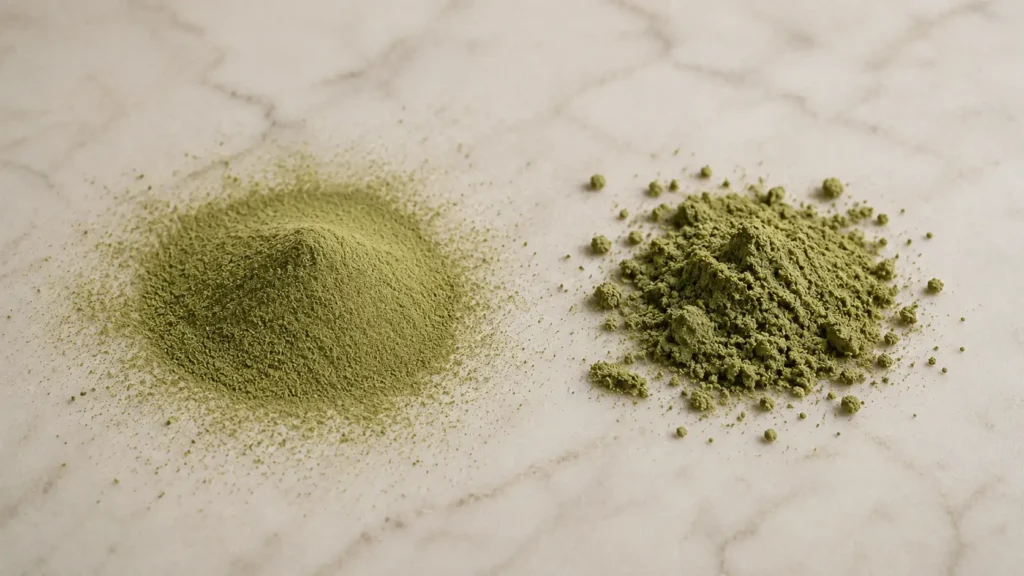
Kratom powder and static charge versus moisture clumping
This distinction matters because the two problems ask for opposite responses. Texture, temperature, and how easily a cluster breaks tell you more than a photo can.
How static clusters usually feel
- Dry and light to the touch
- Crush with almost no pressure and turn back into loose powder
- Often appear with cling on the bag wall
- Often come with particles that jump toward tools
How moisture clumps usually feel
- Cooler and denser than the surrounding powder
- Resist the fingers and may smear slightly
- Form more readily when a bag has been left open in humid air
- Also form when powder is stored near steam or picks up condensation from a lid
What the charge does not mean
It does not prove contamination. It does not prove unique mishandling. It does not, by itself, tell you that the kratom powder in Canada has changed. Electrostatic cling is a surface electrical effect, not a purity test. In ordinary amounts, the nuisance is mess, powder wasted on a liner, and a small cloud if a bag is ripped open too fast. Seeing cling one day and not the next does not mean the contents transformed overnight. Surfaces equalize when air, contact, and time allow them to. That boundary matters. Static is not a secret language about quality. It is friction, dryness, and small particles.
Working with charged powder without fighting it
Once you recognize kratom powder and static charge, the goal is calmer motion, not a special ritual.
Slow the pour and pause before scooping
Height adds speed, and speed adds collisions. Tipping a bag close to the receiving jar shortens the fall through dry air. Letting a newly opened pouch sit for a minute often takes the edge off the most theatrical jumping.
Choose calmer tools and quieter hands
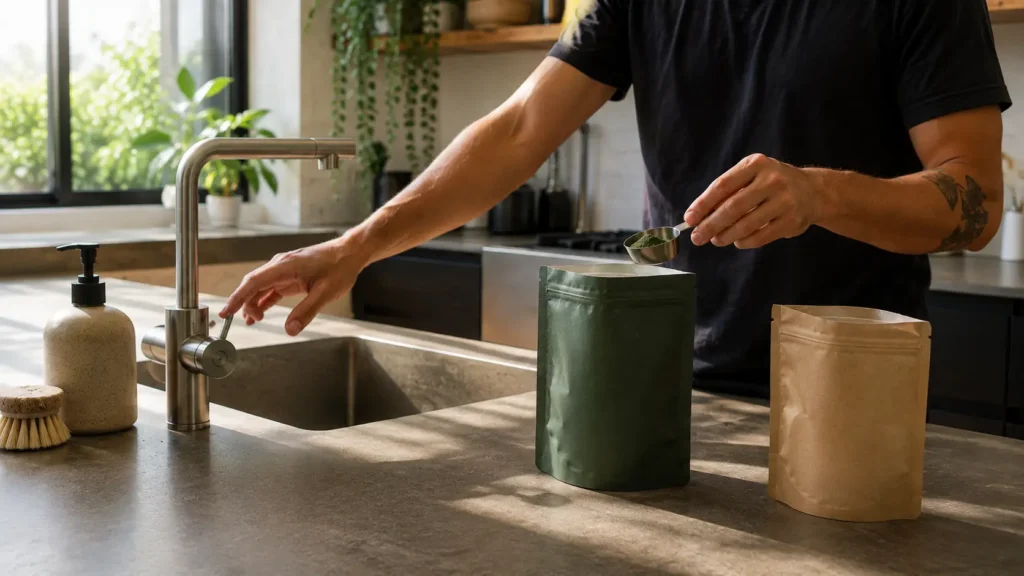
If you have been walking on carpet, touch a metal faucet before you scoop. You are reducing extra charge on your body and tools, not performing a treatment on the leaf. Avoid the driest pocket in the room if cling has become a daily annoyance, and keep the kratom powder itself protected from actual dampness. The air around the workspace can be ordinary indoor air rather than desert air.
A metal scoop used slowly often creates less drama than a light plastic spoon stirred hard against a liner. Tap a scoop against a jar rim instead of flicking it. If powder coats a pouch, fold the liner and tap so the film falls back in, because scraping creates more friction and a new layer of cling. A sudden peel of a tight seal launches a puff, while a slower opening lets air equalize. These habits do not change the identity of the leaf. They change how much contact you add at the moment you want a clean scoop.
FAQ
Q: Is cling a sign that the powder went bad?
A: No. Dry powder that jumps or coats a liner is usually holding an electrical imbalance, not spoiling. Spoilage and moisture damage look different. They tend to come with denser clumps, a change in smell, or a damp feel. Static clusters stay dry and break apart with almost no pressure.
Q: Why does the same bag act up one day and pour calmly the next?
A: Charge lives on surfaces for a while, then fades when air, contact, and time allow it to. A heated room, a plastic scoop, or a hard shake can bring it back. A brief pause after opening a pouch often makes the next scoop quieter.
Q: Does a finer grind make kratom powder and static charge more noticeable?
A: Often, yes. Finer particles have more surface for their weight, so electrostatic forces compete more with gravity. A silkier powder can cling and puff more than a coarser cut from the same leaf. That is a texture effect, not proof that one pouch is better than the other.
Q: Should I add moisture on purpose to kill the static?
A: Not directly into the powder. A little humidity in the room can help charge leak away. Water in the jar can cake the leaf and shorten its storage life. Keep the container sealed and aim for ordinary indoor air around the workspace, not a damp cabinet and not a desert-dry heater vent.
Q: Can static change what is in the leaf?
A: Cling is a surface electrical effect. It is not a test of plant compounds, cleanliness, or origin. A lively pour does not mean the contents transformed, and a still pour does not prove special purity.
Bringing the pieces together
Kratom powder and static charge appears when fine, dry, insulating particles rub against each other and against packaging, then keep that imbalance because dry air and plastic will not carry the charge away. The visible results are cling, jumping, light dry clusters, and a brief haze when a bag is opened too fast.
Humidity, grind size, container material, shipping vibration, and scooping style decide how strong the effect feels on a given day. Moisture clumping is a different problem with a different feel. Charge is not proof of poor leaf, and a perfectly still pour is not proof of special purity.
Handle the powder the way you would handle any other fine botanical: slowly, in a room that is not desert-dry, in a container that does not scrape more than it needs to. Keep actual water out of the jar. Once the cause is clear, the bag on the counter looks less like a riddle and more like ground leaf that is dry enough to keep and light enough to listen to the air around it.