Most people who use kratom can name mitragynine and 7-hydroxymitragynine without hesitation. A smaller group has heard of paynantheine, speciogynine, or speciociliatine. Very few, however, have ever come across the word mitraphylline when reading about kratom. That is not because the compound is imaginary; it is because mitraphylline in kratom exists only in tiny, almost negligible amounts, yet in other plants the same alkaloid occurs in meaningful concentrations and is now attracting serious scientific attention for its potential anti-cancer properties.
What Exactly Is Mitraphylline?
Mitraphylline is an oxindole alkaloid, a class of molecules built around a central indole ring with an extra oxygen atom attached. Chemically, it belongs to the same broad family as mitragynine, but the two compounds behave very differently in the body.
It was first isolated in the 1960s from a completely different plant: Uncaria tomentosa, better known as cat’s claw, a woody vine that grows throughout South America and is famous in Peruvian herbal medicine. In cat’s claw bark, mitraphylline can reach concentrations of 0.2 to 1 % of dry weight, which is high enough to be pharmacologically relevant. In Mitragyna speciosa (kratom), the story is quite different.
How Much Mitraphylline Does Kratom Actually Contain?
Modern laboratory testing using high-performance liquid chromatography or mass spectrometry routinely detects more than 40 alkaloids in kratom leaves. In almost every published analysis, mitraphylline appears either as “trace,” “below limit of quantification,” or simply absent from the table.
Typical findings from commercial and academic labs show:
- Mitragynine: 0.7 to 2.0 %
- Paynantheine: 0.2 to 0.9 %
- Speciogynine: 0.1 to 0.7 %
- 7-Hydroxymitragynine: 0.001 to 0.02 %
- Mitraphylline: < 0.01 % (often < 0.001 % or not detected)
In plain language, you would need to consume several kilograms of even the strongest kratom powder to get the same amount of mitraphylline found in a single gram of high-quality cat’s claw bark. That alone tells you almost everything you need to know about its practical importance in kratom.
Why Does It Still Appear on Some Alkaloid Lists?
The confusion started decades ago when early researchers used less precise methods and sometimes mixed up plant samples. A few older papers listed mitraphylline as a “minor alkaloid of Mitragyna speciosa,” and those entries have been copied from website to website ever since. Once something is repeated enough times on the internet, it gains a life of its own, even when newer and more accurate data contradicts it.
Today, when independent labs test dozens of different strains (red, green, white, wild, plantation-grown, young leaf, mature leaf), the pattern is consistent: mitraphylline is either undetectable or present at levels so low that they fall within the margin of error of the equipment.
Chemical Cousins: Mitraphylline vs. the Major Kratom Alkaloids
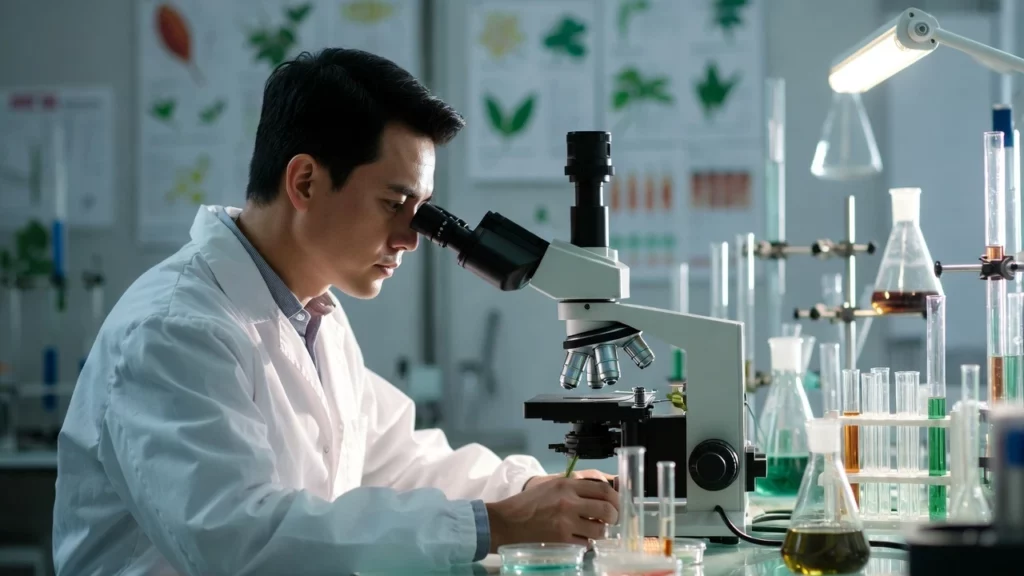
Even though they share part of their name, mitraphylline and mitragynine are built on different scaffolds. Mitragynine and most of the dominant kratom alkaloids are indole alkaloids with a closed E-ring and a methoxy group at position 9. Mitraphylline is an oxindole, meaning the E-ring is open and the molecule has a different three-dimensional shape. That structural difference changes how it interacts with receptors in the human body.
Most of the effects people associate with kratom come from partial agonist activity at mu-opioid receptors and other targets such as adrenergic and serotonin receptors. Mitraphylline shows little to no affinity for those same sites. Instead, research on isolated mitraphylline (mostly from cat’s claw) points toward mild immune-modulating, antioxidant, and anti-inflammatory activity, but only at concentrations far higher than anything achievable from kratom leaves.
Where Mitraphylline Actually Shines: Cat’s Claw and Uncaria Species
If you are specifically interested in experiencing mitraphylline, the plant kingdom offers a much better source. Uncaria tomentosa and the related species Uncaria guianensis contain several oxindole alkaloids in meaningful amounts:
- Mitraphylline
- Isomitraphylline
- Pteropodine
- Isopteropodine
- Speciophylline
- Uncarine F
These compounds are believed to contribute to the traditional use of cat’s claw bark for joint discomfort, digestive complaints, and general immune support in South American folk medicine. Many commercial cat’s claw supplements standardize their extracts to total oxindole content, something that would be impossible with kratom because the levels are simply too low.
Mitraphylline’s Potential Anti-Cancer Properties
Although mitraphylline is present in kratom only in negligible amounts, the isolated compound, primarily obtained from cat’s claw (Uncaria tomentosa) has attracted significant interest in oncology research for its cytotoxic and antiproliferative effects.
Key Findings from In Vitro Studies
Mitraphylline has shown dose-dependent inhibition of cell growth and induction of apoptosis in multiple cancer cell lines, including:
- Breast cancer (MT-3, MCF-7)
- Ewing’s sarcoma (MHH-ES-1)
- Neuroblastoma (SKN-BE(2))
- Glioblastoma (GAMG)
- Lymphoblastic leukemia
Reported IC₅₀ values typically range from 11–20 µM, sometimes outperforming reference drugs like cyclophosphamide in the same assays.
Mechanism: Suppression of Metastasis
Recent studies demonstrate that mitraphylline inhibits epithelial-mesenchymal transition (EMT) by downregulating integrin α4 signaling and key EMT markers (N-cadherin, vimentin, Twist, Snail, and Slug). This may reduce tumor invasion and improve sensitivity to conventional chemotherapy.
Current Limitations and Realistic Sources
All evidence remains preclinical (cell cultures and animal models). No human clinical trials exist, and therapeutic doses are orders of magnitude higher than anything obtainable from kratom. Even concentrated cat’s claw extracts standardized to 0.5–1 % oxindole alkaloids are a far more practical source than kratom leaves or powder.
Bottom Line for Kratom Users
Mitraphylline’s emerging anti-cancer research is exciting, but it has no bearing on the effects or benefits of kratom consumption. Seeking mitraphylline for potential therapeutic purposes should focus on properly standardized Uncaria tomentosa products under medical guidance, not kratom.
Why Strain or Vein Colour Makes Almost No Difference
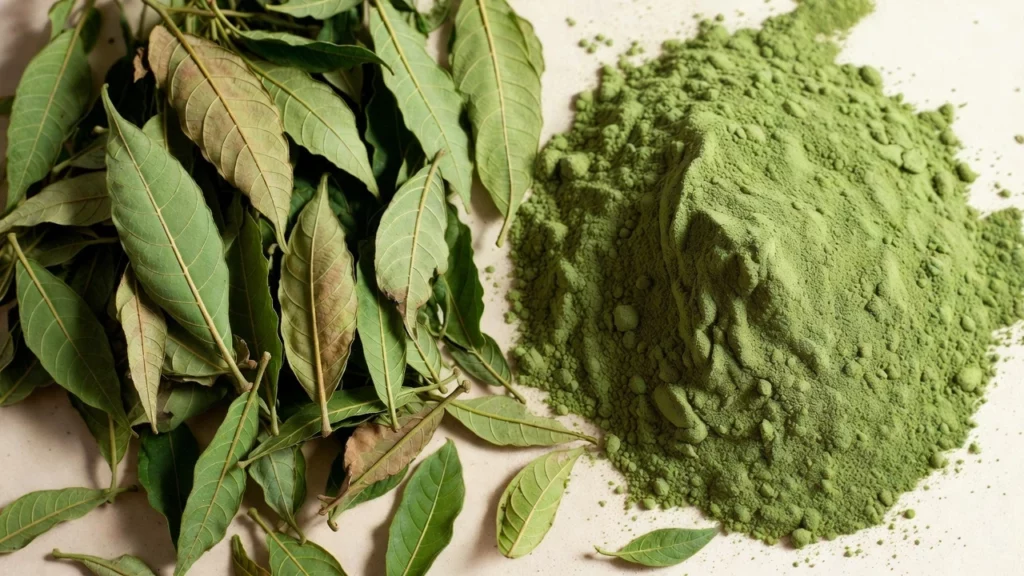
Some vendors suggest that certain rare or “premium” strains contain higher amounts of minor alkaloids. While it is true that alkaloid ratios shift slightly depending on growing region, harvest time, and drying method, the variation for mitraphylline stays within the same trace range. White-vein, red-vein, or gold-vein kratom all show essentially the same near-zero levels when tested side by side.
The same holds true for wild-crafted versus plantation-grown material. Age of the tree, soil type, and fermentation style affect mitragynine and 7-OH content far more dramatically than they affect oxindole alkaloids like mitraphylline.
Practical Takeaway for Kratom Users
If someone tells you they “feel” mitraphylline when they take a particular batch of kratom, they are almost certainly experiencing the combined effect of the major alkaloids, the placebo response, or simply the natural variation that exists from one session to the next. There is no evidence that mitraphylline contributes in any noticeable way to the characteristic effects of kratom. That does not make the compound useless or uninteresting; it simply means kratom is not the right delivery vehicle if mitraphylline is your target.
How Laboratories Detect and Report Trace Alkaloids
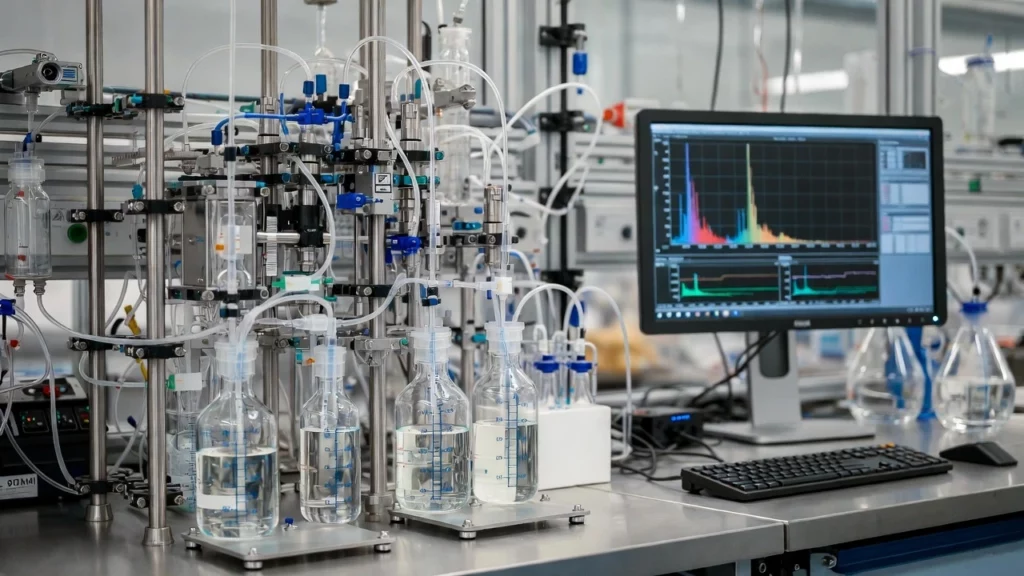
Modern kratom testing labs use two main techniques:
- High-Performance Liquid Chromatography with UV detection (HPLC-UV)
- Liquid Chromatography coupled with tandem Mass Spectrometry (LC-MS/MS)
The second method is far more sensitive and can reliably quantify compounds down to parts-per-billion. Even with this technology, mitraphylline usually registers as “not detected” or “< LOQ” (below the limit of quantification). When it does appear, the reported value is typically 0.000x %: several orders of magnitude lower than the alkaloids that actually drive the plant’s profile.
The Bigger Picture: More Than 50 Alkaloids and Counting
Kratom researchers have now identified over 50 distinct alkaloids in Mitragyna speciosa, and new ones are still being discovered every few years. Some, like corynoxine A and B, rhynchophylline, and isorhynchophylline, are also oxindoles and chemically related to mitraphylline. They, too, occur in trace amounts, usually below 0.02 % combined. This incredible chemical diversity is part of what makes the plant so fascinating to scientists, but it also explains why trying to attribute specific effects to any single minor alkaloid is usually an exercise in speculation.
Should You Care About Mitraphylline in Kratom?
From a practical standpoint, the honest answer is no. The amount present is too small to produce measurable biological activity in humans. Your experience with any given kratom product will be shaped almost entirely by:
- Total alkaloid content
- Ratio of mitragynine to 7-hydroxymitragynine
- Presence of other indole alkaloids such as paynantheine and speciogynine
- Your own individual biochemistry and tolerance
If you are interested in oxindole alkaloids for their own sake, look to properly standardized cat’s claw extracts or other Uncaria species instead
Frequently Asked Questions About Mitraphylline in Kratom
Q: Why do some older kratom alkaloid charts still list mitraphylline as a “minor alkaloid”?
A: Early botanical surveys from the 1960s to 1980s sometimes cross-contaminated samples with Uncaria species or used less specific detection methods that couldn’t distinguish between similar oxindole peaks. Those outdated lists have been copied across websites and books for decades.
Q: Can any kratom strain or vendor actually offer “high-mitraphylline” kratom?
A: No reputable lab has ever found a strain where mitraphylline exceeds 0.01 %. Claims of “mitraphylline-rich” batches are almost always marketing rather than measurable reality.
Q: If mitraphylline is so low, why do some people say they feel something different from certain batches?
A: Natural batch-to-batch variation in the major alkaloids (mitragynine, 7-OH, paynantheine, etc.), different drying/fermentation techniques, and individual body chemistry easily explain perceived differences. Trace compounds like mitraphylline are too scarce to be felt.
Q: Is mitraphylline the same thing as rhynchophylline or isorhynchophylline?
A: No. They are all oxindole alkaloids and chemically related, but they have different structures and slightly different effects. Rhynchophylline and isorhynchophylline are also present in kratom, but still only in trace amounts (usually <0.02 % combined).
Q: Could concentrated kratom extracts ever deliver a meaningful dose of mitraphylline?
A: Even 50× or 100× extracts would only raise mitraphylline to microgram levels per serving, still far below the milligram doses studied in cat’s claw research. The safety and efficacy of extracts is more important than increasing concentration of alkaloids.
Q: Does fresh kratom leaf (not dried powder) contain more mitraphylline?
A: Fresh leaf analyses show the same pattern: mitraphylline remains undetectable or below 0.001 % on a wet-weight basis. Drying does not significantly concentrate it.
Q: Are there any drug interactions specific to mitraphylline that kratom users should worry about?
A: Because the amount in kratom is negligible, mitraphylline-related interactions (such as mild CYP3A4 inhibition seen in cat’s claw studies) are not considered relevant for normal kratom use.
Q: If I want the benefits that research attributes to mitraphylline, should I just take more kratom?
A: No. You would need an impractical and potentially unsafe amount of kratom to reach even the lowest studied dose of mitraphylline. Standardized cat’s claw (Uncaria tomentosa) supplements are the appropriate choice if that alkaloid is your goal.
Conclusion
Mitraphylline in kratom is a perfect example of how a little knowledge can be misleading when taken out of context. Yes, the molecule is technically present in the leaves. No, it is not present in meaningful quantities, and no, it is not responsible for any of the effects people seek from kratom.
Understanding these distinctions helps separate marketing hype from botanical reality. The more we learn about every compound in the plant, even the ones that barely register on a lab report, the better equipped we are to have honest conversations about what kratom is and what it is not. The next time you see mitraphylline listed in big letters on a product label or forum post, you will now know exactly how much weight to give that claim: very little.