




In the lush rainforests of Southeast Asia, where sunlight filters through dense canopies and humidity clings to every leaf, the kratom tree stands as a quiet testament to nature’s ingenuity. Known scientifically as Mitragyna speciosa, this evergreen member of the Rubiaceae family has evolved over centuries to thrive in challenging environments.
One of its most remarkable traits is kratom’s natural pest resistance, a built-in shield that allows it to flourish with minimal human intervention. This resilience not only ensures the plant’s survival in the wild but also offers intriguing possibilities for modern agriculture, where the battle against insects and diseases often relies on synthetic solutions.
The Origins of Kratom: A Plant Shaped by Tropical Challenges
To appreciate kratom’s natural pest resistance, we must first understand its roots (both literal and figurative). Native to regions like Thailand, Indonesia, Malaysia, and Papua New Guinea, kratom trees can reach heights of up to 25 meters, their straight trunks supporting broad crowns of glossy, dark green leaves. These leaves, the plant’s hallmark, are where much of the magic happens, but the tree’s entire structure is adapted to a life in the understory of tropical forests.
Tropical ecosystems are hotbeds of biodiversity, but that comes with a downside: relentless pressure from herbivores, insects, and pathogens. Kratom has not evolved in isolation, it has been shaped by these pressures over millennia. In its natural habitat, young saplings push through leaf litter teeming with borers, beetles, and aphids, while mature trees contend with leaf-chewing caterpillars and fungal spores carried on humid winds. Yet, kratom persists, often outlasting more fragile neighbors and this endurance is no accident. The plant’s evolutionary toolkit includes adaptations that make it a less appealing target for invaders.
Consider the tree’s growth pattern. Kratom is a slow-to-moderate grower, investing energy in sturdy stems and thick foliage rather than rapid expansion. This deliberate pace allows it to allocate resources toward defense mechanisms, creating a robust framework that withstands environmental stresses. In wild groves, kratom trees often cluster in mixed stands, benefiting from the diversity that dilutes pest concentrations. No single tree becomes an easy mark. Farmers in Southeast Asia have long observed this, harvesting leaves from wild or semi-wild populations where the trees seem almost self-sustaining.
But what gives kratom its edge? At the heart of its pest resistance lies a dual strategy: structural barriers and biochemical armaments. The leaves, for instance, feature a tough, waxy cuticle that acts like a suit of armor. This layer is not just for show as it repels water and deters small insects from landing or feeding. The texture (slightly rough and veined) can physically snag or discourage crawlers, much like how thistles protect themselves from grazers. In cultivation trials, growers note that even in non-native settings, like greenhouses in subtropical areas, these leaves show fewer chew marks compared to nearby vulnerable crops.
Beyond the surface, kratom’s real strength emerges from within. The plant produces a cocktail of compounds that serve as natural repellents. These are not aggressive toxins but subtle signals that say, “Move along.” In the wild, this means fewer resources wasted on fighting off attacks, allowing the tree to focus on growth and reproduction. For agriculture, it translates to a model of resilience that could inspire more eco-friendly practices. As global food demands rise, plants like kratom remind us that strength can come from subtlety, not force.
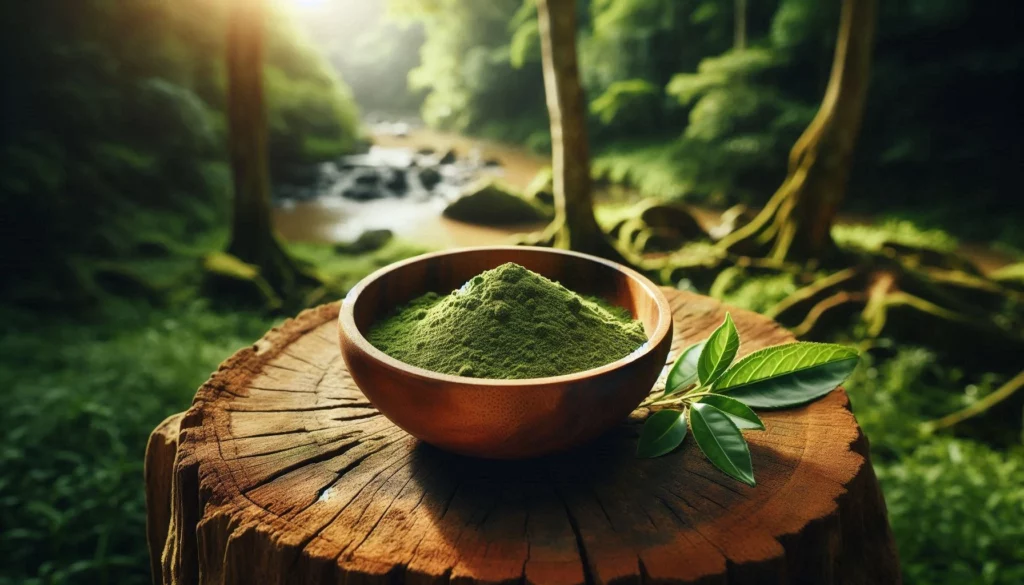
Unpacking the Defenses: How Kratom Keeps Pests at Bay
Physical Barriers: Kratom’s First Line of Defense
Diving deeper into kratom’s natural pest resistance reveals a layered system of protection, honed by evolution to balance offense and defense. At the forefront are the plant’s physical attributes, which create immediate hurdles for potential threats. The leaves’ elliptical shape and pointed tips, measuring up to 18 centimeters long, fold slightly at the edges, forming natural channels that direct rainwater away and reduce moist hiding spots for fungi or mites. This design minimizes infection points, a common vulnerability in humid tropics.
The waxy coating, or epicuticular wax, plays a starring role. Composed of long-chain hydrocarbons, it gives the leaves a subtle sheen while forming a hydrophobic barrier. Insects like spider mites, which thrive on sucking sap from soft tissues, find it slippery and uninviting. In field observations, kratom patches show markedly lower mite populations than adjacent rubber plantations, where smoother leaves invite infestation. Similarly, the bark’s gray, smooth exterior resists borers. Wood-boring beetles struggle to penetrate the dense, fibrous layers beneath.
Chemical Arsenal: Subtle Repellents in Action
Yet, physical barriers alone would not suffice in such a competitive niche. Kratom’s true prowess lies in its chemical arsenal, a suite of secondary metabolites that deter without destroying. These compounds, produced in response to environmental cues, include alkaloids and other nitrogen-rich molecules. Alkaloids like mitragynine, the plant’s most abundant, are not just notable for their effects on humans. They serve as evolutionary tools. In nature, they impart a bitter taste that signals danger to herbivores. Browsers, from deer to insects, learn quickly to avoid foliage that leaves a lingering acrid aftertaste.
This bitterness is not uniform. It is concentrated in the veins and edges, where pests are most likely to strike first. When a leaf is nipped, the plant responds by ramping up production, a process called induced defense. Nearby leaves toughen up, releasing volatile signals that alert the whole tree. This systemic response means a single attack does not cascade into widespread damage. Growers in Indonesia report that even after occasional caterpillar nibbles on young growth, mature trees rebound swiftly, their canopies filling in without scarring.
Sustainable Efficiency: Why This System Endures
Terpenoids and phenolics add another layer. These volatile oils evaporate slowly, creating an aura around the tree that confuses pollinators turned pests. Moths laying eggs on kratom leaves often choose poorly, their offspring hatching into an inhospitable environment. Fungal resistance follows suit as phenolic compounds inhibit spore germination, keeping blights at bay in rainy seasons. In mixed agroforestry, where kratom shades coffee or cocoa, these defenses spill over, reducing pest loads on companion plants.
What makes this system sustainable is its efficiency. Kratom does not overproduce defenses constantly because that would drain energy from growth. Instead, it senses threats via receptors in its cells, triggering just enough response. This precision mirrors strategies in other resilient species, like neem trees, but kratom’s tropical specialization makes it particularly adept. For those cultivating it, this means scouting for early signs, like minor leaf curl, and relying on the plant’s own vigor rather than sprays. The result? Healthier trees and cleaner harvests.
Alkaloids and Beyond: The Chemical Guardians of Kratom
Spotlight on Mitragynine: Key to Pest Deterrence
While physical traits provide the first line of defense, kratom’s chemical profile elevates its natural pest resistance to a masterful level. Secondary metabolites, those non-essential compounds plants craft for survival, are the unsung heroes here. Alkaloids dominate, comprising up to 2% of dry leaf weight, but they are joined by flavonoids, saponins, and tannins that weave a complex web of protection.
Mitragynine, the flagship alkaloid, exemplifies this. Present in concentrations that vary by leaf age and season, it disrupts insect digestion when ingested. Caterpillars feeding on treated leaves experience slowed gut motility, leading to malnutrition and deterrence. This is not lethal outright but enough to make kratom an unappealing meal. Other alkaloids, like paynantheine and speciogynine, amplify this by binding to neural receptors in pests, causing disorientation. A beetle scouting for a host might veer away, mistaking the tree for something toxic.
Supporting Compounds: Building a Gradient of Protection
Flavonoids contribute antioxidant punch, neutralizing free radicals from pest attacks that could weaken tissues. They also modulate gene expression in the plant, bolstering cell walls against penetration. Saponins, soap-like molecules, foam up in insect guts, rupturing membranes and causing rejection. Tannins bind proteins, making foliage indigestible, think of it as nature’s bitter glue. Together, these create a gradient of deterrence: mild for casual browsers, potent for persistent ones.
Seasonal rhythms influence this chemistry. During wet seasons, when pests peak, alkaloid levels spike, fortifying leaves against floods of invaders. Dry periods see a shift toward drought tolerance, but the baseline remains high. In cultivation, this variability means timing harvests for peak potency, when defenses are strongest. Environmental factors, like soil nutrients, fine-tune production. Nitrogen-rich soils boost alkaloids, enhancing resistance without excess.
Ecosystem Benefits: Broader Impacts of These Guardians
This chemical symphony does not just protect kratom, it influences its ecosystem. Volatiles attract beneficial insects, like predatory wasps that parasitize caterpillars. Birds and bats, drawn to the tree’s fruits, control larger herbivores. In this way, kratom’s defenses foster balance, turning potential vulnerability into communal strength. For agriculture, it is a blueprint: plants that self-regulate pests reduce the need for broad interventions, preserving soil life and water quality.
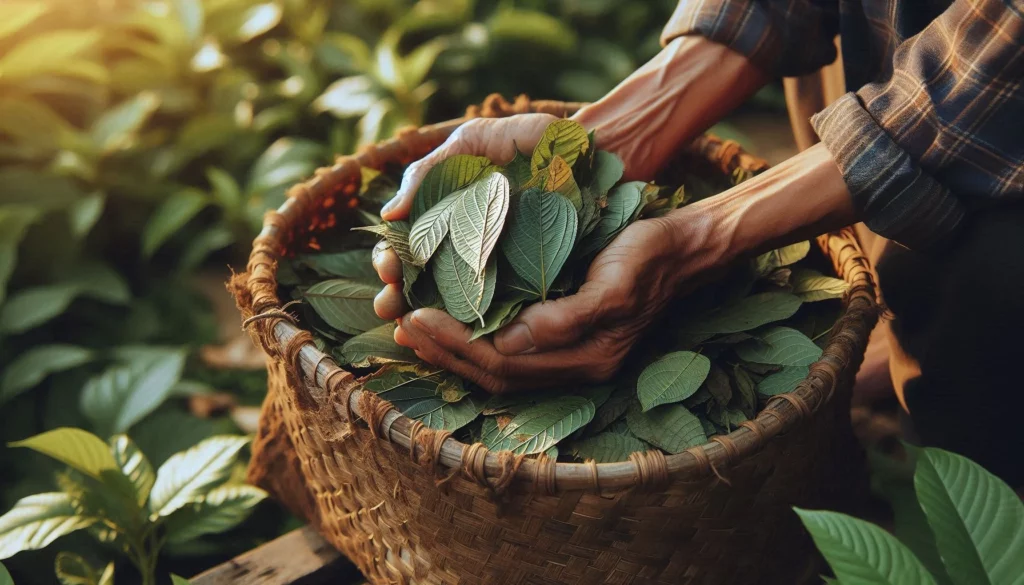
Agricultural Benefits: Why Kratom’s Resilience Matters Today
Cutting Chemical Costs: A Greener Farming Shift
Kratom’s natural pest resistance is not just a survival story, it is a blueprint for agriculture’s future. In an era where synthetic pesticides cover 80% of global croplands, leading to resistant superbugs and polluted waterways, plants like kratom offer a refreshing counterpoint. Their ability to thrive with minimal inputs translates to cost savings, environmental gains, and resilient farms.
First, reduced chemical use stands out since traditional kratom groves in Malaysia require few interventions. Natural defenses keep infestations low, slashing expenses on sprays by up to 70%. This eases the burden on smallholders, who often cannot afford commercial protectants. In broader terms, it cuts runoff into rivers, protecting aquatic life from collateral damage. Imagine scaling this to rice paddies or orchards. Fewer chemicals mean healthier soils, teeming with microbes that cycle nutrients.
Boosting Biodiversity: Intercropping Wins
Biodiversity blooms under such systems as kratom’s intercropping compatibility shines here. Planted alongside legumes or fruits, it shades soil, suppressing weeds while its repellents deter shared pests. In Indonesian models, mixed kratom-coffee plots show 30% higher yields for both, as kratom buffers against aphids that plague beans. This polyculture mimics wild forests, boosting pollinator habitats and natural predators. Farms become ecosystems, not monoculture factories, yielding stable outputs despite weather whims.
Enhancing Soil and Economic Health
Soil health improves too over time without heavy tillage for pest control, organic matter builds, enhancing water retention and fertility. Kratom’s deep roots aerate subsoil, preventing compaction and erosion on slopes. In Kapuas Hulu, Indonesia, long-term kratom lands exhibit richer humus layers, supporting rotations with vegetables. This cycle sustains productivity, reducing fallow periods and fertilizer needs.
Economic ripples extend further since resilient crops like kratom fetch premiums in eco-markets, where consumers prize low-residue goods. Export data from Thailand highlights this: pest-resistant strains command higher prices, empowering rural economies. Labour shifts from spraying to value-adding, like leaf processing, building skills and income diversity.
Adapting to Climate and Community Needs
Climate adaptation factors in greatly as warming intensifies pest migrations, kratom’s tropical-hardened defenses provide a buffer. In experimental plots in Vietnam, it withstood introduced beetles better than locals, suggesting gene pools for breeding. This resilience aids food security, especially in vulnerable tropics where yields falter 20% from unchecked outbreaks.
Water conservation follows since less irrigation for stressed, pest-weakened plants means efficient use. Kratom’s vigor holds moisture, cutting demands by 15-20%. In drought-prone areas, this stretches resources, benefiting communities beyond farms. Traditional knowledge in harvesting pest-free leaves preserves cultural ties to land, passing resilience stories to youth. In essence, kratom’s natural pest resistance heralds a shift toward regenerative agriculture, where plants partner with nature, not dominate it. It is a win for yields, planet, and people.
Navigating Challenges: Pests That Test Kratom
No plant is invincible to the tenacity of pests and insects. Young kratom tree’s constantly face aphids or snails, yet, its baseline resilience limits spread. Organic aids like neem complement without overriding natural defenses, keeping systems clean. Climate shifts may introduce novel threats, but kratom’s adaptability (seen in its spread to Myanmar) suggests potential. Vigilance, paired with its strengths, ensures thriving.

FAQ
Q: What is kratom, and where does it originate from?
A: Kratom (Mitragyna speciosa) is an evergreen tree in the Rubiaceae family, native to Southeast Asia, including Thailand, Indonesia, Malaysia, Myanmar, and Papua New Guinea. It thrives in tropical understory environments and can grow up to 25 meters tall, with its glossy dark green leaves serving as the primary source of its bioactive compounds.
Q: How does kratom achieve natural pest resistance?
A: Kratom employs a dual defense strategy: physical barriers like a tough, waxy cuticle on leaves that repels water and insects, and chemical repellents such as alkaloids (e.g., mitragynine), flavonoids, saponins, and tannins. These compounds create bitterness, disrupt insect digestion, and induce systemic responses to threats, making the plant unappealing to pests like caterpillars, aphids, and beetles.
Q: What role do alkaloids play in kratom’s pest deterrence?
A: Alkaloids, comprising up to 2% of dry leaf weight, act as the plant’s primary chemical guardians. Mitragynine, the most abundant, imparts a bitter taste and slows insect gut motility, leading to malnutrition in herbivores. Other alkaloids like paynantheine cause disorientation in pests, while supporting compounds like tannins bind proteins to render foliage indigestible.
Q: Are there any pests that can still affect kratom trees?
A: While mature kratom is highly resilient, young saplings may face threats from aphids, spider mites, snails, caterpillars, and root maggots, especially in humid conditions. Natural predators often keep populations low, and organic aids like neem can supplement defenses without chemicals.
Q: How does kratom’s pest resistance benefit agriculture?
A: It reduces reliance on synthetic pesticides by up to 70%, lowers costs for smallholders, enhances biodiversity through intercropping (e.g., with coffee, yielding 30% higher outputs), improves soil health via deep roots, and supports eco-friendly practices that cut chemical runoff and boost economic premiums for low-residue products.
Conclusion
Kratom’s natural pest resistance illuminates agriculture’s path: resilient, balanced, bountiful. By emulating its ways, we cultivate not just crops, but futures intertwined with nature’s wisdom. This vision extends beyond Southeast Asian groves, offering a blueprint for global farming that replaces destructive practices with agroforestry systems nurturing soil and economic stability.
Selective harvesting and companion planting ensure regeneration while shielding neighbors from threats, all free of chemical shadows. As demand for ethical sourcing rises, it empowers smallholders to protect lands and honor the earth’s rhythms, reimagining agriculture as a true partnership yielding enduring abundance.
Disclaimer
This blog is provided for informational and educational purposes only and does not constitute medical advice, diagnosis, treatment recommendations, or endorsement of any practices involving kratom (Mitragyna speciosa). While the discussion highlights the plant’s botanical resilience and potential agricultural applications, kratom products are not authorized by Health Canada for any medical, therapeutic, or dietary use, and the agency strongly advises against their consumption due to significant health and safety risks.
These risks include serious adverse events such as liver toxicity, seizures, substance use disorder, addiction, withdrawal symptoms, digestive issues, respiratory depression, or contamination with pathogens like Salmonella. Kratom’s active compounds, including mitragynine and 7-hydroxymitragynine, exhibit opioid-like properties that may lead to dependence, abuse, and interactions with other medications, potentially exacerbating conditions like anxiety, aggression, or cardiovascular issues.
Individuals with pre-existing health conditions, pregnant or breastfeeding persons, and those under 18 should avoid kratom entirely. Always consult a qualified healthcare professional before considering any herbal or supplemental product, and report any adverse effects to regulatory authorities like Health Canada. The author and publisher of this blog disclaim any and all liability arising from the use of or reliance on the information provided herein.