The DEA Notice of Intent on 7-OH marks a significant step in how federal authorities approach certain concentrated forms of a compound linked to the kratom plant. Published in the Federal Register on July 6, 2026, this notice signals the agency’s plan to temporarily place 7-OH above a defined threshold into Schedule I of the Controlled Substances Act. A companion notice covers three related substances. Together, these actions aim to address products that go beyond the trace levels naturally present in botanical material.
Understanding the DEA Notice of Intent on 7-OH
On July 1, 2026, the Drug Enforcement Administration announced that it had filed two Notices of Intent. One focuses on 7-OH when it exceeds a specified concentration. The second targets mitragynine pseudoindoxyl, MGM-15, and MGM-16. These notices appeared in the Federal Register five days later. The Department of Health and Human Services and the Food and Drug Administration publicly supported the move the same day the filings were announced. Officials described the targeted materials as presenting risks that justified rapid temporary control under existing law.
The notices serve as formal public alerts rather than final rules. They outline the substances under consideration, the reasons for temporary action, and the timeline for possible next steps. Readers following the Federal Register can track each stage without relying on secondary summaries. The core message is consistent across agency statements: the focus remains on elevated concentrations and synthetic forms, not on ordinary botanical material that stays below the stated limits.
The Legal Framework Behind Temporary Placement of 7-OH
Temporary Scheduling Authority Under the Controlled Substances Act
The legal foundation for this type of action sits in section 811(h) of the Controlled Substances Act. That provision allows the Attorney General to place a substance into Schedule I on a temporary basis when necessary to avoid an imminent hazard to public safety. The temporary placement can last up to two years and may be extended by one additional year if permanent scheduling proceedings are already underway.
The Thirty-Day Waiting Period and Earliest Possible Effective Date
Before issuing the temporary order, the agency must publish a notice of intent and wait at least thirty days. That waiting period ran from the July 6 publication date, making August 5, 2026, the earliest possible effective date for any temporary scheduling order.
Role of the HHS Request for Information
A parallel Request for Information from the Office of the Assistant Secretary for Health invited public comments on the proposed threshold for 7-OH. Comments were accepted through July 31, 2026. After reviewing those submissions, the Secretary of Health and Human Services can forward relevant information to the Attorney General. Once the thirty-day minimum has passed and any comments have been considered, the temporary order may be published. The order takes effect on the date it appears in the Federal Register.
This structure balances speed with process. The temporary authority exists precisely for situations where authorities identify an imminent hazard, while still requiring notice and a short public window before controls take effect. Permanent scheduling, by contrast, follows a longer path that includes an eight-factor analysis and broader opportunities for comment and hearings.
Specific Thresholds Defined for 7-OH in the Notice
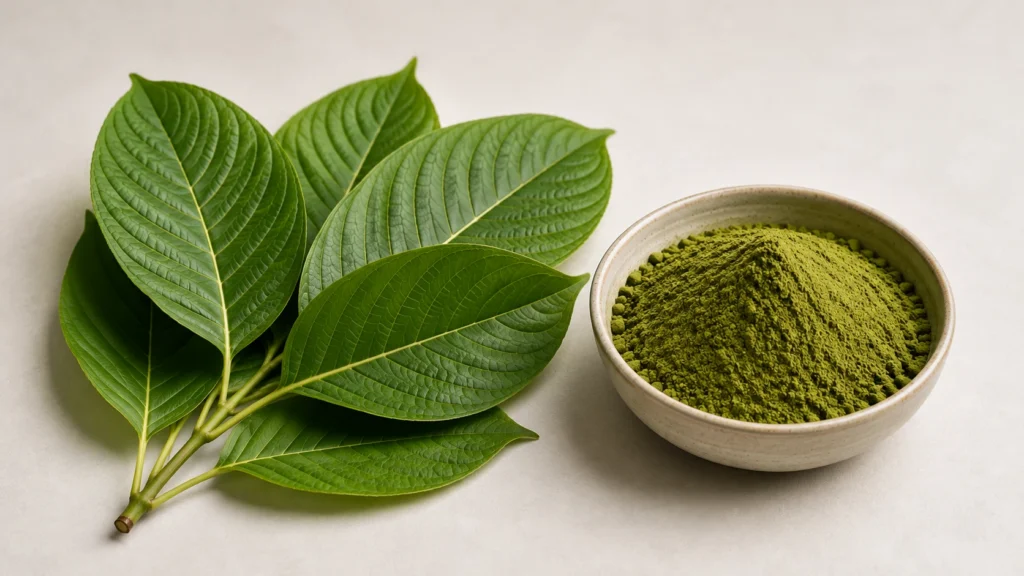
The threshold language is precise. For botanical material of the plant Mitragyna speciosa, the notice applies when 7-OH exceeds 0.050 percent on a dry-weight basis. For synthetic material or for products derived from the plant and further processed into extracts, concentrates, processed edibles, or pressed pills, the limit is either 0.050 percent by weight, volume, or weight/volume, or more than 1.00 milligram of 7-OH in the article. The notice also covers isomers, esters, ethers, salts, and salts of those forms whenever they can exist.
These numbers create a clear dividing line. Products that stay under the limits fall outside the proposed temporary controls. Products that exceed them, whether through concentration methods or synthetic production, would become subject to Schedule I requirements once an order is issued. The dual measurement options (percentage or absolute milligram amount) account for different product formats, from powders to finished consumer items.
Related Substances Covered Alongside 7-OH
The three related substances stand on different footing. Mitragynine pseudoindoxyl is described as a chemical rearrangement product of 7-OH. MGM-15 and MGM-16 are synthetic derivatives that do not occur in the plant. Their proposed temporary placement carries no concentration threshold; any amount would fall under Schedule I controls once an order is issued.
Because these compounds do not appear naturally, the notices treat them as fully synthetic materials. Once temporary scheduling takes effect, manufacture, distribution, possession, and related activities involving any quantity would face the same restrictions that apply to other Schedule I substances. This broader coverage for the three related compounds reflects their status as non-botanical products.
What Schedule I Controls Would Mean for 7-OH
Schedule I classification brings the full set of regulatory controls that apply to substances with a high potential for abuse and no currently accepted medical use in treatment in the United States. Once a temporary order takes effect, the following would apply to covered forms of 7-OH and the related substances:
- Full criminal, civil, and administrative sanctions under the Controlled Substances Act
- Requirement for DEA registration for any authorized handlers
- Restrictions on manufacture, distribution, importation, exportation, research, and possession
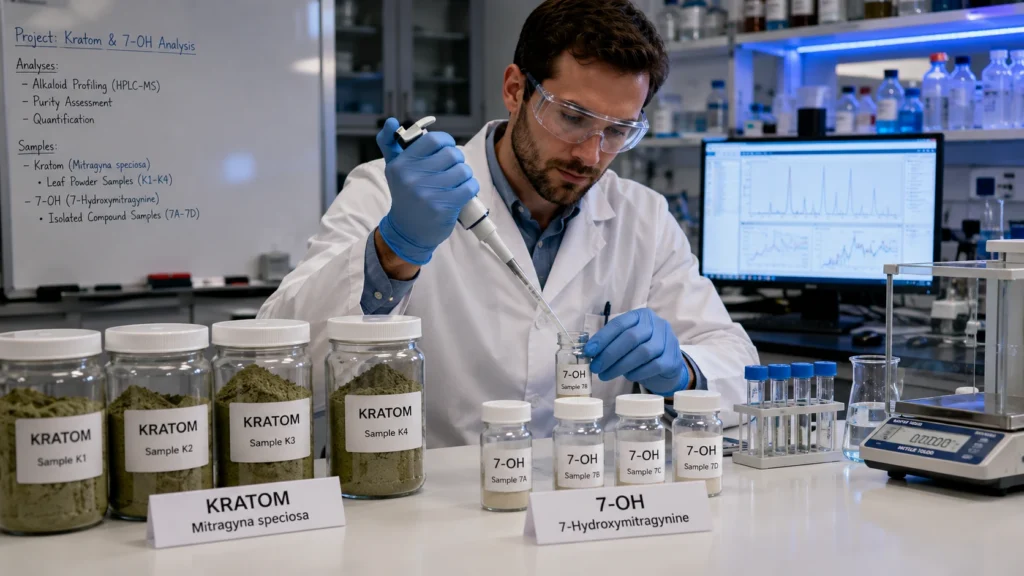
- Laboratory testing requirements to determine concentration and presence of the covered substances
- Record-keeping and security obligations for permitted activities
Background Leading to the 7-OH Notices
The path that led to the notices began earlier. In 2025 the Food and Drug Administration issued warning letters to companies marketing products that contained 7-OH in various forms, including tablets, gummies, drink mixes, and liquid shots. Later that year, federal authorities seized products valued at roughly one million dollars from firms in Missouri. Following a scientific and medical evaluation, Health and Human Services recommended that the Drug Enforcement Administration begin the temporary scheduling process for 7-OH above a defined level. The July 2026 notices represent the formal start of that process.
Public communication from the agencies has stayed consistent on the core points. Concentrated and synthetic forms are the focus. Natural leaf below the threshold is not. The temporary authority rests on the need to avoid an imminent hazard. The thirty-day waiting period and the public comment opportunity on the threshold are built into the process. These elements together provide a structured sequence that interested parties can follow in real time through the Federal Register and agency press releases.
Potential Next Steps After the Notice of Intent on 7-OH
Issuance of the Temporary Scheduling Order
Because the temporary order can be issued on or after August 5, 2026, the period immediately following that date becomes the next practical checkpoint. The agency is not required to act on the earliest possible day. It may publish the order later, adjust details within the scope of the original notice, or decline to issue an order at all. Once published, the temporary controls take effect on the date of publication in the Federal Register.
Duration and Possible Extension of Temporary Controls
Once published, the temporary controls remain in force for two years unless extended or replaced by permanent scheduling. If permanent proceedings are underway near the end of the two-year period, the temporary order can be extended for one more year.
Path Toward Permanent Scheduling
Permanent scheduling follows a longer route. It requires an eight-factor analysis under the Controlled Substances Act, input from Health and Human Services, and the opportunity for public comment and hearings. Temporary placement buys time for that fuller review while the substance is already under control.
Practical Considerations for Tracking Developments on 7-OH
International implications fall outside the domestic notices, yet cross-border shipments of plant-derived materials that exceed the 7-OH threshold or contain any of the three related synthetic substances would face Schedule I restrictions at the U.S. border once a temporary order takes effect. Manufacturers and shippers must monitor the Federal Register and adjust compliance accordingly.
Several states have already restricted or banned elevated 7-OH products. Federal temporary scheduling would set a nationwide baseline, but states can impose stricter rules, so multi-state businesses need to track both federal and state developments. Official statements emphasize that the notices target materials above the threshold and the three non-natural substances; unprocessed leaf with only trace 7-OH remains outside the controls.
Comments submitted through the Request for Information process become part of the record that can shape any temporary order’s final language. Transparency in that review supports informed decisions by the public and regulated parties. With the July 31 comment deadline and August 5 earliest effective date now past, attention focuses on whether and when a temporary scheduling order appears. Its publication would trigger full Schedule I controls; the Federal Register remains the most reliable source for confirmation.

FAQ
Q: What is the DEA Notice of Intent on 7-OH?
A: It is a formal announcement published in the Federal Register on July 6, 2026, stating the Drug Enforcement Administration’s plan to temporarily place 7-OH above a specified concentration threshold into Schedule I of the Controlled Substances Act, along with three related substances.
Q: Does the Notice of Intent immediately ban or schedule 7-OH?
A: No. A Notice of Intent is not a final scheduling order. 7-OH remains unscheduled under federal law until a temporary scheduling order is published and takes effect.
Q: Does this action apply to natural kratom leaf?
A: No. The notices specifically exclude botanical kratom products that contain only naturally occurring trace amounts of 7-OH below the stated threshold.
Q: What is the concentration threshold for 7-OH?
A: For botanical material, more than 0.050 percent on a dry-weight basis. For synthetic or further processed products (extracts, concentrates, edibles, pills), either more than 0.050 percent or more than 1.00 milligram of 7-OH in the article.
Q: What are the three related substances included in the notices?
A: Mitragynine pseudoindoxyl (a rearrangement product of 7-OH), MGM-15, and MGM-16 (synthetic derivatives). These substances carry no concentration threshold in the proposed temporary placement.
Q: Where can I find the most accurate and up-to-date information?
A: Primary sources such as the Federal Register and official statements from the Drug Enforcement Administration, the Department of Health and Human Services, and the Food and Drug Administration provide the most reliable information as the process continues.
Conclusion
The DEA Notice of Intent on 7-OH provides a clear and formal starting point for potential temporary Schedule I controls on concentrated and synthetic forms of the compound, along with three related substances. It establishes specific concentration thresholds, outlines the legal process under the Controlled Substances Act, and sets a defined timeline that began with publication on July 6, 2026. Natural botanical material that remains below the stated limits is not the target of these actions.
As of now, the notices represent intent rather than final control. The next concrete development will be whether and when a temporary scheduling order is published, which can occur on or after August 5, 2026. Any such order would impose Schedule I requirements for a period of up to two years, with the possibility of extension or transition into permanent scheduling.
Disclaimer
This information is provided solely for general educational and informational purposes regarding the regulatory status of certain concentrated or synthetic forms of 7-hydroxymitragynine (7-OH) and related substances under the U.S. Controlled Substances Act. It does not constitute medical, health, legal, or safety advice of any kind. Substances linked to the kratom plant, including elevated levels of 7-OH, may pose significant health and safety risks, such as potential for dependence and adverse physiological effects.
No currently accepted medical use in treatment in the United States has been established for the materials subject to the notices, and individuals should not interpret any discussion of thresholds, botanical material, or regulatory processes as an endorsement of use, consumption, or self-treatment.
Anyone with questions about these substances or related products is strongly advised to consult a qualified healthcare professional and to rely exclusively on primary sources such as the Federal Register and official statements from the Drug Enforcement Administration, the Department of Health and Human Services, and the Food and Drug Administration. The authors and publishers assume no liability for any health, safety, medical, legal, or other outcomes arising from reliance on this material.