


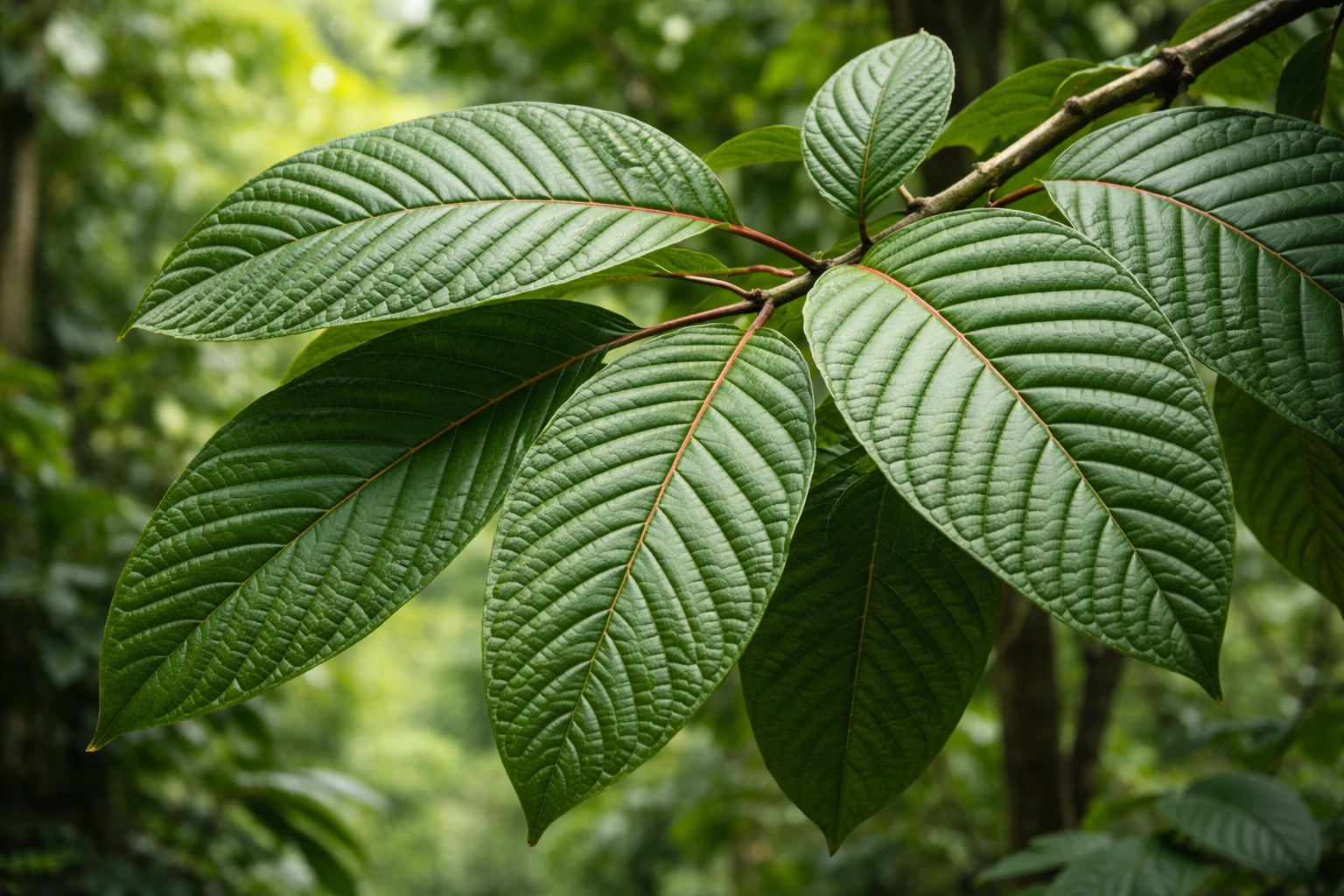

When exploring the world of kratom, many focus on the lush, dark green harvestable leaves from the Mitragyna speciosa tree that reach full potential for traditional uses. However, the process is far more selective than it appears. Not every kratom tree produces harvestable leaves in abundance, and even on a single tree, only specific foliage qualifies. Harvestable leaves are those that have developed sufficient size, thickness, and natural alkaloid concentrations to be considered ready for picking. This selectivity stems from the plant’s biology and its demanding growth requirements in tropical environments.
Mitragyna speciosa is an evergreen tree native to the wetland forests of Southeast Asia, where it thrives in warm, humid conditions with rich soil. In the wild, these trees can grow to impressive heights, often exceeding 50 feet, with broad, glossy leaves persisting throughout the year. Despite this constant greenery, achieving consistent harvestable leaves involves multiple factors, from the tree’s developmental stage to external influences that affect leaf quality.
The tree belongs to the Rubiaceae family, sharing relations with coffee and gardenia plants, which h ints at its preference for similar growing conditions. Its leaves are opposite in arrangement, oval-shaped, and can span up to eight inches in length when fully mature. The bark is smooth and grayish, and the tree produces small, yellow flowers in clusters, though these are not the focus of harvesting efforts.
The Importance of Tree Maturity
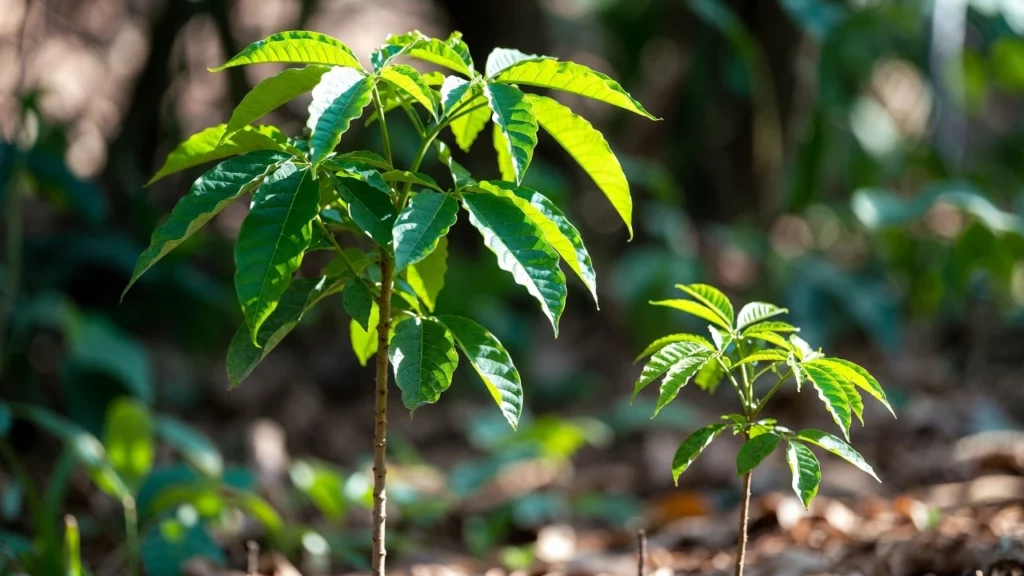
One of the main reasons not all kratom trees yield harvestable leaves is their age. Young Mitragyna speciosa plants prioritize establishing strong roots, sturdy trunks, and foundational branches over producing high-quality foliage. Seedlings and saplings generate leaves, but these are typically smaller and contain lower alkaloid levels. The early leaves serve primarily for photosynthesis, helping the plant build biomass rather than accumulating the secondary compounds that develop later.
It generally takes several years for a kratom tree to reach a stage where it consistently produces harvestable leaves. While alkaloid production can begin in the first or second year under ideal conditions, optimal concentrations and robust leaf development often require the tree to be at least three to five years old. During this growth period, energy is directed toward structural development rather than secondary metabolite accumulation in the leaves. Factors like pruning can influence this timeline; in cultivated settings, careful trimming encourages bushier growth, potentially leading to more harvestable leaves sooner, but it must be done judiciously to avoid stressing the plant.
Even after reaching maturity, the tree’s overall health and size influence yield. Larger, well-established trees tend to produce more vigorous foliage with higher potential alkaloid content. In contrast, trees that experience stunted growth due to poor initial conditions may never catch up, resulting in sparse or subpar leaves. Maturity also brings resilience; older trees can better withstand environmental fluctuations, ensuring a steadier supply of harvestable leaves over time.
Growth Stages and Their Impact on Leaf Production
Breaking down the growth stages further clarifies this. The seedling phase lasts about six months to a year, during which the plant is vulnerable and produces minimal foliage. The sapling stage follows, extending up to three years, where the focus is on height and branch development. Only in the juvenile to adult transition does the tree begin allocating resources to leaf quality. By the time a tree is five years old, it can enter a productive phase lasting decades, provided conditions remain favourable.
Leaf Maturity and Vein Colour Variations
On a mature kratom tree, leaves exist at different stages of development simultaneously due to continuous new growth. This means younger leaves coexist with older ones, but only the fully developed ones are typically selected as harvestable leaves. The tree’s evergreen nature allows for year-round leaf production, but this also means constant variation in maturity levels across the canopy.
Traditional harvesting focuses on mature leaves, which have had time to accumulate alkaloids like mitragynine. Immature leaves, often found on newer branches, are thinner and less potent. These young leaves are crucial for the tree’s ongoing photosynthesis but lack the density and compound buildup that make older ones desirable. Harvesters often climb or use tools to access mid-level branches, where leaves have balanced exposure to light and nutrients.
Understanding Vein Colours as Maturity Indicators
A key visual cue for leaf readiness is the colour of the central vein, which changes as the leaf ages. White-veined leaves come from the youngest growth, green-veined from mid-stage development, and red-veined from the oldest, most mature foliage. This progression is not due to different strains but rather the natural aging process, influenced by chlorophyll breakdown and pigment changes.
Many harvesters prefer red-veined leaves because they represent peak maturity, with thicker texture and potentially different alkaloid balances shaped by extended time on the tree. White and green leaves, while usable in some contexts, may not meet the criteria for harvestable leaves if the emphasis is on full development. The vein colour also correlates with leaf position; upper canopy leaves tend to be younger and whiter, while lower ones mature to red. This spatial distribution helps in efficient harvesting without damaging the tree.
Alkaloid Development in Leaves
Alkaloids form gradually as leaves mature. In early stages, basic structures dominate, but over months, complex compounds build up through biosynthetic pathways. Environmental cues trigger this, making mature leaves richer in content. This explains why rushing harvest from immature leaves yields less effective foliage.
Environmental Factors Influencing Harvestable Leaves
Mitragyna speciosa demands precise tropical conditions to produce quality foliage. Deviations can result in trees that struggle to develop harvestable leaves. The plant’s native habitat in floodplains and riverbanks provides clues: it favours areas with periodic flooding that enrich the soil but not constant waterlogging that could rot roots.
The plant thrives under the following ideal conditions:
- Consistent warmth, ideally between 75 and 95 degrees Fahrenheit
- High humidity levels above 60 percent
- Ample annual rainfall exceeding 80 inches
- Nutrient-rich, acidic soil with a pH around 5.5 to 6.5 and excellent drainage
- Partial shade from its native under story habitat, which supports better growth than full sun exposure (avoiding leaf scorch or reduced vigour)
- High organic content in the soil from decaying plant matter
- Balanced moisture to prevent drought stress or over-saturation
Light intensity affects photosynthesis rates; too little leads to leggy growth with few leaves, while too much prompts protective mechanisms that divert energy from alkaloid production. Temperature fluctuations, even minor ones, can disrupt growth cycles. In cooler periods, leaf development slows, delaying maturity. Water availability is critical; irregular watering leads to wilting or dropped leaves before they become harvestable.
Seasonal changes, such as drier periods, can concentrate compounds in leaves as the plant conserves resources, potentially enhancing quality. Conversely, excessive rain might promote rapid but less potent growth, with leaves expanding quickly but not accumulating sufficient alkaloids.
Regional differences across Southeast Asia also play a role, with variations in elevation, soil composition, and climate leading to diverse outcomes in leaf quality. For example, lowland areas might produce larger leaves, while higher elevations yield denser foliage due to cooler nights. Microclimates within forests further influence individual trees, explaining patchiness in harvestable leaves even in the same grove.
Soil and Nutrient Requirements
Soil fertility is paramount. Kratom trees draw heavily on key nutrients, and deficiencies can render leaves non-harvestable. Essential elements include nitrogen, phosphorus, and potassium as primary macronutrients, along with trace minerals such as magnesium and calcium for overall health. Symptoms of deficiencies, like chlorosis (yellowing) or malformed leaves, appear early. Organic mulches in natural settings provide slow-release nutrients, a practice mimicked in cultivation.
Challenges from Pests, Diseases, and Genetic Variation
Natural threats further limit the production of harvestable leaves. Insects, fungi, and other pathogens can damage foliage, causing discoloration, curling, or premature drop. Affected leaves rarely qualify for harvest, showing visible damage or reduced size, and severe infestations can reduce overall yield significantly. Preventive measures in wild populations rely on natural predators, but in denser plantings, vigilance is key.
Genetic diversity within the species means not all trees perform equally. Some individuals naturally exhibit stronger growth and higher alkaloid profiles, while others may lag, even under similar conditions. This inherent variation, stemming from seed propagation, explains why, in wild or cultivated settings, only certain trees reliably deliver harvestable leaves. Clonal methods from cuttings can standardize traits, but diversity persists.
Common Pests and Their Effects
Specific threats include a range of insects and diseases that directly impact leaf quality:
- Aphids and scale insects: Suck sap from foliage, leading to distortion and weakened leaves
- Leaf miners: Bore holes, causing visible trails and reduced photosynthetic ability
- Kratom hornworm caterpillars: Strip leaves bare, defoliating branches rapidly
- Spider mites: Cause stippling, yellowing, and fine webbing on undersides
- Fungi like powdery mildew or root rot: Thrive in humid conditions, resulting in spots, wilting, or defoliation
- Diseases such as anthracnose: Produce dark lesions, making leaves brittle and unsuitable
- Bacterial infections: Spread via wounds, weakening branches and reducing overall leaf output
Sustainable Practices and Selective Harvesting
Experienced growers and traditional harvesters employ selective methods to ensure long-term productivity. They pick only mature leaves, leaving younger ones to develop and support the tree’s health. This approach prevents over-stressing the plant, allowing it to continue producing harvestable leaves over many years. Harvesting is often done by hand, plucking individual leaves to minimize damage.
Over-harvesting immature or damaged foliage can weaken the tree, diminishing future yields. Balanced practices maintain the delicate equilibrium needed for consistent quality. In traditional communities, knowledge passed down generations guides timing, often aligning with lunar cycles or weather patterns for optimal leaf condition.
Long-Term Tree Management
Pruning shapes the tree for better airflow and light penetration, reducing disease risk and promoting even maturity. Fertilization with natural compost sustains soil health, while spacing prevents competition. These techniques extend a tree’s productive life, sometimes beyond 20 years.
Traditional Harvesting Practices in Southeast Asia
In the native regions of Thailand, Indonesia, Malaysia, and other parts of Southeast Asia, harvesting Mitragyna speciosa remains a skilled, labour-intensive process passed down through generations. Local communities have developed methods that prioritize the tree’s long-term health while selecting only the most suitable foliage. These time-honoured approaches underscore why selectivity is essential for obtaining true harvestable leaves.
Methods of Selection and Collection
Harvesters typically work by hand, climbing mature trees or using long poles to reach higher branches. They focus on identifying harvestable leaves by sight and touch: larger, thicker leaves from lower or mid-level branches that show full maturity, often indicated by darker colouration and prominent vein structure. Younger growth at the branch tips stays untouched to allow continued development and support the tree’s canopy. This selective approach ensures the plant regenerates quickly, with new leaves emerging within weeks.
Timing plays a key role in traditional practices. Many harvesters wait for specific seasonal cues, such as the transition from wet to drier periods, when leaves naturally concentrate their compounds. In some areas, cultural traditions influence the schedule, aligning picks with favourable weather or community rhythms to optimize leaf condition.
After selection, leaves are carefully plucked individually or in small clusters to avoid damaging stems. This minimizes stress on the tree compared to stripping entire branches. Experienced harvesters know that over-picking from one section can weaken growth, so they distribute efforts evenly across the canopy.
Post-Harvest Handling and Drying
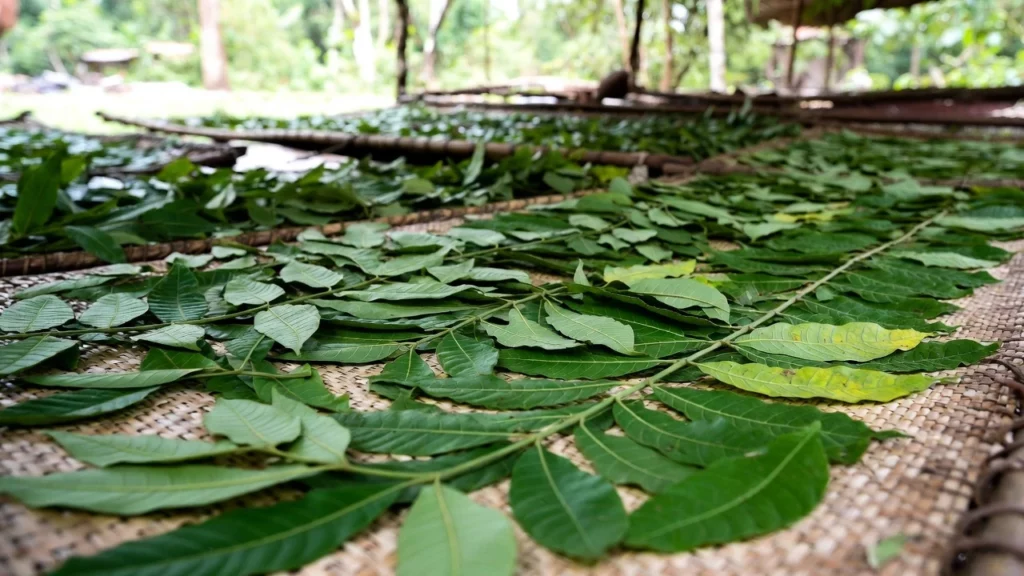
Once collected, the harvestable leaves undergo careful handling to preserve their qualities. Traditional methods often involve spreading the leaves in well-ventilated, shaded areas to dry slowly, preventing mold and maintaining natural characteristics. This indoor or covered drying protects from direct sun and rain, allowing even moisture loss over several days. In some communities, leaves are bundled or laid flat on mats, turned periodically for uniformity. This patient process reflects generational knowledge, ensuring the foliage retains its integrity from tree to final use.
The Balance of Tradition and Sustainability
These methods reflect a deep understanding of the plant’s biology. By leaving immature leaves and avoiding excessive removal, trees remain productive for decades in wild or semi-cultivated settings. This balance has allowed Mitragyna speciosa to thrive in its native ecosystems while providing consistent yields for local use. Modern adaptations in some farming communities incorporate these principles, combining hand selection with basic tools for efficiency. However, the core emphasis on maturity and restraint endures, ensuring that only truly harvestable leaves reach processing stages.
Frequently Asked Questions About Harvestable Leaves
Q: How long does it take for a kratom tree to start producing harvestable leaves?
A: While young trees may produce leaves within the first couple of years, truly harvestable leaves with optimal size and alkaloid content typically appear once the tree reaches three to five years of age, depending on growing conditions.
Q: Why do vein colours matter when determining if a leaf is harvestable?
A: Vein colour indicates the leaf’s maturity level. White veins mark younger leaves, green veins mid-maturity, and red veins the oldest, most developed foliage. Many traditional harvesters consider red-veined leaves the prime harvestable ones due to their extended development time.
Q: Can all leaves on a mature kratom tree be considered harvestable?
A: No. Even on a healthy mature tree, only the older, fully developed leaves qualify. Younger leaves toward the branch tips are left to mature further to support the tree’s health and future growth.
Q: What environmental conditions are most critical for producing harvestable leaves?
A: Consistent warmth (75-95°F), high humidity, ample rainfall, acidic well-draining soil, and partial shade are essential. Deviations from these tropical ideals often result in underdeveloped or low-quality foliage.
Q: How do pests or diseases affect whether leaves become harvestable?
A: Damage from insects, fungi, or bacteria can cause discoloration, distortion, or premature drop, rendering affected leaves unsuitable. Healthy trees free from severe infestations are far more likely to yield harvestable leaves.
Q: Is there a best time of year to harvest harvestable leaves?
A: In traditional practices, many prefer the transition from wet to drier seasons, when leaves naturally concentrate their compounds. Timing varies by region but often aligns with periods that enhance leaf maturity.
Q: Why is selective harvesting important for ongoing production of harvestable leaves?
A: Picking only mature leaves while leaving younger ones allows the tree to regenerate quickly and remain productive for decades. Over-harvesting stresses the plant and reduces long-term yield and quality.
Conclusion: Why Selectivity Matters for Quality
The reasons behind limited harvestable leaves highlight the intricacies of Mitragyna speciosa cultivation. From extended maturation periods to specific environmental needs and careful selection based on vein colour and condition, multiple hurdles must be overcome. This process ensures that only the best foliage is utilized, preserving the plant’s integrity.
This natural selectivity contributes to the plant’s unique characteristics, rooted in its evolutionary adaptations to tropical forests. Understanding these factors provides deeper appreciation for why not every leaf or tree reaches the harvestable stage, emphasizing patience and respect for the plant’s growth cycle. In essence, producing harvestable leaves requires the right combination of time, conditions, and care. Trees that fall short in any area may bear foliage, but it often lacks the development needed for traditional purposes.
Disclaimer
The information provided in this blog is for educational and informational purposes only and is not intended to promote, endorse, or recommend the use of kratom (Mitragyna speciosa) or any products derived from it. Health Canada has not authorized any kratom products for sale as natural health products, foods, or drugs for human consumption.
Health Canada has issued warnings about kratom, stating that it may pose serious health risks when swallowed or inhaled, including side effects such as drowsiness, nausea, vomiting, seizures, liver toxicity, excessively rapid heartbeat, respiratory depression, potential for abuse, dependence, addiction, and withdrawal symptoms similar to opioids. In rare cases, severe adverse effects or death have been reported, particularly when kratom is combined with other substances.
While some individuals report perceived benefits such as pain relief or mood enhancement, these claims are not supported by sufficient scientific evidence from well-controlled studies to establish safety or effectiveness for any medical condition. Kratom use can present significant health risks, especially for pregnant or breastfeeding individuals, those with pre-existing medical conditions, or anyone taking medications, due to possible interactions.
Always consult a qualified healthcare professional for personalized health advice, and do not use kratom as a substitute for approved medical treatments or to self-manage withdrawal from opioids or other substances. The legal status of kratom in Canada allows personal possession but prohibits its sale for human consumption; regulations may vary and continue to evolve. Product quality, purity, potency, and potential contamination (including with heavy metals or other harmful substances) can vary widely, increasing risks.
The author and publisher of this content are not liable for any actions taken based on the information provided herein, including any health consequences, legal issues, or other outcomes resulting from the use or misuse of kratom.