


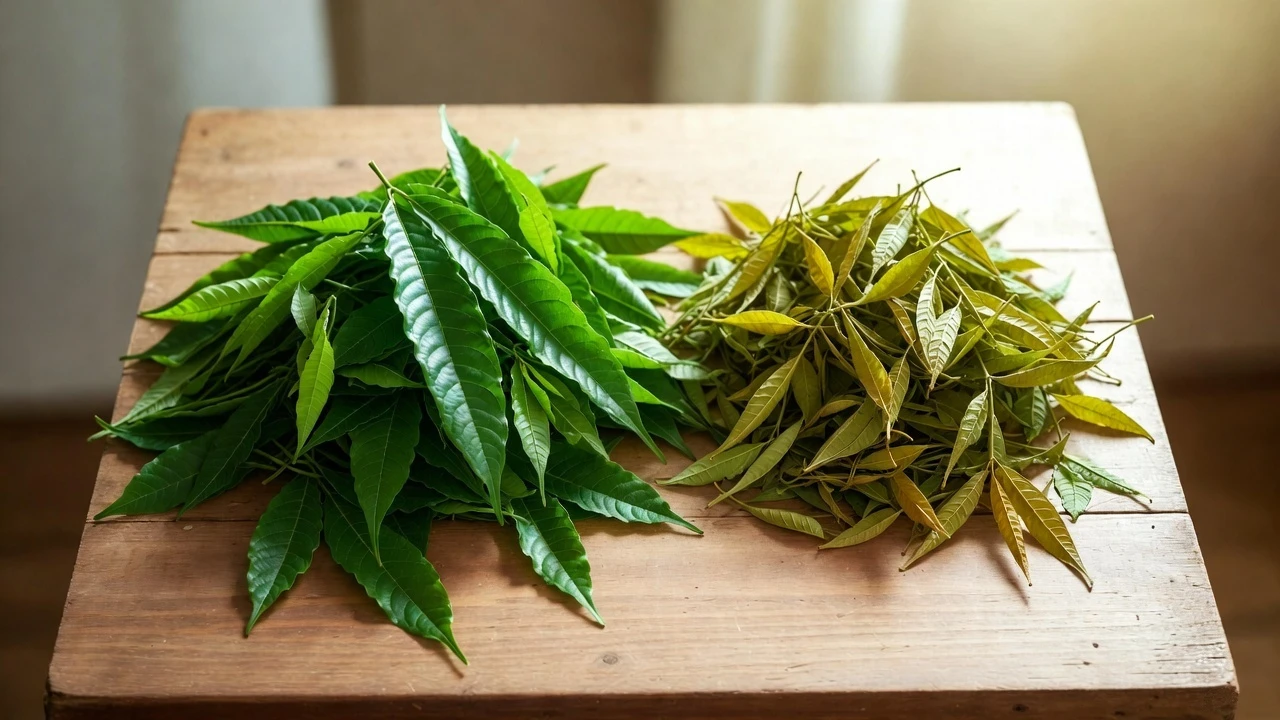

Have you ever opened a fresh bag of kratom and wondered why some batches look a little less vivid than others, or why certain strains are intentionally pale or yellowish instead of deep green? If you’re asking why kratom leaves turn yellow after harvest, the answer lies in a completely natural chemical process that starts the instant the leaf is picked. This isn’t a defect, poor storage, or old product. It’s post-harvest oxidation at work, guided by farmers to create the exact colours and characteristics you see on the market.
Fresh kratom (Mitragyna speciosa) leaves on the tree are a rich, vibrant green thanks to high levels of chlorophyll. The moment they’re harvested, that living supply of water and nutrients is cut off. Respiration continues briefly, but oxygen from the air quickly begins reacting with the leaf’s internal compounds. Chlorophyll starts to break down, underlying yellow pigments become visible, and the final colour you get depends entirely on how that oxidation is managed in the hours and days after picking.
The Chemistry of Colour: Chlorophyll’s Slow Goodbye
Chlorophyll is a magnesium-containing molecule responsible for the intense green of living leaves. As long as the leaf is attached to the tree, chlorophyll is continuously replenished. Once harvested, enzymes inside the leaf replace the central magnesium ion with hydrogen in a process called pheophytinization. The resulting pheophytin molecule is grayish-olive rather than green, so the bright colour immediately begins to dull.
At the same time, yellow-orange carotenoids (pigments that were always present but masked by chlorophyll) start to dominate visually. These carotenoids served protective roles while the leaf was alive, and now they give the first pale or yellowish tint as the green fades. This is the same reason autumn leaves reveal brilliant yellows and golds: chlorophyll disappears first, and the carotenoids that remain are suddenly unmasked.
Oxygen’s Role: The Spark of Enzymatic Reactions
When a leaf is cut, cell walls rupture and previously separated enzymes mix with their substrates. The key player is polyphenol oxidase (PPO). In the presence of oxygen, PPO rapidly oxidizes phenolic compounds into quinones, which then polymerize into larger pigmented molecules. In mild conditions these polymers are yellowish. Under more intense oxidation they darken to brown and eventually reddish-brown. Flavonoids and other polyphenols in kratom contribute to this palette, softening the green and adding subtle warm tones as oxidation progresses.
The Three Main Factors That Control How Fast (and How Far) Oxidation Goes
- Temperature: Enzyme activity roughly doubles for every 10 °C increase. Leaves left in tropical heat (30–38 °C) can start fading within hours, while cooling the fresh harvest to 15 °C or lower dramatically slows the process and helps retain a brighter green.
- Light Exposure: Direct or strong indirect sunlight accelerates chlorophyll breakdown through photo-oxidation and quickly unmasks the underlying yellow carotenoids. Controlled sunlight is the main tool farmers use when they want a true yellow or gold strain.
- Humidity & Drying Speed: Fresh leaves are 70–80 % water. Too-fast drying in low humidity collapses cell walls and speeds enzymatic reactions. Excessively high humidity without airflow invites unwanted fermentation and darker colours. The sweet spot (slow, steady moisture removal in ventilated shade) gives the most even, predictable colour transition.
These three variables explain why one farmer’s harvest can stay vivid green while another’s turns noticeably pale or yellow in just a couple of days.
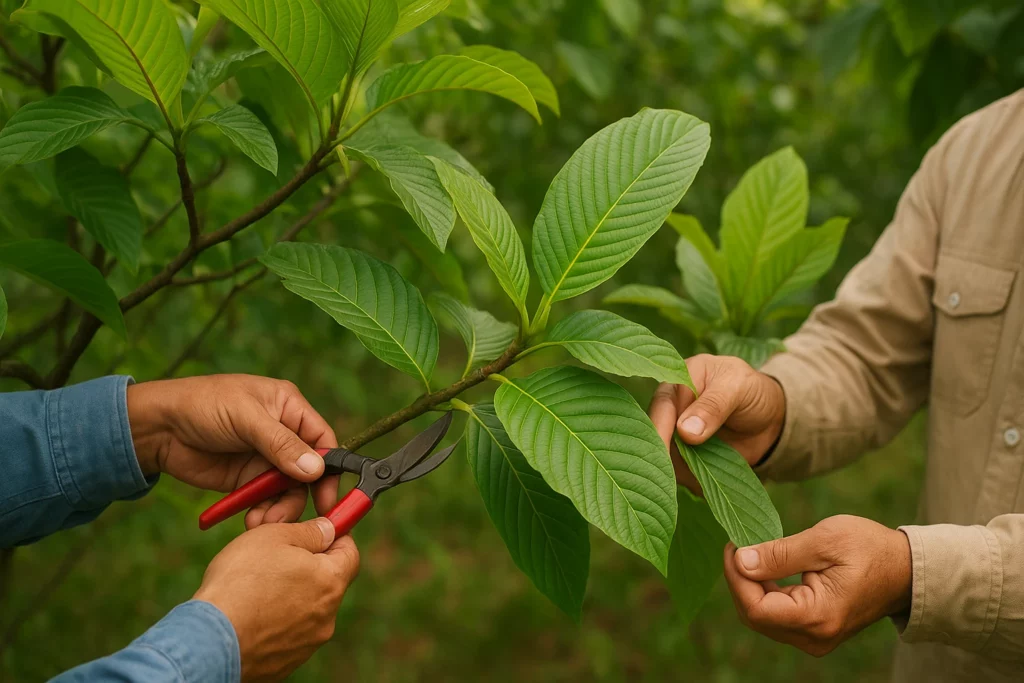
Drying Techniques: Crafting Colour Through Intent
Farmers don’t leave oxidation to chance. They steer it with specific drying methods.
- Indoor air drying in dark, well-ventilated rooms with fans produces the classic bright to mid-tone greens most people associate with fresh kratom. Minimal light and gentle airflow slow chlorophyll loss and keep carotenoid yellows hidden.
- Shade drying under roofs or in screened barns allows a little more light and slightly longer drying time. The result is often a softer, slightly duller green with faint yellowish undertones (still green-dominant but clearly different from indoor-dried material).
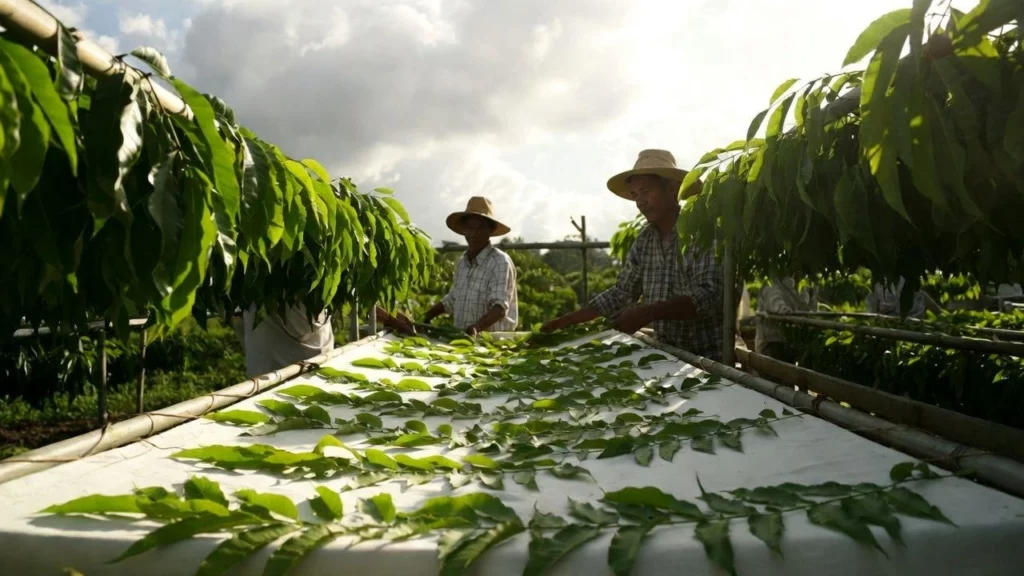
- Controlled sun or partial-sun drying is the primary way true yellow and gold strains are created. A day or two of carefully managed sunlight accelerates photo-oxidation, stripping away chlorophyll fast enough for the carotenoids to shine through. The leaves dry to a consistent pale yellow rather than olive or brown.
- Fermentation (used for most red strains) pushes oxidation much further. Leaves are lightly piled or bagged for 2–5 days in warm, humid conditions, allowing both enzymatic and microbial activity to transform pigments into deep reds and browns. Any yellow phase is brief and quickly overtaken.
How Post-Harvest Oxidation Reshapes the 40+ Kratom Alkaloids
The visible colour change is only the surface. Beneath it, the same oxygen and enzymes quietly rewrite the alkaloid profile that actually determines how a strain feels. More than 40 alkaloids have been identified in Mitragyna speciosa, but these seven undergo the most important and best-documented shifts during the first 72 hours after harvest and beyond:
| Alkaloid | Typical Level / Behavior in Fresh (Green) Leaf | Change During Controlled Oxidation (Yellow / Gold / Red) |
|---|---|---|
| Mitragynine | Dominant (50–70 % of total) | Slightly decreases; small portion converts to the much more potent mitragynine pseudoindoxyl |
| 7-Hydroxymitragynine | Trace (<0.05 %) | Increases 5–20× in first 48 hours — the main reason many yellow/red strains feel stronger |
| Speciociliatine | Usually <5 % | Rises dramatically (often 25–35 % in reds) — smooths and balances the experience |
| Paynantheine | Second most abundant | Stable or slight increase — contributes muscle-relaxant effects |
| Speciogynine | Moderate levels | Stable or rises — adds heavier body feel in oxidised strains |
| 9-Hydroxycorynantheidine & oxindoles | Very low | Increase noticeably in yellow/gold phase — linked to clean, mood-lifting qualities |
| Corynoxine A & B | Present in greens | Gradually degrade with heat/oxygen — lowest in fermented reds |
Key takeaway: A fresh green powder might show 2.2 % total alkaloids and feel sharp and stimulating. A yellow or gold from the same trees can test at 1.6–1.9 % yet feel stronger and smoother because the ratio has shifted toward 7-hydroxymitragynine, pseudoindoxyl, and speciociliatine. This is why lab numbers alone never tell the full story.
Alkaloid Evolution: More Than Just a Colour Change
Oxidation doesn’t stop at pigments. It subtly alters the alkaloid profile. Mitragynine and other alkaloids can undergo slow conversion or binding during the drying and fermentation stages. Mild, controlled oxidation (the kind that produces yellow strains) often yields a smoother, more balanced feel, while extensive fermentation creates the heavier profile typical of reds. Well-handled yellow strains are not “weaker” than greens. They simply represent a different point on the same chemical continuum.
Storage After You Bring It Home
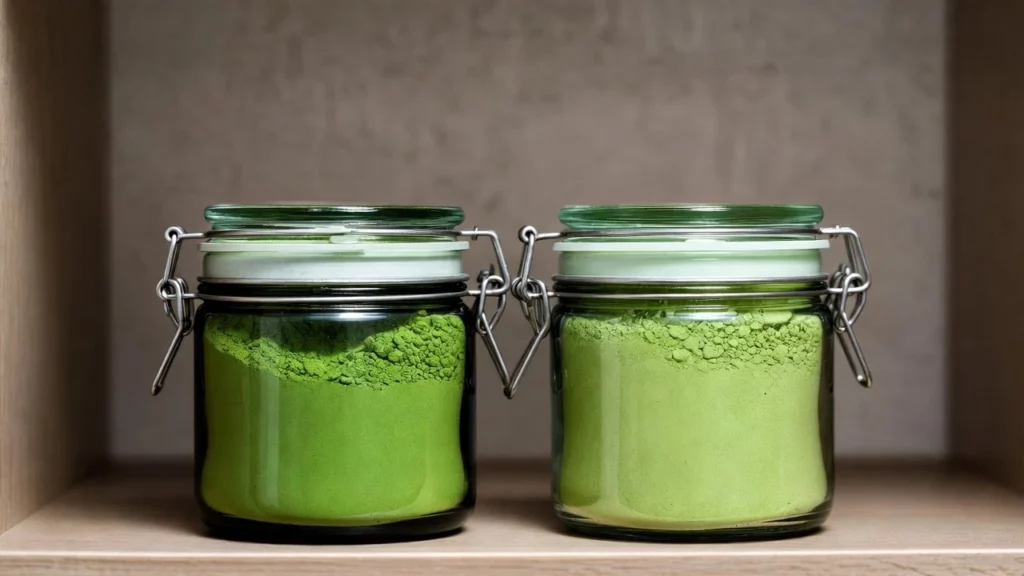
Once kratom is fully dried and ground, oxidation continues, but at a snail’s pace. Over months in a cupboard, a bright green powder will gradually fade to a paler, duller green (never a true yellow under normal conditions). Light, heat, and air exposure are still the culprits, but the surface-area-to-volume ratio of fine powder means the change is slow and limited to softening rather than dramatic yellowing. Store in cool, dark, airtight containers and the colour you received is the colour you’ll keep for a very long time.
Separating Myth from Reality
- Yellow colour in a freshly opened bag labeled “Yellow” or “Gold” = intentional post-harvest processing, not age or damage.
- A once-vibrant green powder that has dulled to pale green after a year = normal, slow oxidation in storage.
- Sudden bright yellow in a bag that arrived green = extremely rare and usually indicates an entirely different batch was shipped.
Experienced users judge quality by aroma, texture, fineness, and lab results far more than by exact shade of green.
FAQ: Common Questions About Why Kratom Leaves Turn Yellow
Q: Will my green kratom eventually turn yellow if I store it for a long time?
A: No. Under normal storage conditions (cool, dark, airtight), green kratom powder slowly fades to a paler or duller green over 1–3 years. It will never become truly yellow. A distinct yellow colour in powder is always the result of intentional post-harvest processing, not aging.
Q: Are yellow or gold strains weaker because they look “older”?
A: Not at all. Many yellow/gold strains feel stronger or smoother than greens from the same farm because controlled oxidation increases 7-hydroxymitragynine and mitragynine pseudoindoxyl while converting the profile toward speciociliatine and other relaxing alkaloids.
Q: Do red-vein leaves on the tree become red powder and green-vein leaves become green powder?
A: No. The vein colour you see on a living leaf has almost nothing to do with the final powder colour. All leaves start with the same green chlorophyll and are classified based entirely on matuity and age of the tree.
Q: Is sun-dried yellow kratom lower quality than indoor-dried green?
A: Quality is determined by cleanliness, freshness, and proper handling (not by colour). A well-made sun-dried yellow can be cleaner, more consistent, and more potent than a poorly handled indoor green.
Q: Why do some lab reports show lower total alkaloid percentages in yellow and red strains?
A: Because some mitragynine is converted into other alkaloids (7-OH-mitragynine, pseudoindoxyl, speciociliatine, etc.) during oxidation. The total percentage may drop slightly, but the resulting profile is often more bioactive, which is why the effects can feel stronger.
Q: Can I make my own yellow kratom at home by leaving green powder in the sun?
A: No. Once the leaf is fully dried and ground, the enzymatic reactions that create yellow colour are finished. Exposing finished powder to sun will only degrade alkaloids and create off-flavours without producing a true yellow strain.
Q: Is fermented red kratom basically “rotting” leaves?
A: No. Proper fermentation is a controlled, aerobic-to-anaerobic process lasting 2–5 days at specific temperature and humidity levels. Uncontrolled rotting would produce mould, off-odours, and unsafe material. Good red kratom is as clean and safe as green.
Conclusion
When kratom leaves turn yellow, it’s almost always because a farmer deliberately allowed controlled light and oxygen exposure shortly after harvest to unmask natural carotenoids and create a specific strain. The same plant, harvested from the same tree, can become bright or deep green depending only on how the first few days after picking are managed.
Understanding post-harvest oxidation (and the deeper alkaloid transformations that ride alongside it) removes confusion and lets you choose strains based on the experience you want rather than worrying that colour equals quality. Every shade on the shelf is just a different chapter of the same natural story, written by sunlight, air, and careful hands.
Disclaimer
The information provided in this blog is for educational and informational purposes only and is not intended to serve as medical advice, diagnosis, or treatment. Kratom (Mitragyna speciosa) is an unregulated botanical substance whose safety, efficacy, and long-term health effects have not been fully established by rigorous clinical research. Kratom is not approved by the U.S FDA or Health Canada for any medical use.
Use of kratom carries known risks, including but not limited to dependence, addiction, withdrawal symptoms, nausea, constipation, dizziness, respiratory depression, liver toxicity and seizures. These risks are especially high when kratom is combined with other substances such as prescription medications, alcohol, benzodiazepines, or other central nervous system depressants. Individuals with pre-existing medical conditions, those who are pregnant or breastfeeding, and anyone taking prescription or over-the-counter medications should avoid kratom entirely due to the high risk of dangerous interactions.
Consult a qualified healthcare professional before considering kratom for any reason, especially if you are seeking relief from pain, opioid withdrawal, anxiety, or any other health condition. Self-treatment with kratom can delay proper medical care and may worsen underlying conditions. The author and publisher of this article assume no liability for any adverse effects resulting from the use or misuse of kratom or the information presented here. Personal choices regarding kratom are the sole responsibility of the individual user.