


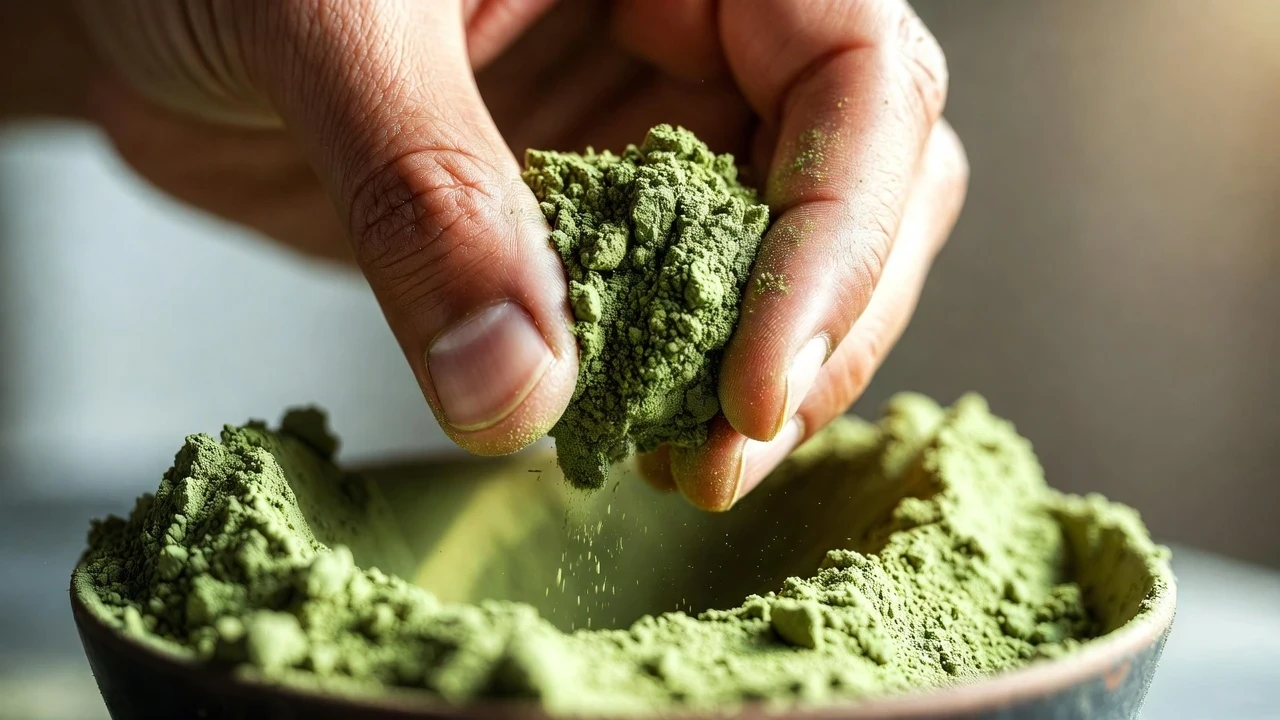

If you’ve ever opened a fresh bag of kratom and noticed that the fine powder has turned into little lumps or even hard chunks, you’re not alone. Clumpy kratom is one of the most frequent questions people have when they start buying in larger amounts or storing it for more than a few weeks. The good news is that almost every single time, those clumps are completely normal and don’t mean the product has gone bad. So what actually causes kratom powder to clump together, and when (if ever) should you be concerned? Let’s walk through the real reasons this happens and what you can do about it.
What Is Clumpy Kratom and Why It’s Not Always a Red Flag
Clumpy kratom refers to when the typically loose, powdery form of Mitragyna speciosa starts forming soft aggregates or firmer nodules, often resembling damp flour or packed spices. This phenomenon is widespread among botanical powders and stems from environmental interactions rather than any inherent defect in the leaf itself. For newcomers, spotting clumps can spark worries about contamination, age, or potency loss, but in reality, it’s a benign trait of natural, unprocessed products, much like how pure honey crystallizes over time without losing its benefits.
Unlike synthetic supplements with added stabilizers, authentic kratom lacks those extras, making it more susceptible to everyday factors. Rest assured, clumpy kratom retains its full profile of alkaloids and efficacy unless accompanied by clear spoilage signs, which we’ll cover later. By recognizing this as a standard occurrence, you can shift from concern to confidence, focusing instead on optimal storage and handling for the best experience.
1. Humidity Is the Number-One Culprit
Kratom (Mitragyna speciosa) leaves are dried and ground into an ultra-fine powder in Southeast Asia, where the air is often hot and humid. Once that powder is packaged and shipped across the world, it usually lands in places with very different climates. The powder itself is hygroscopic, which is a fancy way of saying it loves to absorb moisture from the air.
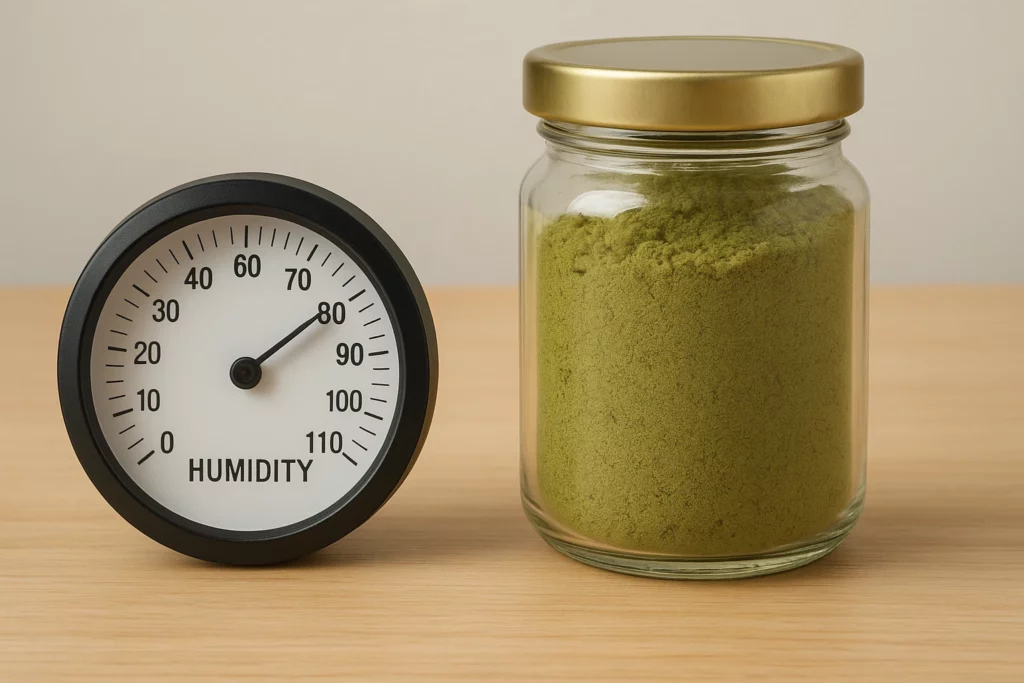
When the relative humidity in your room goes above roughly 50-55%, the microscopic particles on the surface of the kratom start pulling in water molecules. Those water molecules act like tiny bridges between particles, and before long you feel soft or hard lumps. This is exactly the same thing that happens when table salt gets clumpy in the summer or when brown sugar hardens in the bag.
In Canada especially, we see big swings in indoor humidity. Winter heating dries the air out to 20-30% RH, then spring and summer can push it back up to 60-70% indoors if you don’t run a dehumidifier or air conditioning. Those rapid changes are perfect conditions for clumpy kratom.
2. Temperature Fluctuations Speed the Process Up
Temperature and humidity are close cousins. Warm air can hold much more moisture than cold air. If you leave a bag of kratom on a kitchen counter near a window, the powder can go through daily temperature cycles: cool at night, warm during the day. Every time the temperature rises, the air around the powder expands and pulls in more moisture. When it cools again, that moisture has nowhere to go except into the powder itself.
This is why people who store kratom in bathrooms, garages, or basements often notice clumping faster than people who keep it in a climate-controlled bedroom or living room.
3. Particle Size Plays a Bigger Role Than Most People Realize
Not all kratom powder is ground to the same fineness. “Super fine,” “nano,” or “micro” powders have an average particle size under 50 microns (sometimes as low as 20-30 microns). The finer the grind, the more surface area each gram has, and the faster it can absorb moisture.
Standard or “regular” powders are usually in the 100-150 micron range and clump much less dramatically. If you switched from a coarser traditional powder to an ultra-fine one and suddenly noticed more clumping, particle size is almost certainly part of the equation.
4. Natural Plant Oils and Resins Contribute
Fresh kratom leaves contain small amounts of natural oils, fats, and resins. During the drying and grinding process, some of those compounds remain in the final powder. These plant lipids are slightly sticky at room temperature and become even stickier when they absorb a bit of moisture.
Think of it like the difference between all-purpose flour and almond flour. The extra fat content in almond flour makes it clump more easily. The same principle applies here. Red-vein and gold/bentuangie powders often feel a little “heavier” or clumpier than clean green or white powders because they tend to retain more of those natural compounds during processing.
5. Packaging and Sealing Matters More Than You Think
Most reputable vendors ship kratom in thick, food-grade bags with a heat-sealed inner layer and sometimes a zip-top. If that seal is perfect and you keep the bag closed, very little air exchange happens. But the moment the bag gets a tiny tear, is left partially open, or you transfer the powder to a plastic jar with a loose lid, you’ve just given humidity a freeway into your stash. Even “airtight” containers aren’t always airtight if the gasket gets old or you don’t fully close the lid every single time.
6. Electrostatic Charge Can Create Temporary Clumps
This one surprises a lot of people. When ultra-fine powders are poured or shaken, the particles rub against each other and build up static electricity. That static charge makes them stick together in fluffy clumps that look a lot like moisture clumping but break apart with almost no pressure. You can often tell the difference by touch: moisture clumps feel cool and slightly damp; static clumps feel dry and fall apart the moment you squeeze them. Static clumping is more common in very dry winter air than in humid summer conditions.
7. Age and Oxidation (Rarely the Real Problem)
Old, poorly stored kratom can oxidize and form harder chunks, but this usually takes many months to years and comes with obvious colour and aroma changes (fading from bright green to brownish, weak or rancid smell). In almost every case people complain about, the kratom is still well within its usable life and the clumping is caused by one of the first six reasons above.
How to Tell If Clumpy Kratom Is Still Good
- Colour: Still bright or deep depending on strain (no dull brown or gray tones)
- Smell: Earthy, grassy, slightly bitter (no sour, moldy, or rancid odor)
- Taste: Normal bitterness (no off or moldy flavors)
- Clumps break apart easily between fingers or with a quick shake
- No visible mold spots (tiny black or white fuzzy dots)
If your powder passes those checks, it’s perfectly fine to use. Many experienced users actually prefer slightly clumpy powder because it often means the product wasn’t over-dried or processed with anti-caking agents.
Easy Ways to Restore Clumpy Kratom to Fluffy Powder
Gentle Manual Breaking
The simplest method is often the best. Pour the powder into a large bowl and use a fork, whisk, or even your fingers to gently crush the lumps. Most moisture-related clumps break apart in under a minute with almost no effort. This works especially well for softer clumps and keeps everything 100% pure with no heat or tools required.
Food-Safe Desiccant Packets
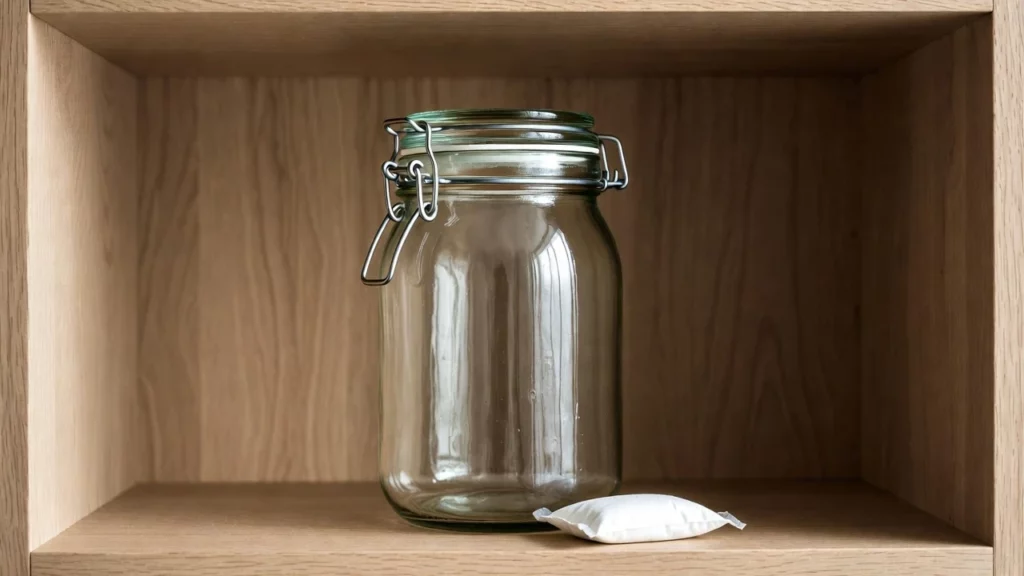
Drop one or two food-grade silica gel packets (the kind marked safe for dry foods) into the bag or jar and seal it for 24-48 hours. The silica absorbs excess moisture without touching the powder directly. After a day or two, remove the packets and give the bag a shake; the majority of clumps will have loosened or disappeared entirely.
Low-Heat Drying (Oven-Light Method)
Spread the powder in a thin, even layer on a baking sheet. Turn your oven to its lowest possible setting (usually 100-120 °F / 38-49 °C) or simply leave the oven light on and the door closed. Let it sit for 20-40 minutes, stirring once halfway through. The gentle warmth drives off surface moisture without risking alkaloid degradation. Let it cool completely before returning it to storage.
Dehydrator Method
If you own a food dehydrator, set it to 95-105 °F (35-40 °C) and run the powder for 30-60 minutes on parchment-lined trays. This is one of the safest and most even ways to remove moisture while keeping temperatures well below any point that could affect quality.
Quick Pulse in a Clean Grinder or Sifting
For stubborn hard chunks, a 5-10 second pulse in a dedicated clean coffee or spice grinder restores an ultra-fine texture instantly. Alternatively, pass the powder through a fine mesh sieve or tea strainer. Both methods are fast and effective, though they do create a bit of dust in the air.
Long-Term Prevention That Actually Works
Store in a consistently cool (60-70 °F / 15-21 °C), dark place away from heat sources and sunlight. Use containers with proven airtight seals or divide bulk amounts into smaller vacuum-sealed or heat-sealed bags. Keep room humidity between 35-50% year-round; a small dehumidifier in the storage area makes a huge difference in Canadian homes. Consider adding an inexpensive humidity indicator card so you always know the exact conditions inside your jar.
A Note on Anti-Caking Additives
Some brands mix in rice flour, magnesium stearate, or silica to keep powder flowing freely in any condition. That’s why certain products almost never clump with these anti-caking additives. Many experienced users prefer pure, additive-free leaf and are happy to spend thirty seconds breaking up lumps if it means they’re getting nothing but the plant itself.
Frequently Asked Questions About Clumpy Kratom
Q: Is clumpy kratom still safe to use?
A: Yes, almost always. If the colour is still normal, it smells earthy and slightly bitter (not sour or moldy), and the clumps break apart easily, it’s perfectly safe and just as effective as fresh fluffy powder.
Q: Does clumpy kratom mean it’s low quality or fake?
A: Usually the opposite. Pure, additive-free kratom with no rice flour or anti-caking agents clumps naturally. Brands that never clump under any conditions are often the ones adding flow agents.
Q: Will heating kratom in the oven destroy the alkaloids?
A: No, not at the low temperatures we recommend (under 120 °F / 49 °C). Mitragynine and 7-hydroxymitragynine remain stable well below 150 °C for short periods, so the oven-light or dehydrator trick is completely safe.
Q: Why does my red strain clump more than green or white strains?
A: Red-vein and fermented strains retain more natural plant oils and resins from longer drying/oxidation processes. Those lipids attract and hold moisture more easily, making reds clump faster.
Q: My kratom turned into a solid brick. Is it ruined?
A: Almost never. Even rock-hard bricks can be fully restored with low-heat drying, the freeze-thaw method, or a quick pulse in a clean grinder. Only discard it if it smells rancid or shows visible mold.
Q: I live in a very humid area (coastal BC, Ontario summer, etc.). Will it always clump?
A: It clumps faster in high humidity, but you can keep it fluffy year-round with a small room dehumidifier, vacuum-sealed smaller bags, and a couple of food-grade silica packets. Many coastal users do exactly this and never see clumps.
Q: Does finer “nano” powder expire faster than regular coarse powder?
A: No, shelf life is identical when stored properly (2–3+ years). Ultra-fine powder just has far more surface area, so it absorbs moisture and clumps much quicker.
Conclusion
Clumpy kratom is simply a natural characteristic of an ultra-fine, unadulterated botanical powder reacting to its environment. It’s the same reason high-quality matcha, sea salt, or cocoa powder can clump: they’re real plant materials without chemical flow agents.
Once you understand the role of humidity, temperature, particle size, and storage conditions, clumping stops being a mystery and becomes something you can prevent or fix in minutes. With the techniques and answers above, you can keep your powder as fluffy as the day it arrived, or you can simply break up the occasional lump and enjoy knowing you’re working with pure, minimally processed leaf. Either way, those little clumps are almost never a sign of poor quality; more often they’re proof that what you have is exactly what nature grew.
Disclaimer
The information provided in this blog is for educational and informational purposes only and is not intended to serve as medical advice, diagnosis, or treatment. Kratom (Mitragyna speciosa) is an unregulated botanical substance whose safety, efficacy, and long-term effects have not been fully established by robust clinical research. Potential side effects may include nausea, constipation, dizziness, liver toxicity, and, in rare cases, more severe outcomes. Kratom may also interact with prescription medications, over-the-counter drugs, alcohol, and other substances, potentially leading to dangerous or unpredictable effects.
Kratom is not approved by Health Canada, the U.S. Food and Drug Administration (FDA), or most other regulatory agencies for any medical use. In Canada, kratom is legal to possess but may only be sold for purposes not intended for human consumption (e.g., as an incense or research material). Individuals who are pregnant, breastfeeding, under 18, or who have pre-existing medical conditions (especially liver, kidney, heart, or psychiatric conditions) should avoid kratom entirely. If you are taking any medication or have any health concerns, consult a qualified healthcare professional before considering kratom use.
Never operate vehicles or heavy machinery while under the influence of kratom, as it may impair judgment and reaction time. The author and publisher of this blog assume no liability for any injury, loss, or damage resulting from the use or misuse of kratom or from the suggestions provided. Use kratom at your own risk and in accordance with all applicable laws and regulations in your jurisdiction.