


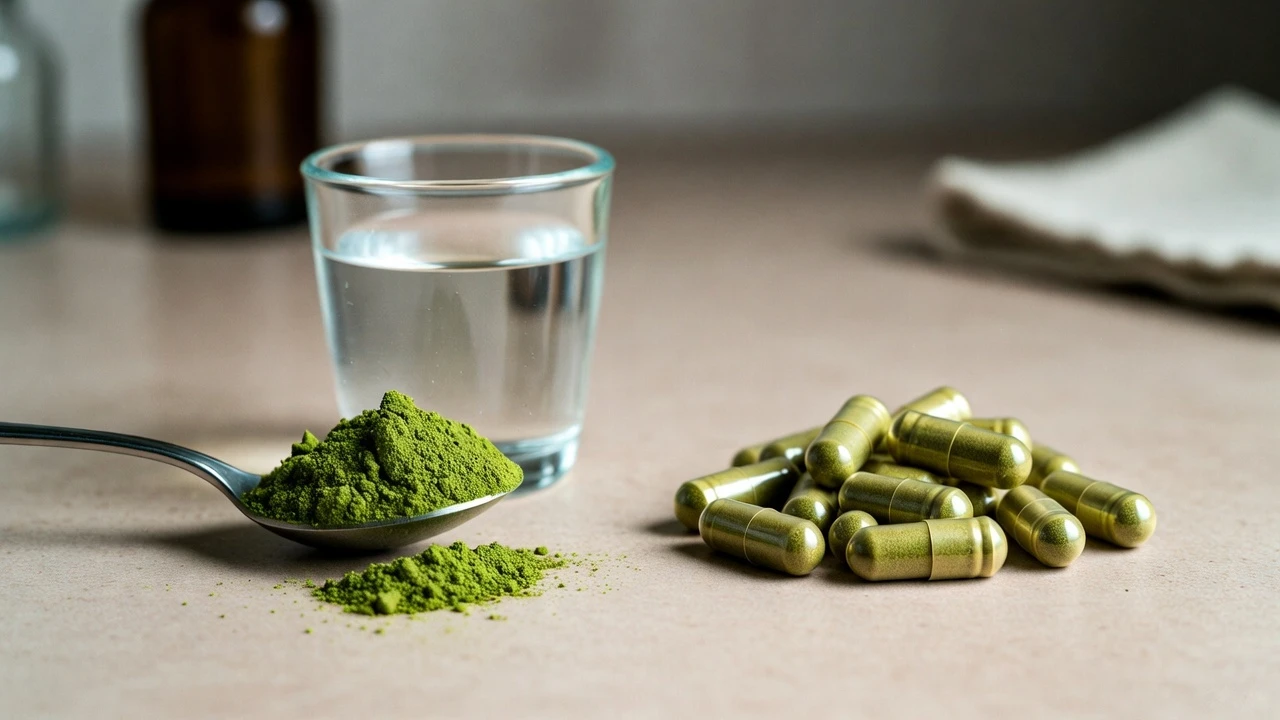

When it comes to taking kratom, two methods dominate the conversation: toss and wash vs kratom capsules. Each has passionate fans and equally passionate critics. One side swears by the raw intensity and speed of tossing powder straight into the mouth, while the other refuses to touch anything that isn’t neatly sealed inside a capsule. Both approaches work, but they deliver dramatically different experiences in speed, cost, convenience, taste, and even how your body processes the plant.
How Toss and Wash Works in Practice
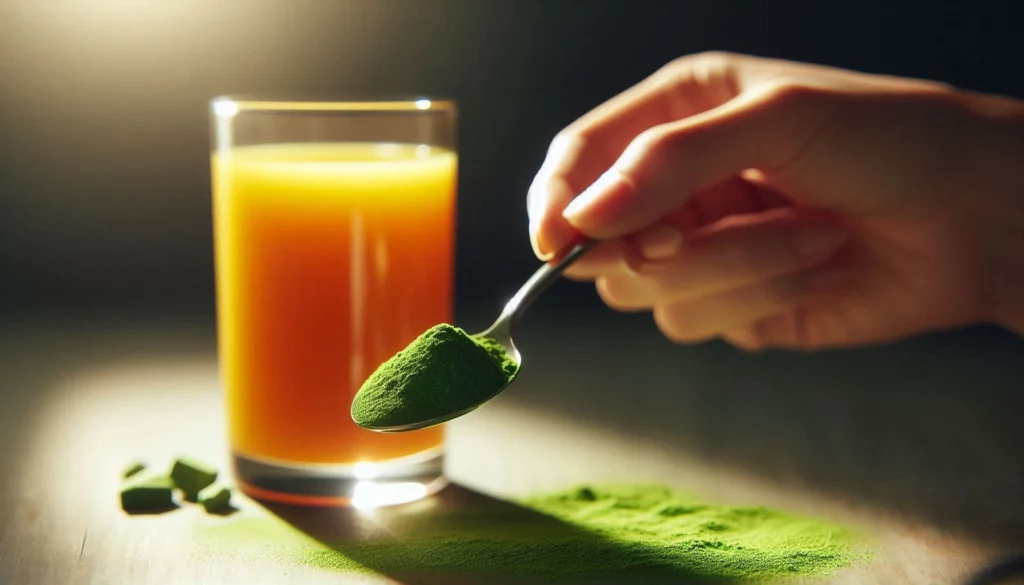
Toss and wash is exactly what it sounds like. You measure your desired amount of kratom powder, toss it to the back of your tongue, and wash it down with water, juice, or tea. Most people use between 2 and 5 grams per dose, though experienced users sometimes go higher. The powder reaches your stomach almost immediately. There is no gelatin shell to dissolve, no delayed release. Within 10 to 20 minutes, most people feel the first wave of effects. That rapid onset is the single biggest reason long-time users refuse to switch to anything else.
How Kratom Capsules Work
Kratom capsules are pre-filled (or hand-filled) with finely ground kratom powder, usually in 500 mg or 600 mg amounts per capsule. A typical dose ranges from 6 to 12 capsules, depending on strength and tolerance. The outer shell is almost always vegetarian or gelatin-based and must dissolve completely in stomach acid before the powder becomes available.
This dissolution process adds anywhere from 15 to 45 minutes to onset time compared to raw powder. In exchange, you get zero taste and perfect portability.
Side-by-Side Comparison: The Facts at a Glance
| Aspect | Toss and Wash | Kratom Capsules |
|---|---|---|
| Onset time | 10–25 minutes | 30–70 minutes |
| Peak effects | Usually stronger and sharper | Smoother, more gradual |
| Bioavailability | Highest possible | Slightly reduced by capsule material |
| Taste | Extremely bitter, chalky | None |
| Cost per 5 g dose | $0.20–$0.40 | $0.70–$1.40 |
| Convenience | Requires scale and liquid | Grab and go |
| Portability | Messy if traveling | Perfect for work, gym, flights |
| Dosing accuracy | Depends on your scale | Pre-measured |
| Stomach comfort | Higher chance of nausea if taken wrong | Generally gentler |
| Discretion | Hard to hide in public | Completely discreet |
Speed and Strength: Why Toss and Wash Usually Hits Harder
Why the Same Dose Feels Stronger with Toss and Wash
The difference in onset is not just about waiting longer with capsules. Because the powder contacts your stomach lining immediately, absorption begins right away. Many users report that the same strain and the same gram amount feels noticeably stronger when tossed and washed compared to capsulated.
The capsule shell itself is part of the reason. Even high-quality vegetarian capsules take time to break down, and a small percentage of the powder can get trapped inside undissolved shell fragments that pass through your system.
How Capsule Processing Can Affect Minor Alkaloids
Processing for kratom capsules often involves finer grinding and machine-filling that can slightly reduce levels of less common alkaloids like rhynchophylline, which contribute to kratom’s subtle mood-balancing qualities. Vendor alkaloid profiles from recent batches indicate these compounds remain more intact in unprocessed loose powder, potentially enhancing the overall experiential nuance for users sensitive to strain variations. This preservation edge is particularly noticeable in red vein varieties, where those secondary alkaloids help temper the intensity without altering the primary mitragynine-driven response.
The Cost Reality Most Capsule Users Ignore
Current Canadian Pricing Breakdown
In 2025, plain kratom powder in Canada still hovers between $140 and $200 per kilogram from reputable vendors.
A single “00” capsule holds about 0.5–0.6 g. Filling capsules yourself adds labor and the cost of empty shells (about 4–6 cents each). Buying pre-filled capsules from most vendors can bring the price down per kilogram. but sometimes it might be higher depending on the vendor.
Why Pre-Filled Capsules Keep Getting More Expensive
These figures reflect averages from mid-2025 listings across five compliant Canadian online vendors, where powder benefits from streamlined Southeast Asian shipping lanes with minimal tariffs. Capsule pricing has gone up due to rising encapsulation machinery costs and stricter quality seals mandated by updated import guidelines, widening the gap for high-volume buyers.
For those sourcing 500 grams monthly, this markup equates to $45–$75 in avoidable expenses that could redirect toward diverse strain sampling instead. Over a year of daily use, the price difference easily runs into hundreds of dollars. For occasional users, the convenience may be worth it.
Taste and the Gag Reflex: The Biggest Barrier
Let’s be honest: kratom powder tastes terrible to most people. It is earthy, bitter, and leaves a lingering film on the tongue. Toss and wash forces you to confront that taste head-on for a few seconds. Some people chase it with orange juice, chocolate milk, or a spoonful of honey. Others simply hold their nose and power through. Kratom capsules eliminate taste completely. If the flavour of kratom makes you gag or ruins your morning coffee ritual, capsules solve that problem permanently.
Convenience and Lifestyle Fit
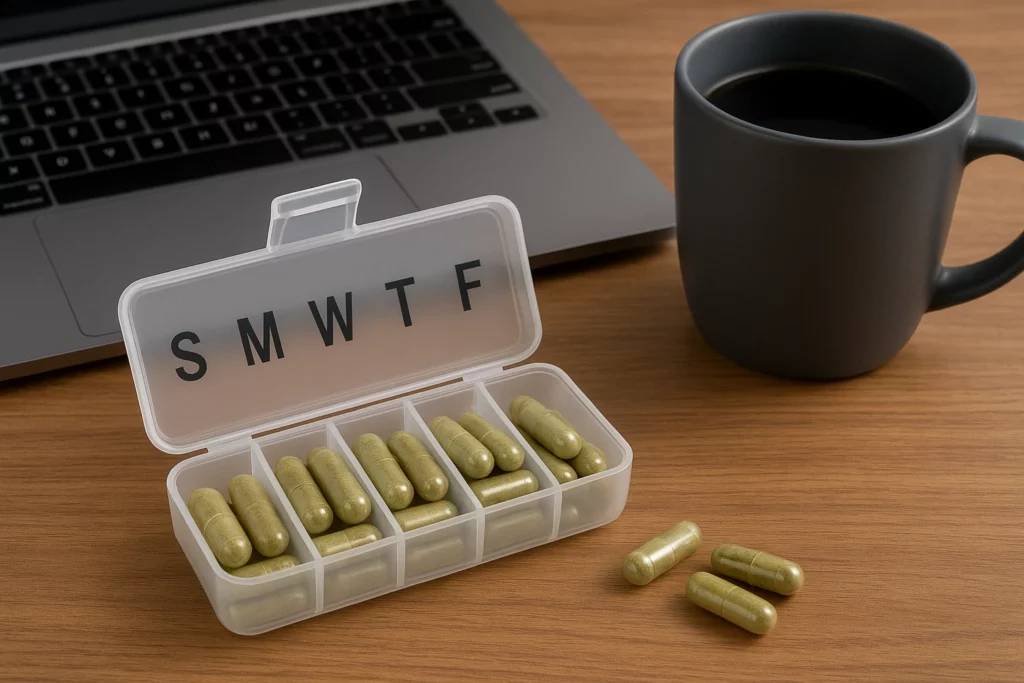
Capsules win decisively for anyone with a busy schedule. You can pre-fill a weekly pill organizer or keep a bottle in your gym bag, desk drawer, or carry-on luggage without raising eyebrows. Taking six capsules with a sip of water at your desk looks exactly like taking vitamins.
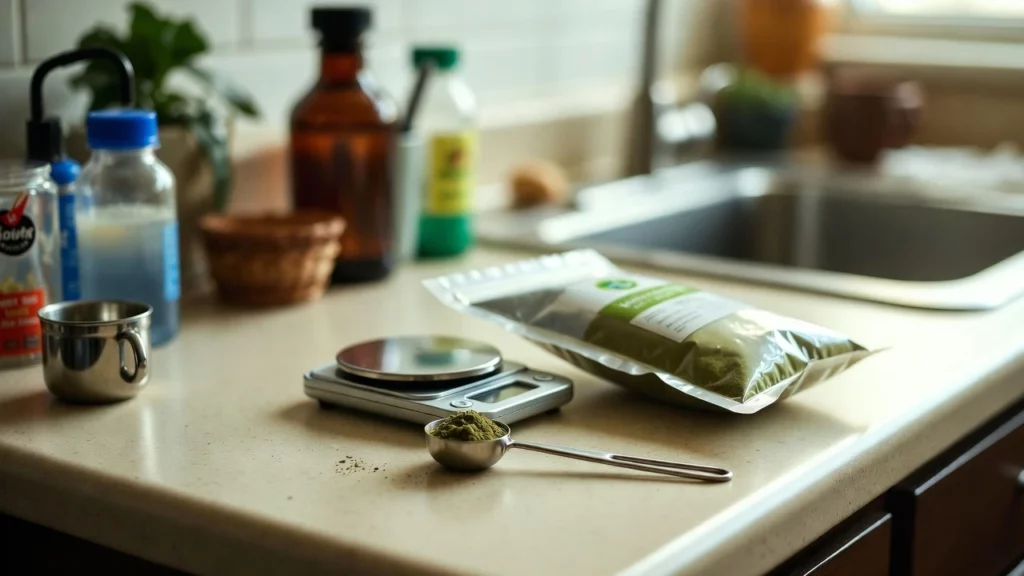
Toss and wash requires a scale, a flat surface, and liquid. It is doable at home, but far less practical in an office bathroom, on a plane, or at a music festival. If you don’t have the time, opt for vendors that provide lab tested and high quality kratom capsules.
Stomach Sensitivity and Nausea Risk
Empty-stomach nausea is one of the most common beginner complaints with kratom. Raw powder hits the stomach lining aggressively, especially in higher amounts. Taking toss and wash without food dramatically increases the chance of wobbles or queasiness.
Capsules spread the release over a longer window and mix with more stomach acid before the alkaloids hit all at once. Many people with sensitive stomachs report far fewer issues when they switch to capsules, even at the same gram weight.
Precision and Overdosing Concerns
Capsules are pre-measured, usually to within a few milligrams. You know exactly how much you are taking every time.
Toss and wash relies on your scale and your scooping technique. A slight overfill on a 5-gram dose can push you into uncomfortable territory, especially with potent strains. Experienced users develop an eye for it, but beginners frequently overshoot.
Travel and Legal Considerations in Canada
As of 2025, Health Canada still has not approved kratom for human consumption, though enforcement remains light for personal amounts. Kratom capsules look indistinguishable from herbal supplements or vitamins. A bottle labeled “Mitragyna speciosa capsules” attracts far less attention at a border or airport than a bag of green powder.
Long-Term Tolerance Differences
How Release Profile Influences Strain Rotation Habits
Community-shared dosing logs from extended users reveal that capsule consumers often adapt by rotating strains more frequently to maintain efficacy, as the encapsulated form’s consistent release profile can lead to a plateau in receptor sensitivity after consistent 4–6 week periods. In contrast, the variable absorption from toss and wash encourages natural dose cycling through session-to-session intensity shifts, helping sustain baseline responsiveness without as much need for breaks.
This adaptation style difference highlights how method choice influences not just immediate feel but also sustainable usage rhythms over months.
Environmental Impact
Gelatin-based capsules contribute to animal-derived waste streams, with each standard bottle’s production adding trace byproducts from bovine sources that complicate recycling in municipal systems. Vegetarian alternatives made from hypromellose reduce this issue but still generate non-biodegradable fragments that linger in landfills longer than plain powder pouches. Opting for powder minimizes these material-specific footprints, aligning with broader shifts toward zero-waste botanicals in the wellness space.
How to Make Toss and Wash More Bearable If You Want to Try It
If you are capsule-dependent but curious about the raw method, ease in slowly:
- Start with a small dose (2–3 g) to test your gag reflex.
- Use a strongly flavoured chaser: fresh orange juice, chocolate milk, or strong ginger tea mask the taste better than water.
- Tilt your head forward slightly when you toss. This keeps powder from sticking to the roof of your mouth.
- Swish and swallow quickly. The longer it sits on your tongue, the worse it gets.
How to Switch to Capsules Without Breaking the Bank
If toss and wash is no longer practical:
- Buy an inexpersive capsule-filling machine (the kind with 100 holes) and bulk empty vegetarian capsules.
- One evening of filling gives you a month’s supply at roughly half the price of pre-filled bottles.
- Look for “size 00” capsules (0.6–0.7 g capacity) to minimize the number you have to swallow.
Frequently Asked Questions About Toss and Wash vs Kratom Capsules
Q: Does toss and wash really feel stronger than the exact same amount in capsules?
A: Yes, for most people it does. The immediate contact with stomach acid and the absence of any capsule shell means faster and more complete absorption. Many regular users report that 5 g tossed and washed matches or exceeds the perceived strength of 6–7 g taken in capsules.
Q: Will capsules eventually dissolve 100 % or is some powder always wasted?
A: In real-world digestion, a small amount (usually 5–12 %) can remain trapped in undissolved capsule fragments that pass through the digestive tract. This is more common with lower-quality vegetarian capsules and when taken without enough liquid or food.
Q: How long does it take for the capsule shell itself to fully break down in the stomach?
A: Vegetarian (HPMC) capsules typically dissolve in 15–30 minutes. Gelatin capsules can take 10–20 minutes. Stomach acidity, food intake, and hydration level all affect this timing.
Q: Are there any strains that work noticeably better with one method over the other?
A: Fast white and green strains feel the potency difference most dramatically when tossed and washed. Slower red strains have a smaller gap because their effects are naturally more gradual regardless of delivery method.
Q: Is it safe to take capsules on a completely empty stomach?
A: Yes, capsules are generally gentler on an empty stomach than raw powder. The shell buffers the initial contact, which is why many people with sensitive digestion prefer them first thing in the morning.
Q: Will making my own capsules at home save enough money to be worth the effort?
A: For anyone using 10+ grams per day, filling your own capsules cuts the cost per gram roughly in half compared to pre-filled bottles, often paying for the machine in the first month.
Conclusion
There is no universally “best” method. The right choice depends entirely on your priorities: Choose toss and wash if you want the fastest onset, strongest effects, lowest cost, and you don’t mind the taste or ritual.
Choose capsules if you value absolute convenience, zero taste, precise dosing, and discretion above all else. Most people who have used both for an extended period agree on one thing: once you do the math and feel the difference in potency, the price gap between the two methods becomes very hard to ignore.
Whichever path you pick, start low, listen to your body, and adjust as needed. Kratom has a wide margin of safety between typical doses and uncomfortable ones, but respect for dose and method makes all the difference between a great experience and an unpleasant one.
Disclaimer
The information presented in this blog is for educational and informational purposes only and is not intended to serve as medical advice, diagnosis, or treatment. Kratom (Mitragyna speciosa) is not approved by Health Canada or the U.S. Food and Drug Administration (FDA) for any medical use, and its safety, efficacy, and long-term effects have not been fully established by rigorous clinical research.
Kratom contains alkaloids such as mitragynine and 7-hydroxymitragynine that can produce opioid-like effects and carries a risk of dependence, tolerance, withdrawal symptoms, and addiction with regular or high-dose use. Potential adverse effects include nausea, vomiting, constipation, dizziness, sedation, confusion and liver toxicity.
Individuals who are pregnant, breastfeeding, under 18, or have a history of substance use disorder, liver/kidney disease, cardiovascular conditions, psychiatric disorders, or who are taking any medications (especially MAO inhibitors, CYP3A4/CYP2D6 substrates, or sedatives) should avoid kratom entirely due to heightened risks of severe interactions and complications.
Always consult a licensed healthcare professional before using kratom or any herbal supplement. Use at your own risk, start with the lowest possible dose, and never combine with other substances without medical supervision. The author and publisher assume no liability for any outcomes resulting from the use or misuse of the information contained herein.