



The mycorrhizal relationship between fungi and plants is one of nature’s most remarkable partnerships, a hidden alliance that supports life beneath the soil. In the lush, humid forests of Southeast Asia, where the kratom tree (Mitragyna speciosa) thrives, this symbiotic bond may play a vital role in the tree’s growth and resilience. But what exactly is a mycorrhizal relationship, and how might it influence kratom in its natural habitat? This blog explores into the intricate connection between kratom roots and fungi, shedding light on how these organisms may collaborate to create a thriving ecosystem.
What Is a Mycorrhizal Relationship?
A mycorrhizal relationship is a symbiotic association between certain fungi and the roots of plants. The term “mycorrhizal” comes from the Greek words “mykes” (fungus) and “rhiza” (root), reflecting the intimate connection between these two life forms. In this partnership, fungi colonize the plant’s root system, forming a network that enhances the plant’s ability to absorb water and nutrients, particularly phosphorus and nitrogen. In return, the plant provides the fungi with sugars and other organic compounds produced through photosynthesis. This mutual exchange benefits both parties, fostering growth and survival in often challenging environments.
Mycorrhizal relationships are widespread in nature, with an estimated 80-90% of terrestrial plants forming these associations. They are particularly critical in nutrient-poor soils, where plants rely on fungal networks to access scarce resources. For kratom, a tropical evergreen tree native to regions like Thailand, Malaysia, and Indonesia, such a relationship could be key to its adaptation to the diverse and competitive ecosystems of Southeast Asian forests.
The Kratom Tree and Its Natural Habitat
To understand the potential for a mycorrhizal relationship with kratom, we must first consider the tree’s natural environment. Kratom grows in the rich, biodiverse rainforests of Southeast Asia, where warm temperatures, high humidity, and frequent rainfall create ideal conditions for lush vegetation. The soils in these regions are often nutrient-poor due to heavy leaching from rainfall, which washes away essential minerals. Despite this, kratom trees flourish, often reaching heights of 50 feet or more, with glossy green leaves that are harvested for their unique properties.
The ability of kratom to thrive in such conditions suggests it may rely on partnerships with other organisms, including fungi. The tree’s root system, which spreads widely in the shallow, nutrient-scarce soils, is well-suited for forming connections with fungal networks. These networks could help kratom access resources that would otherwise be out of reach, supporting its growth in a competitive environment teeming with other plants and microorganisms.

Types of Mycorrhizal Relationships
Mycorrhizal relationships come in several forms, with the two most common being arbuscular mycorrhizal (AM) and ectomycorrhizal (EM) associations. Each type involves different fungal species and root interactions, tailored to the needs of specific plants.
Arbuscular mycorrhizal fungi, belonging to the Glomeromycota phylum, penetrate the root cells of their host plants, forming intricate structures called arbuscules. These structures facilitate the exchange of nutrients between the plant and fungus. AM fungi are particularly common in tropical plants, including many trees and shrubs found in kratom’s native habitat. Given kratom’s environment, it is plausible that it forms an AM relationship, as these fungi thrive in warm, nutrient-poor soils.
Ectomycorrhizal fungi, on the other hand, form a sheath around the plant’s roots without penetrating the cells. They are more common in temperate forests and are typically associated with trees like pines and oaks. While less likely in kratom’s tropical context, some tropical trees do form ectomycorrhizal relationships, so this possibility cannot be entirely ruled out.
Both types of mycorrhizal relationships enhance a plant’s ability to absorb water and nutrients, but they also offer additional benefits, such as increased resistance to drought, pathogens, and soil toxins. For kratom, these advantages could be critical in navigating the challenges of its rainforest home.
Could Kratom Form a Mycorrhizal Relationship?
While direct evidence of a mycorrhizal relationship between kratom and fungi is limited, the ecological context of kratom’s habitat strongly suggests such a partnership. Most plants in tropical rainforests, where nutrient cycling is rapid but soil fertility is low, rely on mycorrhizal fungi to access essential nutrients. Kratom’s ability to grow tall and produce abundant foliage in these conditions points to a potential reliance on fungal allies.
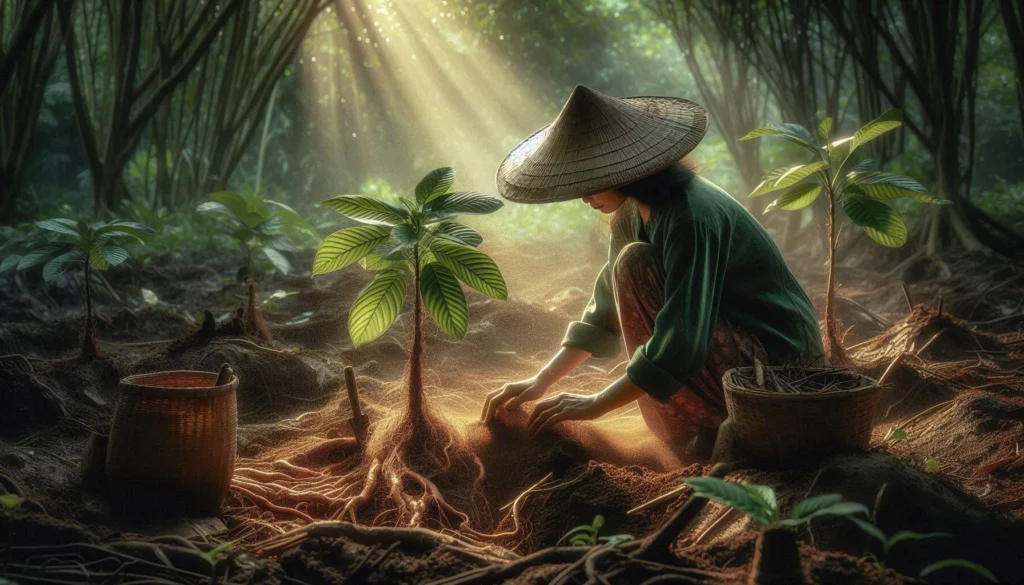
The structure of kratom’s root system further supports this hypothesis. Like many tropical trees, kratom has shallow, spreading roots that maximize contact with the upper soil layers, where organic matter and microbial activity are concentrated. This root architecture is ideal for forming mycorrhizal connections, as it provides ample surface area for fungi to colonize. The fungi, in turn, extend their hyphae (thread-like structures) far beyond the root zone, acting as an extended root system that scavenges for nutrients in the surrounding soil.
In addition to nutrient uptake, a mycorrhizal relationship could help kratom cope with environmental stresses. Tropical soils are often acidic and contain high levels of aluminum, which can be toxic to plants. Mycorrhizal fungi are known to improve a plant’s tolerance to such conditions by buffering the effects of soil acidity and reducing aluminum toxicity. For kratom, this could mean greater resilience in the face of fluctuating soil conditions and intense competition from neighboring plants.
The Role of Fungi in Kratom’s Ecosystem
Beyond direct benefits to the kratom tree, mycorrhizal fungi contribute to the broader ecosystem in which kratom grows. In rainforests, fungal networks often connect multiple plants, forming what is known as the “wood wide web.” This underground network allows plants to share resources, such as carbon and nutrients, and even communicate stress signals, such as warnings of pest attacks or drought.
In kratom’s habitat, such a network could link kratom trees with other species, creating a cooperative system that enhances the resilience of the entire forest. For example, if a neighboring tree is struggling to access water, mycorrhizal fungi might redistribute resources from healthier plants, including kratom, to support the community. This interconnectedness underscores the importance of fungi in maintaining the balance of tropical ecosystems, where competition for light, water, and nutrients is fierce.
Fungi also play a role in soil structure and health. Their hyphae bind soil particles together, improving soil stability and water retention. In the heavy rains of Southeast Asia, this can prevent erosion and ensure that kratom’s roots remain anchored in nutrient-rich soil. Additionally, fungi contribute to the decomposition of organic matter, recycling nutrients back into the ecosystem and making them available for plants like kratom.
Potential Benefits for Kratom
If kratom does form a mycorrhizal relationship, the benefits would likely extend beyond nutrient acquisition. One key advantage is enhanced drought tolerance. While rainforests are typically wet, they can experience seasonal dry periods that stress plants. Mycorrhizal fungi improve a plant’s ability to absorb water, helping kratom survive these dry spells. This could be particularly important for younger kratom trees, which have less extensive root systems and are more vulnerable to water scarcity.
Another benefit is protection against pathogens. Mycorrhizal fungi can act as a barrier, preventing harmful microbes from attacking the plant’s roots. Some fungi even produce compounds that deter root-eating pests or compete with pathogenic fungi for space and resources. In the biodiverse and microbe-rich soils of a rainforest, this protection could give kratom a competitive edge.
Finally, a mycorrhizal relationship could enhance kratom’s ability to produce secondary metabolites, the compounds responsible for its unique properties. While the exact mechanisms are not fully understood, some studies suggest that mycorrhizal fungi can influence the production of alkaloids and other chemicals in plants. For kratom, this could mean that its fungal partners play a role in shaping the composition of its leaves, though this remains speculative without further research.
Challenges in Studying Kratom’s Mycorrhizal Connections
Confirming a mycorrhizal relationship in kratom is not without challenges. The complexity of rainforest ecosystems makes it difficult to isolate specific plant-fungus interactions. Soil samples from kratom’s native range would need to be analyzed to identify the presence of mycorrhizal fungi, and controlled experiments would be required to demonstrate a symbiotic relationship. Such studies are complicated by the fact that kratom is often harvested from wild populations or small-scale plantations, where environmental variables are hard to control.
Additionally, the diversity of fungi in tropical soils is staggering. A single handful of rainforest soil can contain thousands of fungal species, only a fraction of which may form mycorrhizal relationships. Identifying which fungi, if any, partner with kratom would require detailed genetic and microscopic analysis. Despite these challenges, the prevalence of mycorrhizal relationships in tropical plants makes it highly likely that kratom engages in such partnerships.
Implications for Cultivation and Conservation
Understanding the potential mycorrhizal relationship between kratom and fungi has implications for both cultivation and conservation. For farmers growing kratom, building healthy fungal populations in the soil could improve tree health and yield. Practices such as avoiding excessive tillage, maintaining organic matter in the soil, and minimizing chemical fertilizers can encourage mycorrhizal fungi to thrive. These approaches align with sustainable agriculture principles, ensuring that kratom cultivation supports the broader ecosystem.
From a conservation perspective, preserving the natural habitats where kratom grows is crucial. Deforestation and land conversion in Southeast Asia threaten the delicate balance of rainforest ecosystems, including the fungal networks that support plants like kratom. Protecting these habitats ensures that kratom and its fungal partners can continue to thrive, maintaining the biodiversity that makes these forests so unique.
Frequently Asked Questions
Q: What exactly is a mycorrhizal relationship?
A: A mycorrhizal relationship is a symbiotic partnership between fungi and plant roots. The fungi help the plant absorb water and nutrients, such as phosphorus, while the plant supplies the fungi with sugars from photosynthesis. This mutual exchange supports both organisms, especially in nutrient-poor environments like tropical rainforests.
Q: Why is a mycorrhizal relationship important for plants like kratom?
A: In nutrient-scarce soils, such as those in Southeast Asian rainforests, a mycorrhizal relationship can enhance a plant’s ability to access essential resources. For kratom, this could mean better growth, improved drought tolerance, and protection against soil pathogens, helping it thrive in competitive ecosystems.
Q: Are all kratom trees likely to have mycorrhizal relationships?
A: While not confirmed for every kratom tree, it’s highly likely due to the prevalence of mycorrhizal relationships in tropical plants. Kratom’s shallow root system and nutrient-poor habitat make it a strong candidate for forming these symbiotic bonds with fungi.
Q: Can mycorrhizal fungi affect the properties of kratom leaves?
A: It’s possible, as mycorrhizal fungi can influence a plant’s production of secondary metabolites, like alkaloids. However, without specific research on kratom, this remains speculative, though it’s an intriguing area for future study.
Q: How can farmers support mycorrhizal relationships in kratom cultivation?
A: Farmers can promote healthy fungal populations by avoiding excessive soil disturbance, maintaining organic matter, and reducing chemical inputs. These practices create a favorable environment for mycorrhizal fungi, potentially improving kratom growth and resilience.
Q: Do mycorrhizal relationships only benefit kratom, or the whole ecosystem?
A: These relationships benefit entire ecosystems. Mycorrhizal fungi form networks that connect multiple plants, allowing resource sharing and enhancing forest resilience. They also improve soil structure and nutrient cycling, supporting biodiversity in kratom’s habitat.
A Hidden Partnership Beneath the Soil
The potential mycorrhizal relationship between kratom and fungi is a testament to the interconnectedness of life in tropical rainforests. While direct evidence is still needed, the ecological context of kratom’s habitat, combined with its root structure and the prevalence of mycorrhizal associations in similar plants, strongly suggests that such a partnership exists. This symbiotic bond, if confirmed, would highlight the remarkable ways in which plants and fungi collaborate to overcome environmental challenges, creating a thriving ecosystem beneath the soil.
For those intrigued by the hidden world of plant-fungus interactions, the story of kratom and its potential mycorrhizal allies offers a glimpse into nature’s complexity. It reminds us that even a single tree, standing tall in a rainforest, is supported by an invisible network of life, working together in harmony to sustain the vibrant ecosystems we often take for granted.
Disclaimer
The information provided in this blog of the potential mycorrhizal relationship between kratom (Mitragyna speciosa) and fungi is intended for educational and informational purposes only. It is based on general knowledge about mycorrhizal relationships and ecological principles, as well as the natural habitat of kratom, but specific scientific studies confirming a mycorrhizal association with kratom are limited. This content should not be interpreted as definitive evidence of such a relationship or as a recommendation for the cultivation, use, or consumption of kratom.
Kratom is a botanical substance that may have psychoactive properties, and its use carries potential health risks, including but not limited to addiction, adverse reactions, and interactions with medications. The safety and efficacy of kratom have not been fully evaluated by regulatory authorities such asHealth Canada and its legal status varies by region. Individuals considering the use of kratom for any purpose should consult a qualified healthcare professional to discuss potential risks, side effects, and interactions with other substances or medical conditions.
The author and publisher are not responsible for any adverse effects or consequences resulting from the use of kratom or the application of information provided in this blog. Always prioritize safety and seek professional medical advice before making decisions related to health or kratom use.