


Kratom, scientifically known as Mitragyna speciosa, has captivated global interest for its complex alkaloid profile, which drives its multifaceted effects. Central to this botanical are mitragynine and 7-hydroxymitragynine, two alkaloids that define kratom’s unique properties. Comparing mitragynine vs 7-hydroxymitragynine is crucial for users seeking to understand how these compounds shape kratom’s versatility. This blog explores their differences in concentration, structure, physiological interactions, strain influence, and practical applications.
What Makes Mitragynine vs 7-Hydroxymitragynine Unique?
Alkaloids in kratom, naturally occurring compounds, interact with the body to produce varied effects. Mitragynine and 7-hydroxymitragynine stand out as the primary drivers, differing in abundance, potency, and function. Mitragynine, the more prevalent alkaloid, lays the groundwork for kratom’s broad effects, while 7-hydroxymitragynine, though scarce, delivers intensified outcomes. Comparing mitragynine vs 7-hydroxymitragynine reveals their complementary nature, offering users a nuanced understanding of kratom’s potential.
Modern analytical techniques, such as high-performance liquid chromatography (HPLC), have refined our ability to quantify these alkaloids in kratom samples. These methods reveal precise differences in their profiles, helping users and researchers predict effects more accurately. This comparative approach enhances decision-making for those exploring kratom’s diverse applications.
Concentration in Kratom Leaves
Mitragynine dominates kratom’s alkaloid content, typically ranging from 0.5% to 2% of the leaf’s dry weight, making it a consistent presence across strains. Its abundance underpins kratom’s foundational effects, from stimulation to relaxation. Conversely, 7-hydroxymitragynine constitutes less than 0.2%, yet its high potency ensures significant influence. This contrast in concentration, mitragynine’s prevalence versus 7-hydroxymitragynine’s intensity shapes their roles in kratom’s profile.
Recent studies using mass spectrometry show that alkaloid ratios can vary within the same kratom plant due to leaf age and position on the tree. Younger leaves often have slightly higher mitragynine, while mature leaves may favor 7-hydroxymitragynine formation. These findings highlight the importance of precise harvesting to achieve desired alkaloid balances, offering users insights into batch potency variations.
Structural Distinctions
The molecular structures of mitragynine vs 7-hydroxymitragynine explain their differing impacts. mitragynine, with the formula C23H30N2O4, is an indole alkaloid composed of carbon, hydrogen, nitrogen, and oxygen. It acts as the precursor to 7-hydroxymitragynine, which forms through oxidation, gaining a hydroxyl group at the seventh position (C23H30N2O5). This structural change enhances 7-hydroxymitragynine’s receptor-binding efficiency, amplifying its effects.
Advanced computational modeling has revealed that the hydroxyl group alters 7-hydroxymitragynine’s lipophilicity, allowing it to cross the blood-brain barrier more effectively than mitragynine. This property contributes to its heightened potency, providing users with a clearer understanding of why some kratom products deliver stronger effects despite lower alkaloid concentrations.
Structural Differences: Mitragynine vs 7-Hydroxymitragynine
Mitragynine (C23H30N2O4):
-
- Indole alkaloid base structure
- Precursor compound
- Moderate lipophilicity
- Slower blood-brain barrier crossing
7-Hydroxymitragynine (C23H30N2O5):
-
- Mitragynine + hydroxyl group at C7 position
- Forms via natural oxidation
- Enhanced lipophilicity (20-30% better BBB penetration)
- 13x stronger mu-opioid binding
Why This Matters: The single hydroxyl group makes 7-hydroxymitragynine far more potent despite being 10x less abundant in kratom leaf.
Physiological Interactions
Mitragynine vs 7-hydroxymitragynine exhibit distinct physiological interactions. mitragynine interacts with a broad array of receptors, including adrenergic and serotonin pathways, contributing to kratom’s dual effects of alertness at low doses and calm at higher ones. 7-hydroxymitragynine, however, shows a stronger affinity for mu-opioid receptors, driving more intense relaxation and soothing effects.
A 2021 study in Frontiers in Pharmacology quantified 7-hydroxymitragynine’s binding affinity as up to 13 times stronger than mitragynine’s at mu-opioid receptors, explaining its potency despite lower concentrations. Additionally, emerging research suggests mitragynine’s interactions with dopamine receptors may enhance mood, offering a complementary effect to 7-hydroxymitragynine’s calming properties. This interplay informs users about the nuanced effects of different kratom doses.
Synergy in Kratom’s Effects
The synergy between mitragynine vs 7-hydroxymitragynine creates kratom’s entourage effect, where alkaloids enhance each other’s impact. Mitragynine provides a versatile foundation, supporting energy or relaxation based on dosage. 7-hydroxymitragynine intensifies specific effects, particularly sedation, refining the overall experience. This collaboration ensures balanced outcomes unique to each batch.
Recent pharmacological studies indicate that minor alkaloids, like speciociliatine, may modulate the mitragynine-7-hydroxymitragynine synergy by stabilizing receptor interactions. This complex interplay suggests that isolating either alkaloid might reduce kratom’s holistic effects, emphasizing the value of natural products for users seeking balanced experiences.
Influence on Kratom Strains
Kratom strains, defined by vein colour or region, reflect varying ratios of mitragynine vs 7-hydroxymitragynine. Green and white-vein strains, often linked to energy and focus, typically have higher mitragynine content. Red-vein strains, associated with relaxation, may feature elevated 7-hydroxymitragynine due to processing techniques like fermentation. These ratios define each strain’s unique profile.
Analytical data from kratom vendors shows that Maeng Da strains often have a balanced mitragynine-to-7-hydroxymitragynine ratio (e.g., 1.5% mitragynine to 0.15% 7-hydroxymitragynine), making them versatile. In contrast, Borneo reds may reach 0.3% 7-hydroxymitragynine, enhancing their calming effects. This data helps users select strains that tie to a users specific needs, such as focus for work or relaxation for rest.
Practical Implications for Users
Understanding mitragynine vs 7-hydroxymitragynine helps users choose products strategically. Those seeking focus may prefer green or white strains rich in mitragynine, while relaxation seekers might opt for red strains with higher 7-hydroxymitragynine. Standard powders balance both alkaloids, while extracts may concentrate 7-hydroxymitragynine for stronger effects.
Bioavailability also matters: consuming kratom with a small amount of citrus juice may enhance alkaloid absorption due to pH changes in the stomach, amplifying mitragynine’s stimulating effects. Users can experiment with such methods to optimize their experience, ensuring alignment with personal goals.
Practical Guide: Selecting Kratom by Alkaloid Profile
Match your needs to specific alkaloid ratios:
| Goal | Primary Alkaloid | Recommended Strains | Starting Dose |
|---|---|---|---|
| Energy & Focus | Mitragynine (1.2-2%) | Green Maeng Da, White Borneo | 1.5-3g |
| Relaxation & Pain | 7-Hydroxymitragynine (0.15-0.3%) | Red Bali, Red Borneo | 2-4g |
Alkaloid Testing: Verifying Mitragynine & 7-Hydroxymitragynine Content
How to confirm your kratom contains the alkaloids it claims:
Primary Testing Methods
| Method | Accuracy | Detects | Cost | Availability |
|---|---|---|---|---|
| HPLC (High-Performance Liquid Chromatography) | ±0.01% | Both alkaloids + 25+ others | $150-300/test | Lab only |
| LC-MS (Liquid Chromatography-Mass Spectrometry) | ±0.005% | Trace 7-OH levels (<0.02%) | $250-500/test | Lab only |
| TLC (Thin Layer Chromatography) | ±0.1% | Basic presence screening | $50-100/test | Some vendors |
Understanding Lab Reports
Key metrics to verify:
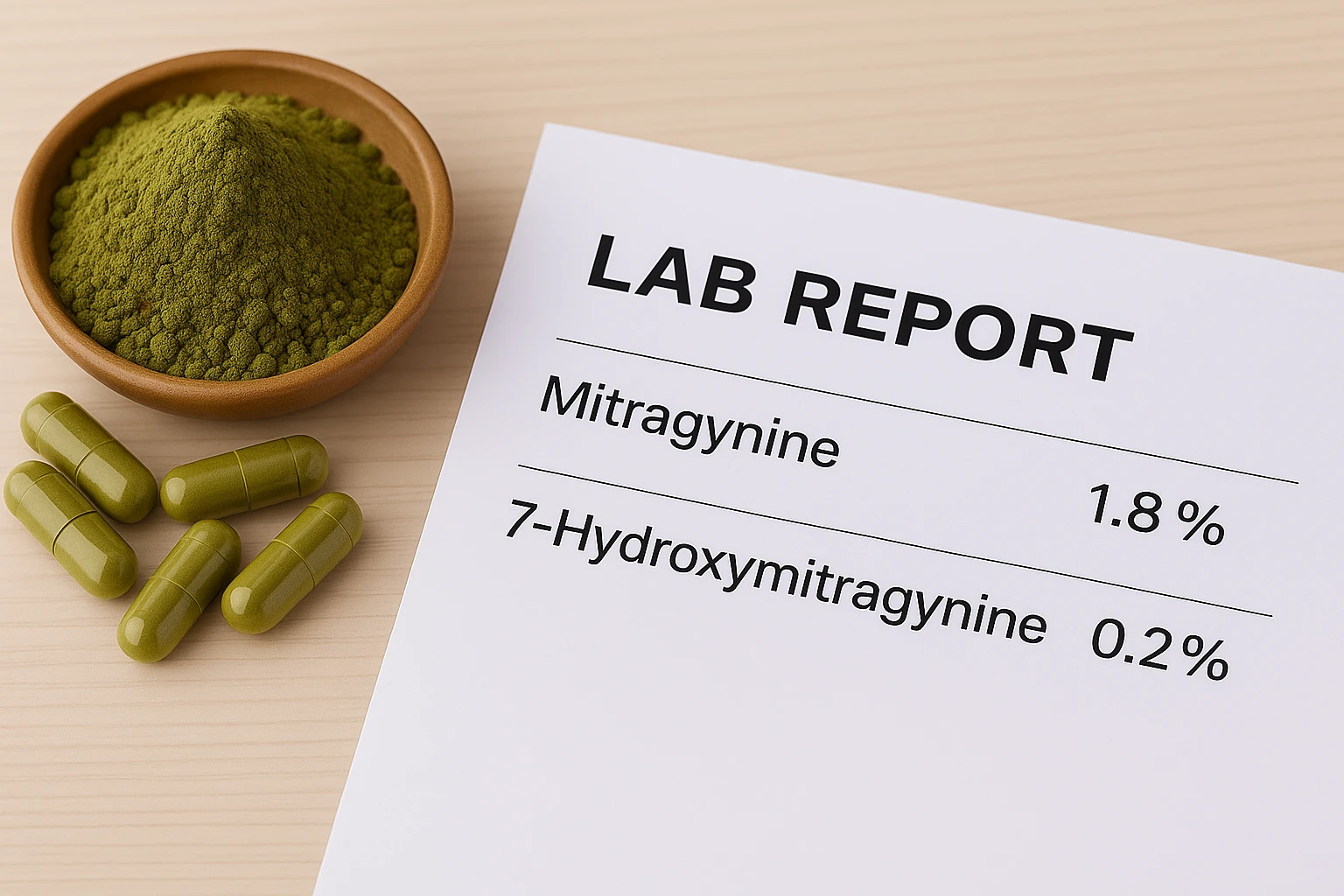
- Mitragynine: Should read 0.8-2.0% (industry standard)
- 7-Hydroxymitragynine: Should read 0.02-0.3% (natural leaf range)
- Total Alkaloids: 1.5-3% indicates quality leaf
- Heavy Metals: Lead <1ppm, Arsenic <0.5ppm
- Microbials: Salmonella/E.coli = Negative
Red Flags in Lab Reports
- No 7-OH detected: Likely poor harvest/processing
- Mitragynine <0.5%: Low-quality or degraded leaf
- Missing batch number: Cannot verify freshness
- Lab undated >6 months: Alkaloid degradation likely
- No third-party lab: Self-testing = unreliable
Vendor Verification Checklist
- COA Availability: Publicly accessible lab reports
- Batch Traceability: Specific harvest dates
- Third-Party Labs: ACS, Eurofins, or ISO-accredited
- Consistent Testing: Every batch, not just “select” batches
- Transparent Methods: HPLC/LC-MS, not proprietary tests
Cultural and Historical Context
Kratom’s Southeast Asian heritage provides context for mitragynine vs 7-hydroxymitragynine comparisons. Traditional users valued kratom’s holistic effects without isolating alkaloids. Modern science now reveals how these compounds underpinned historical uses, from boosting stamina to easing stress. This blend of cultural wisdom and analytical insight enriches kratom’s appeal.
In regions like Thailand, specific cultivation practices, such as selective pruning, were used to enhance alkaloid content, unknowingly optimizing mitragynine levels. This historical knowledge informs modern sustainable farming, ensuring high-quality kratom for today’s users.
User Considerations and Safety
Exploring mitragynine vs 7-hydroxymitragynine requires caution. 7-hydroxymitragynine’s potency demands low starting doses (1-2 grams) to assess tolerance. Frequent high doses can reduce sensitivity to both alkaloids, so moderation is key. Consulting a healthcare provider is wise, especially for those with medical conditions. Users should also consider hydration, as kratom can cause mild dehydration, potentially affecting alkaloid metabolism. Pairing kratom use with adequate water intake supports optimal effects and safety.

Frequently Asked Questions
Q: How do mitragynine and 7-hydroxymitragynine affect kratom’s potency?
A: Mitragynine provides a broad, versatile effect, driving energy at low doses and calm at higher ones. 7-hydroxymitragynine, though less abundant, is more potent due to its strong mu-opioid receptor binding, enhancing relaxation. Their synergy shapes kratom’s overall potency, varying by strain and dosage.
Q: Can I choose a kratom strain based on mitragynine vs 7-hydroxymitragynine levels?
A: Yes, strain choice can align with alkaloid balance. Green or white strains, richer in mitragynine, suit energy and focus. Red strains, often higher in 7-hydroxymitragynine, favour relaxation.
Q: Why does the same kratom strain feel different across batches?
A: Batch variability stems from differences in growing conditions, harvest timing, and processing. Fermentation can boost 7-hydroxymitragynine, while soil and sunlight affect mitragynine. Reputable vendors minimize these inconsistencies with lab testing.
Q: Are mitragynine and 7-hydroxymitragynine safe to use together?
A: In kratom, these alkaloids naturally coexist and work synergistically. Safety depends on responsible use: start with low doses (1-3 grams), avoid frequent high doses, and consult a healthcare provider to ensure compatibility with your health profile.
Q: How can I verify the alkaloid content in kratom products?
A: Choose vendors who provide third-party lab reports detailing mitragynine and 7-hydroxymitragynine levels. These reports confirm alkaloid consistency and product quality, ensuring reliable effects.
Q: Can diet influence the effects of mitragynine vs 7-hydroxymitragynine?
A: Yes, consuming kratom on an empty stomach may enhance mitragynine’s stimulating effects, while a light meal can smooth out 7-hydroxymitragynine’s intensity. Avoid heavy meals, which may slow absorption and reduce potency.
Conclusion
Understanding the differences between mitragynine and 7-hydroxymitragynine unlocks the full potential of kratom, empowering users to make informed choices. By exploring their unique roles in concentration, structure, physiological effects, and strain variations, this comparison reveals how these alkaloids shape kratom’s diverse experiences.
Whether you seek energy, calm, or a balance of both, knowing how these compounds work together helps you select the right strain or product. This knowledge also emphasizes the value of sourcing high-quality kratom to ensure consistent effects. Dive into the world of mitragynine vs 7-hydroxymitragynine to enhance your kratom journey with confidence and clarity.
Disclaimer
The information provided in this blog is intended for informational purposes only. It is not a substitute for professional medical advice, diagnosis, or treatment. Kratom is a botanical substance with complex effects that may vary based on individual physiology, dosage, strain, and other factors. The use of kratom carries potential risks, including but not limited to side effects such as nausea, dizziness, dehydration, or dependency with frequent use.
Always consult a qualified healthcare professional before using kratom, especially if you have pre-existing medical conditions, are taking medications, or are pregnant or breastfeeding. Interactions between kratom’s alkaloids and certain medications or health conditions may pose serious risks. The safety and long-term effects of kratom use are not fully established, and regulatory bodies in some regions have raised concerns about its potential for misuse or adverse effects.
Kratom products are not regulated by the U.S. Food and Drug Administration (FDA) or equivalent agencies in other countries, and their quality, purity, and alkaloid content may vary. Users should exercise caution, source products from reputable vendors with third-party lab testing, and adhere to recommended dosages to minimize risks. The authors and publishers of this blog are not responsible for any adverse effects, consequences, or decisions arising from the use of kratom or the information provided herein. Always prioritize safety and informed decision-making when considering kratom use.