Kratom’s Pioneers: 7 Botanists Who Shaped Its History
Faust
Kratom’s pioneers, the botanists who first studied Mitragyna speciosa, laid the foundation for our understanding of this complex plant. Native to Southeast Asia, kratom has been used for centuries by indigenous communities for its stimulating and soothing properties. Yet, it was the meticulous work of early botanists that brought this tropical tree into the scientific spotlight. These scholars ventured into dense jungles, cataloged flora with precision, and unraveled the botanical and cultural significance of kratom. Their discoveries, often made under challenging conditions, bridged traditional knowledge with modern science.
The Dawn of Kratom’s Scientific Exploration
The story of kratom’s scientific discovery begins in the 19th century, a time when European colonial powers were keenly interested in the natural resources of their territories. Southeast Asia, with its lush rainforests and diverse ecosystems, was a treasure trove for botanists. Kratom, a member of the Rubiaceae family, thrived in countries like Thailand, Malaysia, and Indonesia. Its leaves were chewed by labourers to boost energy or brewed into teas for relaxation, but these practices were largely unknown to the Western world until botanists began their fieldwork.
The pioneers who studied kratom were not just scientists; they were adventurers navigating uncharted territories. Their work required an understanding of local languages, cultures, and ecosystems. By documenting kratom’s characteristics and uses, they created a bridge between indigenous wisdom and global scientific inquiry. Let’s take a look into the lives and legacies of these remarkable individuals.
Pieter Willem Korthals: The First to Name Kratom
One of the earliest figures among kratom’s pioneers was Pieter Willem Korthals, a Dutch botanist born in Amsterdam in 1807. Korthals served as the official botanist for the Dutch East India Service from 1831 to 1836, stationed in the Dutch East Indies (modern-day Indonesia). His mission was to catalog the region’s flora, a task that led him to the discovery of Mitragyna speciosa.
Korthals first encountered kratom in the jungles of Java, Sumatra, and Borneo. Intrigued by its widespread use among local communities, he meticulously documented the plant’s physical characteristics, noting its glossy leaves and distinctive flower stigmas. In 1839, he published his findings, initially classifying the plant as Stephegyne speciosa. Korthals suggested the genus name “Mitragyna,” inspired by the resemblance of the flower stigmas to a bishop’s mitre, a nod to both botanical precision and poetic imagery.
His work was groundbreaking, as it introduced kratom to the Western scientific community. Beyond kratom, Korthals also described the carnivorous pitcher plants of the genus Nepenthes and documented economically significant species like the clove tree (Syzygium aromaticum). His monographs, published in works like Verhandelingen over de natuurlijke geschiedenis der Nederlandsche overzeesche bezittingen (1840-1844), remain foundational texts in Southeast Asian botany. Korthals’ legacy as a pioneer lies in his ability to blend rigorous classification with an appreciation for the cultural roles of the plants he studied.
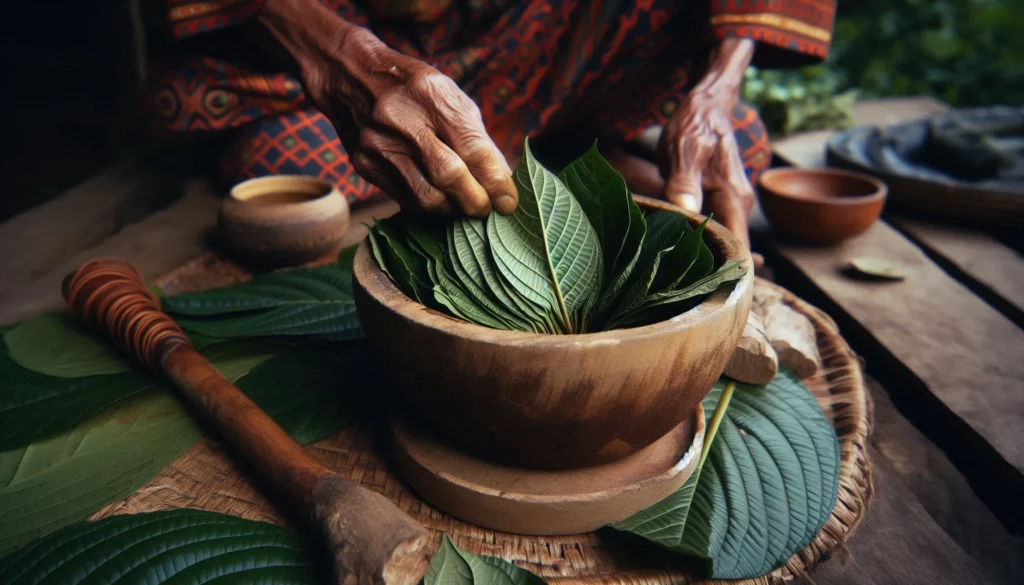
An elderly person prepares kratom using fresh green leaves in a wooden bowl.
George Darby Haviland: Refining Kratom’s Classification
While Korthals laid the groundwork, it was George Darby Haviland, a British botanist, who refined kratom’s taxonomic identity. Born in 1857, Haviland spent much of his career in Southeast Asia, particularly in Borneo, where he served as a curator of the Sarawak Museum. His work focused on the region’s biodiversity, and in 1859, he revisited Korthals’ classification of kratom.
Haviland recognized inconsistencies in the earlier naming of Stephegyne speciosa. Through detailed morphological studies, he confirmed the plant’s place within the Mitragyna genus, solidifying its scientific name as Mitragyna speciosa. This clarification was crucial, as it standardized kratom’s identity for future researchers. Haviland’s collections of plant specimens, housed in institutions like the Kew Gardens, provided a wealth of material for botanists studying Southeast Asian flora.
Haviland’s approach was marked by humility and precision. He often collaborated with local guides, acknowledging their expertise in navigating Borneo’s dense forests. His work on kratom, though less celebrated than Korthals’, was a vital step in ensuring the plant’s accurate representation in botanical literature. For those interested in kratom’s pioneers, Haviland represents the quiet diligence that underpins scientific progress.
Ellen Field: Unlocking Kratom’s Chemical Secrets
The early 20th century marked a shift in kratom’s study, from taxonomy to chemistry. Among kratom’s pioneers, Ellen Field, a British chemist, stands out for her groundbreaking work on the plant’s alkaloids. In 1921, Field isolated mitragynine, the primary active compound in kratom, while working at a research institute in London. Her discovery, published in the Journal of the Chemical Society, was a milestone in understanding kratom’s pharmacological potential.
Field’s research was driven by reports of kratom’s use as an opium substitute in Malaysia. She hypothesized that the plant’s effects were due to unique chemical constituents. Using early extraction techniques, she identified mitragynine as a key alkaloid, noting its structural differences from morphine. Her findings sparked interest in kratom’s potential applications, particularly in addressing opioid dependence, though such studies were limited by the era’s technological constraints.
Field’s work was not without challenges. As a woman in a male-dominated field, she faced skepticism, yet her rigorous methodology earned her respect. Her isolation of mitragynine paved the way for later researchers to explore kratom’s complex alkaloid profile, which includes over 50 compounds. Field’s contribution reminds us that kratom’s pioneers were not only botanists but also chemists who bridged plant science with pharmacology.
Henry Ridley: Documenting Kratom’s Cultural Context
Henry Nicholas Ridley, often called the “Rubber King” for his role in establishing Malaysia’s rubber industry, was another key figure among kratom’s pioneers. Born in 1855, Ridley served as the director of the Singapore Botanic Gardens from 1888 to 1911. His extensive travels across the Malay Peninsula brought him into contact with kratom, which he documented in his ethnobotanical studies.
Ridley observed that kratom leaves were widely chewed by Malay labourers to enhance stamina during long workdays. In his book The Flora of the Malay Peninsula (1922-1925), he described Mitragyna speciosa as a culturally significant plant, noting its use in traditional medicine for ailments like coughs and diarrhea. Ridley’s work was unique in its emphasis on ethnobotany, the study of plants in their cultural context. He interviewed local healers and farmers, preserving knowledge that might otherwise have been lost.
His documentation of kratom’s uses enriched the scientific record, highlighting the plant’s versatility. Ridley’s broader contributions to botany, including his advocacy for sustainable agriculture, earned him a knighthood in 1911. For kratom enthusiasts, his work offers a window into the plant’s deep roots in Southeast Asian society, underscoring the interplay between science and culture.
Isaac Henry Burkill: Cataloging Kratom’s Traditional Uses
Isaac Henry Burkill, a British botanist born in 1870, further expanded the ethnobotanical study of kratom. As the director of the Singapore Botanic Gardens from 1912 to 1925, Burkill built on Ridley’s work, compiling one of the most comprehensive resources on Southeast Asian plants: A Dictionary of the Economic Products of the Malay Peninsula (1935). This two-volume work, co-authored with William Birtwistle, included detailed entries on Mitragyna speciosa.
Burkill’s research revealed kratom’s role as a traditional remedy for opioid withdrawal, a practice dating back to the 19th century when opium addiction plagued parts of Southeast Asia. He noted that kratom teas were used to ease symptoms like irritability and muscle pain, offering a natural alternative to opium. Burkill also described the plant’s stimulant effects at low doses, which made it popular among farmers and fishermen.
His meticulous approach ensured that kratom’s traditional uses were recorded with accuracy. Burkill’s dictionary remains a valuable resource for researchers, providing insights into the plant’s historical significance. Among kratom’s pioneers, Burkill stands out for his commitment to preserving indigenous knowledge, making it accessible to a global audience.
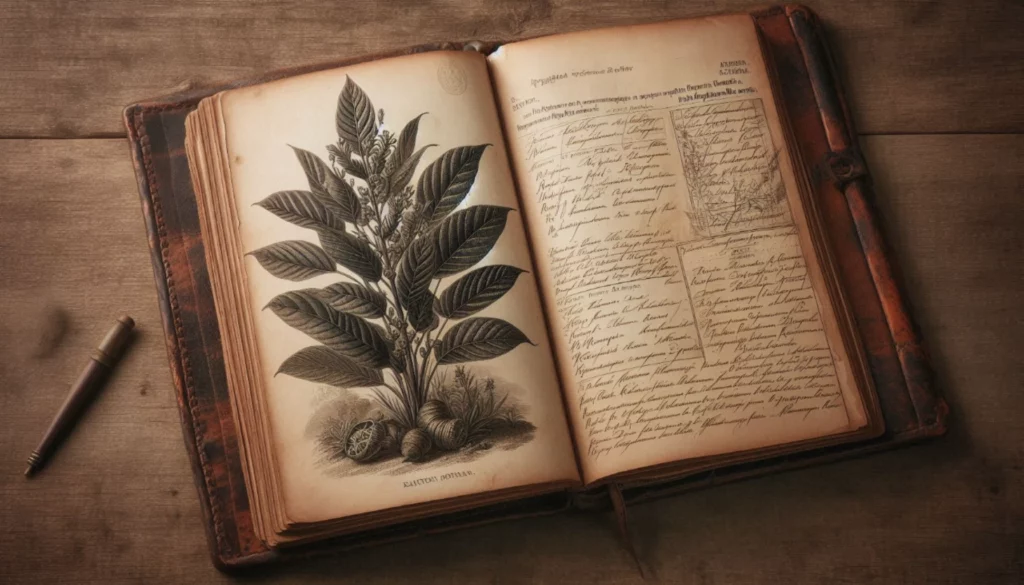
A historic book displays a detailed plant drawing alongside handwritten botanical notes.
Edward M. Holmes: Early Advocacy for Kratom’s Study
Edward Morell Holmes, a British botanist and pharmacist born in 1843, was an early advocate for studying kratom’s medicinal potential. Based in London, Holmes curated the Pharmaceutical Society’s museum and lectured on materia medica, the study of medicinal substances. In the late 19th century, he came across reports of kratom’s use in Southeast Asia, likely through colonial trade networks.
Holmes published articles in pharmaceutical journals, urging researchers to investigate Mitragyna speciosa. He was particularly intrigued by its reported effects as both a stimulant and a sedative, a duality rare among medicinal plants. In an 1895 lecture, he suggested that kratom could offer insights into managing pain and fatigue, though he cautioned that its properties required further study.
While Holmes did not conduct fieldwork like Korthals or Ridley, his role as a communicator was vital. He connected botanists, chemists, and pharmacists, fostering interdisciplinary interest in kratom. His advocacy laid the groundwork for later studies, such as Field’s isolation of mitragynine. Holmes’ contribution highlights the importance of scientific curiosity in driving discovery, even from afar.
Christiaan Pieter Thunberg: An Early Observer of Kratom’s Relatives
Though not directly associated with Mitragyna speciosa, Christiaan Pieter Thunberg, an 18th-century Swedish botanist, deserves mention among kratom’s pioneers for his work on the Rubiaceae family. Born in 1743, Thunberg was a student of Carl Linnaeus, the father of modern taxonomy. His expeditions to Asia, including Java and Japan, resulted in extensive collections of Rubiaceae species, which include kratom’s botanical cousins like coffee (Coffea).
Thunberg’s Flora Japonica (1784) and Flora Capensis (1807-1823) provided detailed descriptions of Rubiaceae plants, establishing taxonomic principles that later aided kratom’s classification. His observations of plants with alkaloid-rich leaves, used by locals for medicinal purposes, set a precedent for studying kratom’s chemical properties. Thunberg’s global perspective on plant diversity influenced subsequent generations of botanists, including Korthals and Haviland.
His inclusion here reflects the interconnected nature of botanical science. Thunberg’s work on related species created a framework for understanding kratom’s place within its family, demonstrating how early explorations shaped later discoveries.
The Legacy of Kratom’s Pioneers
The contributions of kratom’s pioneers extend far beyond their individual discoveries. Korthals introduced the plant to science, Haviland refined its identity, Field unlocked its chemical secrets, Ridley and Burkill documented its cultural significance, Holmes advocated for its study, and Thunberg laid taxonomic foundations. Together, their work transformed Mitragyna speciosa from a local remedy into a subject of global scientific interest.
These botanists faced immense challenges, from navigating colonial bureaucracies to enduring tropical climates. Yet, their curiosity and dedication produced a body of knowledge that continues to inform research today. For those intrigued by kratom, their stories offer a reminder of the human effort behind scientific progress. The plant’s journey from Southeast Asian forests to modern laboratories is a testament to their enduring legacy.
Why Their Work Matters Today
In an era when kratom is both celebrated and scrutinized, understanding its historical roots is more important than ever. The work of kratom’s pioneers provides context for ongoing debates about the plant’s uses and regulation. Their meticulous documentation ensures that we have a foundation to build upon, whether exploring kratom’s potential or addressing its complexities.
For enthusiasts and researchers alike, these pioneers offer inspiration. Their ability to blend observation, collaboration, and respect for local knowledge serves as a model for modern science. As we continue to explore kratom’s possibilities, we stand on the shoulders of these remarkable botanists, whose curiosity lit the path forward.
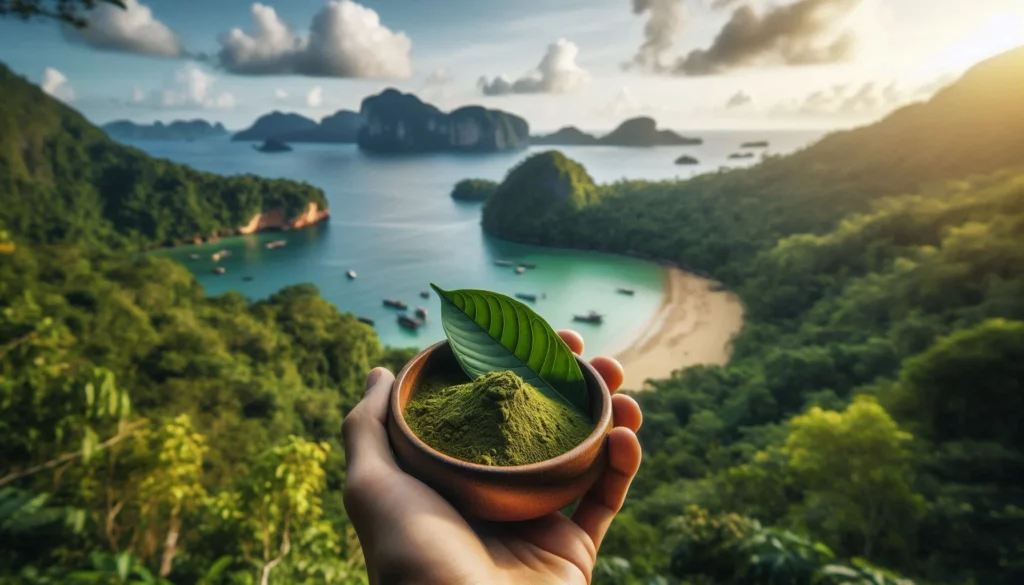
A hand presents a bowl of kratom powder with a fresh leaf, overlooking a stunning tropical island view.
FAQ
Q: Who were the first botanists to study kratom? A: The first botanists to study kratom, often referred to as kratom’s pioneers, included Pieter Willem Korthals, who named Mitragyna speciosa in 1839, and George Darby Haviland, who refined its classification in 1859. Their work introduced kratom to Western science and established its taxonomic identity.
Q: Why did botanists in the 19th century focus on kratom? A: Botanists like Korthals and Ridley studied kratom due to its widespread use in Southeast Asia and its potential economic or medicinal value. During the colonial era, European powers sought to catalog and exploit natural resources, making kratom’s cultural significance and unique properties a subject of interest.
Q: How did indigenous knowledge influence kratom’s pioneers? A: Indigenous knowledge was crucial for kratom’s pioneers. Botanists like Henry Ridley and Isaac Henry Burkill relied on local guides and healers to understand kratom’s traditional uses, such as energy enhancement and opioid withdrawal relief, which they documented in their ethnobotanical studies.
Q: What challenges did kratom’s pioneers face in their research? A: Kratom’s pioneers faced challenges like navigating dense jungles, enduring tropical diseases, and overcoming language barriers. For example, Korthals worked in remote areas of the Dutch East Indies, while Ellen Field faced skepticism as a female chemist in the early 20th century.
Q: How did Ellen Field’s work differ from other kratom pioneers? A: Unlike botanists focused on taxonomy or ethnobotany, Ellen Field, a chemist, studied kratom’s chemical composition. Her isolation of mitragynine in 1921 marked a shift toward understanding kratom’s pharmacological potential, distinguishing her from pioneers like Korthals or Ridley.
Q: Are the works of kratom’s pioneers still relevant today? A: Yes, the works of kratom’s pioneers remain relevant. Their taxonomic, ethnobotanical, and chemical insights provide a foundation for modern research into kratom’s properties and cultural significance, informing discussions on its potential uses and regulatory status.
Q: How can I learn more about the history of kratom’s pioneers? A: To learn more about kratom’s pioneers, explore historical botanical texts like Burkill’s A Dictionary of the Economic Products of the Malay Peninsula or Korthals’ monographs. Archives at institutions like Kew Gardens or the Singapore Botanic Gardens also offer valuable resources.
Conclusion
The story of kratom’s pioneers is not just a historical account; it’s an invitation to engage with the natural world. Whether you’re a botanist, a historian, or simply someone fascinated by plants, their work encourages us to ask questions, seek answers, and appreciate the intricate connections between people and the environment. Kratom’s journey, shaped by these seven figures, reminds us that discovery is a collective endeavour, driven by passion and perseverance.
As you reflect on the lives of Korthals, Haviland, Field, Ridley, Burkill, Holmes, and Thunberg, consider the plants around you. What stories do they hold? What pioneers might have studied them? The legacy of kratom’s pioneers invites us all to explore, learn, and honour the botanical wonders that enrich our world.
Disclaimer
The information presented in this blog is intended for educational purposes only. It explores the contributions of botanists and researchers who studied Mitragyna speciosa (kratom) and does not constitute medical, legal, or health advice. Readers should exercise caution and critical judgment when considering the use of kratom or any related substances.
This blog is not a substitute for professional medical advice, diagnosis, or treatment. Individuals considering kratom for any purpose should consult a qualified healthcare provider to discuss potential risks, benefits, and interactions with existing medications or conditions. Pregnant or breastfeeding individuals, those with liver or kidney issues, or those taking prescription medications should exercise particular caution, as kratom may pose additional risks.
The blog references historical and traditional uses of kratom as documented by botanists and researchers. These accounts reflect past practices and do not endorse or recommend modern use. Scientific understanding of kratom has evolved, and ongoing research continues to explore its pharmacological properties and safety. The author and publisher are not liable for any adverse effects, legal consequences, or other outcomes resulting from its use or misuse of kratom.
On February 16, 2026, select provinces will observe regional holidays.
Canada Post will operate as normal and all shipments will be processed as usual.
FedEx will be closed in Prince Edward Island (Islander Day); Alberta, British Columbia, Ontario, Saskatchewan, and New Brunswick (Family Day); Manitoba (Louis Riel Day); and Nova Scotia (Heritage Day). FedEx shipments to these provinces will move the next business day.