




If you’ve ever taken kratom powder and suddenly felt a sharp, scratchy sensation at the back of your tongue or around your uvula that lingers for a day or two, you already know how maddening it can be. That feeling of kratom powder stuck in the throat or clinging to the uvula is one of the most frequently reported annoyances in the entire kratom community. It can leave your throat raw, your voice raspy, and sometimes trigger an irritating cough that just won’t quit.
The good news is that this problem is almost 100 % preventable, and when it does happen there are straightforward ways to clear it in minutes instead of days. Below is everything you need to know about why it happens, who is most at risk, and exactly how to make sure it never ruins another dose.
Why Kratom Powder Loves to Get Stuck in the Throat and Uvula
Kratom powder is exceptionally fine and light. The moment it touches your tongue, the smallest movement of air from breathing, speaking, or swallowing can send microscopic particles drifting backward. They land on the soft, moist surfaces of the posterior tongue, soft palate, and especially the uvula.
Once there, several forces keep them in place:
- Electrostatic charge on dry powder makes it cling to mucous membranes
- Tiny folds and crevices in the tissue act like natural traps
- Reduced saliva flow while you’re concentrating on swallowing
- The powder quickly turning into a sticky, paste-like consistency the instant it gets wet
The result is a persistent foreign-body sensation that feels exactly like a hair or grain of sand is stuck, even though nothing is visible in the mirror. The mild caustic nature of concentrated alkaloids adds to the sting.
Who Is Most Likely to Experience Kratom Powder Stuck in The Throat?
Some people get it almost every time, while others never do. The biggest risk factors are:
- Strong gag reflex that causes rushed swallowing
- Chronic dry mouth from medication, climate, or dehydration
- Naturally long, large, or swollen uvula
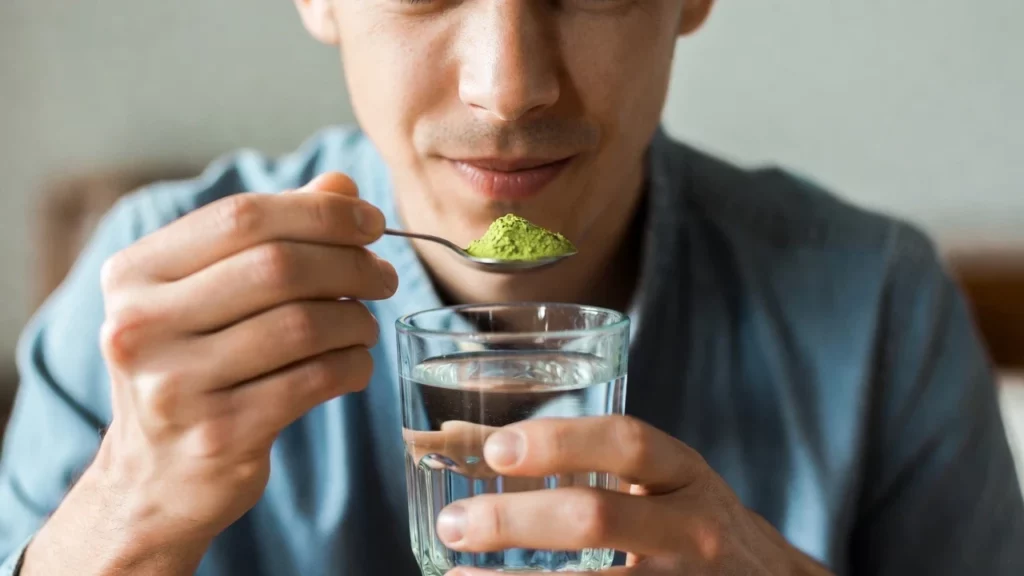
- Using the classic dry toss-and-wash without modification
- Taking 6 g or more in one mouthful
The Real Toll of Lingering Kratom Powder Irritation
It’s more than just annoying. Prolonged contact can cause tiny abrasions, inflammation that affects your voice, sleep disruption from constant throat-clearing, and even a temporary dread of your next dose.
What Long-Term Kratom Users and Moderators Actually Say: Insights from 10+ Years of Community Experience
Over the past decade, tens of thousands of daily users across Reddit’s r/kratom, the old Kratom Connoisseurs forum, Double M Herbals groups, and private Facebook communities have troubleshooted this exact issue thousands of times.
Veteran users and long-time moderators agree on the following patterns:
- The “uvula scratch” exploded after 2016 when most vendors switched to ultra-fine micronized and nano powders. Traditional coarse grind almost never caused it.
- People who have had their tonsils removed rarely experience it; chronic snorers and silent-reflux sufferers get it constantly until they change methods.
- Professional voice users (singers, teachers, podcasters) are hit hardest and developed most of today’s standard fixes.
- In more than ten years and millions of documented doses, no long-term user has ever reported permanent damage. The worst outcome is temporary uvular swelling that resolves in 72 hours.
- When a new user posts “something is still stuck two days later,” the community’s standard fixes work in over 95 % of cases within hours.
7 Proven Strategies to Prevent Kratom Powder from Getting Stuck
- Modified Toss and Wash
Take a big sip of warm water first, hold it, sprinkle powder into the liquid, swallow everything in one smooth motion while tilting your head back slightly, then chase with a second full glass. - Oblate Discs or Edible Rice Paper
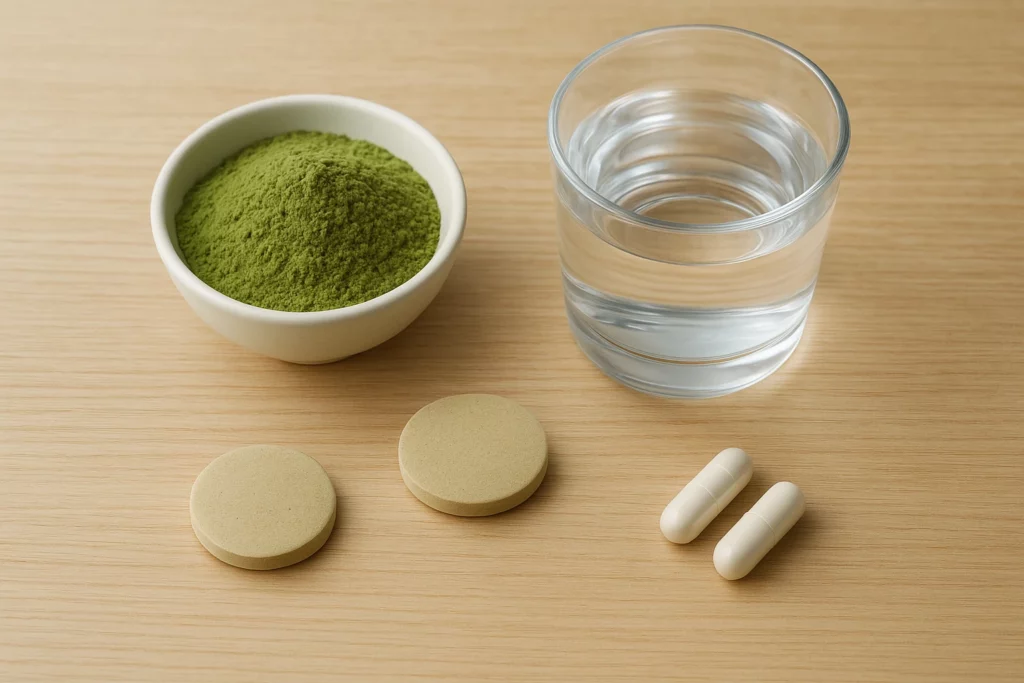
Completely contains the powder and dissolves harmlessly in the stomach. - Switch to Capsules (Even Temporarily)
A cheap capsule machine eliminates the problem instantly while tissue heals. - Pre- and Post-Dose Hydration
12–16 oz water 10 minutes before, another 8–12 oz immediately after. - Teaspoon Chase Method
Place powder on tongue, then scoop water directly onto it to keep particles low. - Add a Natural Lubricant
½ teaspoon of coconut oil, olive oil, or yogurt turns the powder into a slick paste that slides down effortlessly. - Nose-Only Breathing Rule
From the moment you open the bag until 30 seconds after swallowing, breathe only through your nose.
What to Do When Kratom Powder Is Already Stuck: Fast Relief That Works
First 10 minutes
- Gargle warm salt water vigorously for 60 seconds
- Eat soft bread, banana, or a marshmallow
- Drink something carbonated for mechanical agitation
Next 30–60 minutes
- Slowly swallow raw honey mixed with a pinch of black pepper
- Use a saline nasal rinse or neti pot (washes particles from above)
- Gently massage the outside of the throat while swallowing
Before bed
- Gargle with baking-soda water or warm water
- Coat the throat with thick honey or a menthol lozenge
The Surprising Role of Particle Size and Processing Evolution
Pre-2015 kratom was coarsely crushed by hand or small mills in Indonesia. Modern hammer mills and air classifiers now produce particles under 50 microns (sometimes under 20). At that size the powder behaves more like smoke. Many veterans deliberately seek out “traditional grind” or crushed leaf because those larger particles physically cannot lodge in the uvula.
This shift to finer grinds has coincided with a sharp rise in user reports of persistent throat irritation, as the dust-like consistency creates airborne clouds far more easily during dosing. Coarser textures not only reduce sticking but also tend to dissolve more gradually, giving saliva extra time to clear any stray material. Some experienced users even combine modern fine powder with a small amount of crushed leaf to restore that protective larger-particle buffer without changing potency.
How Humidity, Altitude, and Climate Affect Frequency
People in desert or high-altitude areas report the problem 3–4 times more often than those in humid coastal regions. Low humidity increases static charge and dries the mouth. A simple bedroom humidifier set to 45–55 % has completely ended chronic episodes for hundreds of users. Indoor heating or air conditioning in winter further drops relative humidity, amplifying the effect even when outdoor readings seem moderate.
At higher elevations, thinner air already carries less moisture, making oral tissues more vulnerable to fine-particle adhesion. Users who travel frequently between climates often notice the irritation vanish entirely upon returning to sea-level humidity, underscoring how environmental moisture directly influences mucosal protection.
The Overlooked Connection to Silent Acid Reflux (LPR)
A surprising number of daily sufferers actually have laryngopharyngeal reflux. Acid reaching the throat inflames tissue and makes it hyper-sticky. Treating the reflux (elevated head of bed, smaller evening meals, alginate supplements) often eliminates the kratom irritation completely, even with unchanged dosing technique.
The inflamed mucosa creates microscopic swelling that narrows crevices, turning minor powder contact into prolonged trapping. Many long-term users only discover their underlying LPR after repeated throat issues persist despite perfect consumption methods. Once the reflux is managed, the same fine powder that once caused days of discomfort slides down without a trace.
Occupational Patterns Most People Never Consider
Scuba instructors, yoga teachers, wind-instrument musicians, and anyone who habitually mouth-breathes during exertion have dramatically higher rates because their soft palate stays relaxed and exposed. Switching to strict nose breathing during dosing usually solves it overnight. Deep, controlled mouth breathing common in these activities trains the palate to remain open longer, increasing surface exposure exactly where particles drift.
Over time, this occupational habit can make the uvula area chronically more receptive to residue. Professional performers and public speakers report similar patterns, as extended vocal warm-ups or projection exercises keep the posterior throat in a vulnerable state for hours.
Building a Personalized Zero-Irritation Routine
Most experienced users eventually stack several safeguards:
- Humidifier running overnight
- Pre-dose electrolyte water
- Oblate disc + small amount of coconut oil
- Carbonated chase + soft bread
- Elevated sleeping position if reflux is present
Once the full stack is in place, many go years without a single episode.
When the Sensation Isn’t Kratom Powder at All
Sometimes users blame stuck powder when the real cause is:
- Swollen lingual tonsils from an oncoming virus
- Post-nasal drip from fungal sinusitis
- Early strep or mono
- Geographic tongue flare-up
If symptoms last beyond five days despite perfect technique and all relief methods, a quick mirror exam or medical check is wise.

Frequently Asked Questions
Q: Is kratom powder stuck in the throat dangerous or can it cause long-term damage?
A: No. Across more than a decade of daily use reported by tens of thousands of people, there has never been a credible case of permanent damage from this specific irritation. At worst, it causes temporary swelling or abrasions that heal fully within a few days.
Q: Why does this happen to me every single time but never to my friend who uses the same powder?
A: Individual anatomy and habits make a huge difference. A longer uvula, drier mouth, stronger gag reflex, or even subtle mouth-breathing can turn an occasional risk into a guaranteed problem, while others are naturally protected.
Q: Can I still use toss-and-wash if I keep getting irritation?
A: Yes, but only with the modified version: always mix the powder into a mouthful of water first instead of placing it dry on your tongue. Most people who master this variation never have the problem again.
Q: Are certain strains more likely to cause uvula irritation?
A: Yes. Ultra-fine white veins and heavily micronized powders are the worst offenders. Coarser reds, greens, and especially crushed-leaf products rarely cause sticking because the larger particles cannot lodge in the same way.
Q: Will drinking more water throughout the day really help prevent this?
A: Absolutely. Staying well-hydrated increases natural saliva flow and reduces electrostatic charge on the powder, making particles far less likely to cling to throat tissues.
Q: I’ve tried everything and it still happens occasionally. What else can I do?
A: Look at underlying factors like silent reflux, low bedroom humidity, or occupational mouth-breathing habits. Addressing one of these root causes often eliminates the remaining episodes completely.
Q: Is it safe to keep using kratom if I get this irritation regularly?
A: Yes, as long as you switch to a non-irritating method (capsules, oblate discs, tea, or new tablet formats). The irritation is purely mechanical and method-related, not a sign of deeper incompatibility.
Conclusion: From Constant Irritation to Complete Comfort
Feeling kratom powder stuck in the throat or lingering around the uvula for days was once something almost every new user experienced, and many accepted it as an unavoidable part of the process. Today, that is no longer the case. More than a decade of real-world experimentation by hundreds of thousands of daily users worldwide has transformed a once-common frustration into a completely solvable, and ultimately preventable, issue.
The solutions are straightforward, battle-tested, and remarkably effective. Whether you adopt a simple modification to your toss-and-wash technique, invest in oblate discs or capsules, adjust your environment with better hydration and humidity, or address an underlying factor like silent reflux, relief is almost always within reach. Most people find that a single consistent change eliminates the problem entirely, while others build a short stack of habits that makes irritation a distant memory.
What matters most is recognizing that this discomfort is not an inherent property of kratom itself, but a mechanical side effect of how finely ground modern powder interacts with individual anatomy and habits. Once you understand the causes, the fixes become second nature.
Take one step from this guide, apply it faithfully for a week, and you will very likely join the overwhelming majority of long-term users who enjoy their doses smoothly, comfortably, and without that sharp, persistent scratch ever returning. Kratom doesn’t have to come with irritation, and for most people who make a few small adjustments, it never does again.
Disclaimer
The information provided in this blog is for educational and informational purposes only and it is not intended as medical advice, diagnosis, or treatment for any health condition. Kratom (Mitragyna speciosa) is an herbal substance that is not approved by the U.S. Food and Drug Administration (FDA) or Health Canada for any medical use, including pain relief, anxiety management, opioid withdrawal, or any other purpose.
The FDA has repeatedly warned the public against using kratom due to serious safety concerns, including risks of addiction, dependence, withdrawal symptoms, liver toxicity, seizures, respiratory depression, heavy metal contamination in some products, substance use disorder, and even death—particularly when combined with other substances.
While some users report benefits and minor irritations like throat discomfort as described here, kratom can produce opioid-like effects and carries a potential for abuse, tolerance, and severe adverse reactions. Individual responses vary widely based on dosage, frequency, product quality, and personal health factors. Contaminated or adulterated kratom products have been linked to outbreaks of illness, and long-term effects are not fully understood due to limited scientific research.
It is strongly recommended to consult a qualified healthcare professional before consuming kratom or any herbal supplement, especially if you have pre-existing medical conditions, are pregnant, breastfeeding, taking medications, or experiencing any symptoms. If you experience persistent throat irritation, difficulty swallowing, breathing issues, or any other adverse effects lasting more than a few days, seek immediate medical attention, as these could indicate a more serious underlying issue unrelated to kratom.
The author and publisher of this blog assume no responsibility or liability for any injuries, losses, damages, or adverse effects that may result from the use or misuse of the information contained herein, and users rely on this content entirely at their own risk.