


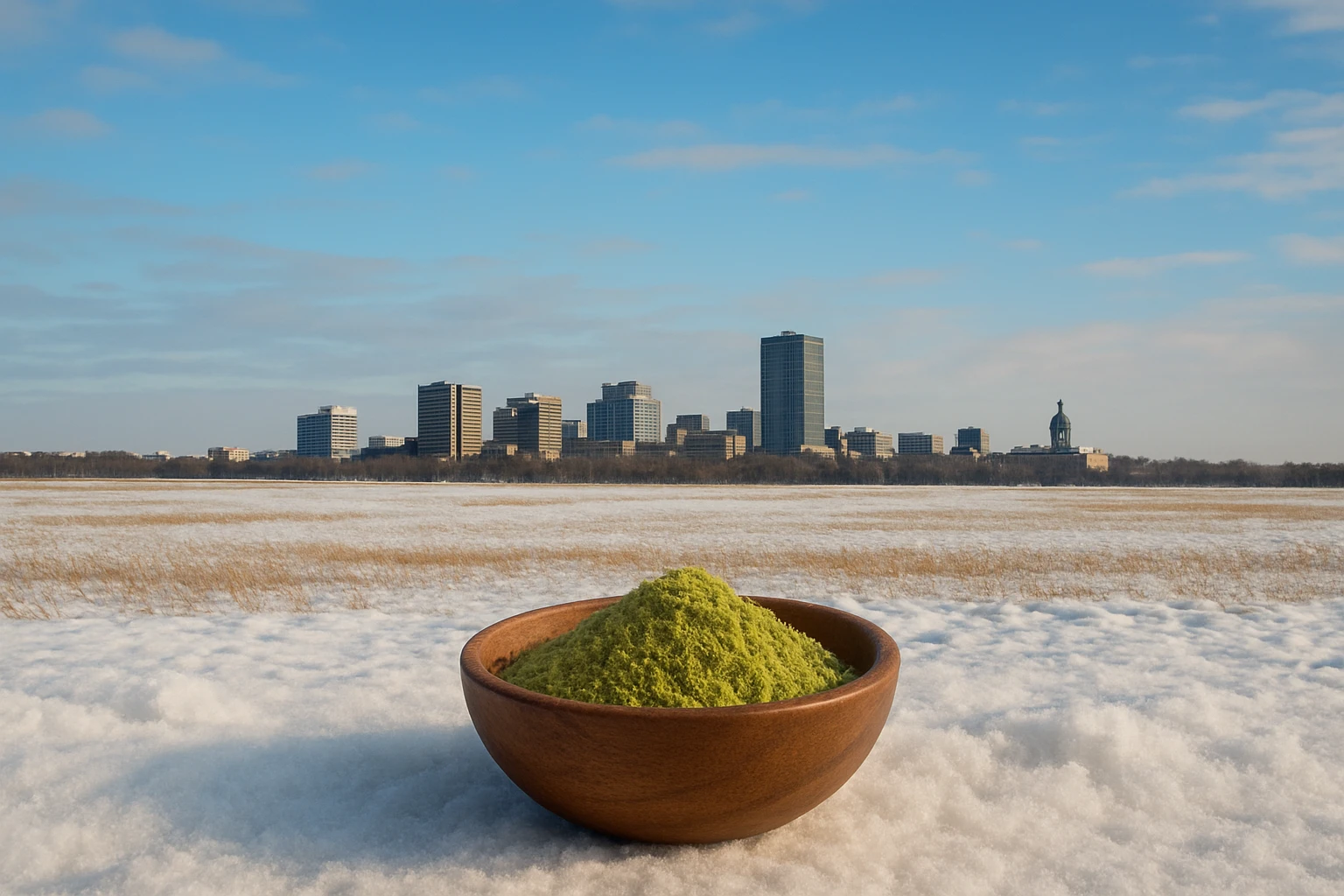

In the heart of the Canadian prairies, where long winters and vast distances shape daily life, residents of Regina, Saskatchewan, have quietly joined a growing number of Canadians exploring Mitragyna speciosa, more commonly known as kratom. Interest in kratom in Regina mirrors a broader national curiosity about this Southeast Asian botanical, often sought for its reported ability to boost energy, ease discomfort, or simply offer a moment of calm amid the stresses of modern life.
Derived from the leaves of a tropical evergreen tree, kratom has been used for centuries in its native regions. In recent years this Southeast Asian botanical has traveled far beyond its traditional roots, finding its way into North American conversations about natural wellness alternatives. For many in Regina, the search begins with a simple online query or a discreet visit to a local shop, yet what follows is rarely straightforward.
This nuanced reality, combined with Saskatchewan’s geographic isolation and extreme seasonal challenges, has shaped distinct patterns of access, sourcing, and informed decision-making among those who choose to explore kratom. As public interest continues to evolve alongside ongoing scientific scrutiny and shifting international policies, understanding both the cultural context and the practical considerations becomes essential for anyone navigating this space responsibly.
Understanding Kratom and Its Active Compounds
Kratom comes from the leaves of Mitragyna speciosa, a tree native to Thailand, Indonesia, Malaysia, and surrounding regions. Indigenous communities have used it traditionally for centuries, often chewing fresh leaves or brewing them into tea for stimulant-like effects at lower amounts or sedative properties at higher ones.
The primary alkaloids, mitragynine and 7-hydroxymitragynine, interact with opioid receptors in the brain, though differently from classic opioids. Research published in the Journal of Medicinal Chemistry highlights how mitragynine acts as a partial agonist, potentially explaining reports of mood elevation, increased focus, or relaxation depending on dosage and individual factors.
In Canada, interest has grown amid discussions of natural alternatives, but Health Canada stresses insufficient clinical evidence for safety or efficacy under regulated dosing. A 2022 review by the World Health Organization’s Expert Committee on Drug Dependence noted kratom’s long history of use while recommending continued monitoring rather than immediate international scheduling.
Kratom in Regina: The Federal Legal Framework in 2025
No major changes occurred to kratom’s status in Canada throughout 2025. The plant does not appear on the schedules of the Controlled Drugs and Substances Act, meaning personal possession and use carry no criminal penalties nationwide, including in Regina.
However, the Food and Drugs Act and Natural Health Products Regulations prohibit selling or advertising kratom for ingestion, inhalation, or therapeutic purposes without a Natural Product Number (NPN). As of November 2025, zero kratom products hold an NPN, rendering all consumptive sales unauthorized.
Health Canada’s latest advisories reiterate concerns over potential risks, including dependency, liver effects, and interactions with other substances. They advise consulting healthcare professionals before any use, particularly for those with pre-existing conditions.
Saskatchewan aligns completely with these federal guidelines. Unlike provinces with documented retail enforcement actions (primarily in Alberta and Ontario), no public Health Canada seizure notices target Regina or broader Saskatchewan retailers in recent years. This lower enforcement visibility contributes to occasional low-key availability, but it does not alter the underlying rules.

Why Physical Stores Remain Rare and Unreliable for Kratom in Regina Residents
Regina’s retail scene reflects Canada’s cautious approach. A small number of vape shops, head shops, or alternative wellness outlets in areas like downtown or Victoria Avenue might occasionally stock kratom powder or capsules, always labeled strictly as “not for human consumption” and often marketed as botanical specimens, incense, or research materials.
Stock proves highly inconsistent. Retailers face significant risk from potential inspections, leading many to avoid carrying it altogether or to remove items quickly if concerns arise. Community discussions and provincial overviews confirm that even when available locally, selection stays limited, prices run higher than online alternatives, and quality assurance varies widely.
For Regina specifically, the city’s size (around 250,000 residents) and prairie location mean fewer specialty stores compared to Calgary or Edmonton. Harsh Saskatchewan winters add another layer: delayed restocking during extreme cold snaps leaves shelves empty for weeks. Many locals report driving across town only to find nothing in stock, reinforcing why most turn elsewhere.
Attempting to purchase without clear non-consumptive labeling could inadvertently put retailers at risk, even if buyers face no personal legal issues. This dynamic explains the honest advice echoed in harm-reduction circles: physical stores offer convenience on rare occasions but rarely reliability or transparency.
Online Options: The Primary Choice for Kratom in Regina Access
Given local limitations, the overwhelming majority of Saskatchewan users, including those searching kratom in Regina, rely on domestic Canadian online sources. These operate within the same regulatory framework, shipping products labeled for non-ingestive uses with disclaimers.
Why Regina Residents Overwhelmingly Choose Online Sources
The combination of inconsistent local stock, higher retail prices, and the convenience of home delivery makes online the default for most people in the province. Even on the rare days a Regina shop has product, selection is usually limited to one or two basic varieties, while online sources offer dozens of options year-round.
Shipping Speeds and Logistics for Saskatchewan
Canada Post Xpresspost and FedEx routes across the prairies are efficient. Orders placed from warehouses in British Columbia or Ontario typically reach Regina postal codes in 1–3 business days. Tracked shipping is standard, and ground transport keeps costs reasonable compared to air freight required for more remote provinces.
Winter Weather Considerations in Regina
Saskatchewan winters routinely drop below -30°C. Poorly packaged orders left on porches can freeze, potentially affecting powder texture. Responsible sources take measures to ensure proper packaging is used and it’s properly sealed or offer signature-required delivery. Many Regina buyers time larger orders for milder seasons or request hold-for-pickup at the post office.
Domestic vs International Orders: Risk Comparison
Domestic shipments avoid Canada Border Services Agency scrutiny almost entirely. International packages (especially from Indonesia or the U.S.) face a much higher chance of delay or seizure under the same unauthorized-product rules. Most experienced buyers stick to Canadian-based operations to eliminate that uncertainty.
Key Advantages Over Local Shopping
| Advantage | Online Benefit | Local Reality |
|---|---|---|
| Selection | Dozens of strains and forms | Usually 1–3 options if any |
| Price | Bulk discounts common | 30–100% markup typical |
| Quality transparency | Lab reports readily available | Rarely provided in-store |
| Convenience | Delivered to your door | Requires driving in -40°C weather |
| Year-round availability | Unaffected by weather or inspections | Stock vanishes without warning |

Evaluating Sources Responsibly: A Practical Checklist
No matter the method, prioritizing verifiable quality protects health. Look for sources that voluntarily provide:
| Criteria | Why It Matters | Red Flags to Avoid |
|---|---|---|
| Independent lab testing | Confirms alkaloid levels and screens for contaminants like heavy metals or pathogens | No tests or in-house only |
| Transparent sourcing | Ethical farms in Indonesia with export compliance reduce adulteration risk | Vague origins or unrealistically low prices |
| Clear, compliant labeling | Aligns with Canadian rules; avoids unsubstantiated claims | Any therapeutic promises |
| Customer education focus | Offers dosage guidelines and harm-reduction info without hype | Aggressive marketing |
Starting with small trial amounts allows personal assessment of effects. The “start low, go slow” principle appears consistently in responsible discussions.
Health Canada’s Official Safety Profile
Transparency requires acknowledging official warnings. Health Canada lists potential adverse effects including nausea, constipation, dizziness, dependency with regular high-dose use, and rare but serious outcomes like seizures or liver injury, often when mixed with other substances.
Canadian poison control data remains limited nationally, but British Columbia’s centre reported 32 kratom-related calls from 2012-2019, mostly mild to moderate. No Saskatchewan-specific spikes appear in public records, though under-reporting affects all botanicals.
Interactions pose particular concern: combining kratom with sedatives, alcohol, or certain medications can amplify risks. Pregnant individuals, those with liver conditions, or anyone on prescription drugs should avoid it entirely without medical supervision.
The Science Behind Variability and Responsible Use Patterns
Alkaloid content fluctuates based on harvest region, drying methods, and processing. A 2021 study in Drug and Alcohol Dependence analyzed commercial samples and found mitragynine ranging from 0.6% to over 2%, explaining why effects differ between batches.
Fermentation techniques used for some “bentuangie” varieties alter profiles further, creating smoother but potentially stronger products. Understanding these nuances helps set realistic expectations.
Responsible patterns emphasize moderation: many experienced users cycle usage (e.g., several days on, followed by breaks) to minimize tolerance. Hydration, nutrition, and avoiding daily high doses align with harm-reduction best practices shared in peer communities.

Frequently Asked Questions About Kratom in Regina
Q: Is it legal to buy or possess kratom in Regina, Saskatchewan?
A: Possession and personal use are completely legal across Canada, including Regina. However, Health Canada has not authorized kratom for sale as a consumable product, so it can only be sold labeled “not for human consumption.”
Q: Can I walk into a store in Regina and buy kratom today?
A: Possibly, but it is extremely unreliable. A few vape or head shops occasionally carry it (strictly labeled as a botanical or incense), but stock disappears quickly and most locations do not carry it at all due to federal compliance concerns.
Q: Will my package get seized if I order kratom online to Regina?
A: Domestic Canadian orders almost never get seized. International orders (especially from Southeast Asia or the U.S.) carry a significantly higher risk of being stopped by the Canada Border Services Agency.
Q: How long does shipping take to Regina from Canadian vendors?
A: Typically 1–3 business days via Xpresspost or FedEx from BC or Ontario warehouses. Winter weather rarely causes major delays on prairie routes.
Q: Is kratom banned or scheduled in Saskatchewan like it is in some U.S. states?
A: No. Saskatchewan follows only the federal rules with no additional provincial bans or restrictions as of November 2025.
Q: Does Health Canada consider kratom safe?
A: No. Health Canada states there is insufficient evidence of safety and efficacy, and they continue to warn about risks of dependency, liver injury, and drug interactions.
Q: Can I drive across the border to the U.S. and bring kratom back to Regina?
A: Not recommended. Many U.S. states allow it, but bringing any amount back into Canada risks seizure and possible charges for importing an unauthorized health product.
Q: How do I know if the kratom I receive is contaminated?
A: Only purchase from sources that voluntarily provide recent third-party lab tests for heavy metals, pathogens, and accurate alkaloid content. It is not advised to buy from vendors who cannot produce current certificates of analysis.
Final Thoughts for Kratom in Regina Searchers
In summary, individuals seeking kratom in Regina must navigate a regulatory environment that permits personal possession while strictly prohibiting its sale or promotion for human consumption. The scarcity and unpredictability of local retail options, combined with Saskatchewan’s challenging winter conditions, have solidified domestic online sourcing as the most practical and consistent approach for residents who choose to access this botanical.
Above all, informed decision-making remains paramount. Prospective users are strongly encouraged to prioritize sources offering third-party laboratory verification, adhere to conservative dosing practices, and consult qualified healthcare professionals. While public interest in Mitragyna speciosa continues to evolve alongside broader discussions of natural health products and harm reduction, the current federal framework underscores the importance of caution, transparency, and personal responsibility.
Disclaimer
The information presented in this blog is for educational and informational purposes only. It does not constitute medical, health, legal, pharmaceutical, or professional advice of any kind. Kratom (Mitragyna speciosa) is not approved by Health Canada as a natural health product, dietary supplement, food, or drug, and no kratom product has been authorized for sale or use for human consumption in Canada. Kratom may pose health risks, including but not limited to nausea, vomiting, constipation, dizziness, tremors, dependency and withdrawal symptoms and liver toxicity.
Readers are strongly urged to consult a qualified healthcare professional before considering any use of kratom or any other unregulated botanical substance, especially if pregnant, breastfeeding, under 18, elderly, or managing any medical condition or medication regimen. The authors and publishers of this blog assume no liability whatsoever for any decisions made or actions taken based on the information provided herein, including any adverse health outcomes, legal consequences, or financial loss. Personal responsibility, thorough independent research, and professional medical guidance are essential when evaluating any substance affecting physical or mental health.