Exploring the Kratom Endocannabinoid Connection Within Your Body
Faust
The kratom endocannabinoid connection sparks curiosity among those exploring plant-based wellness. Kratom has gained attention for its potential effects on mood, energy, and discomfort. Meanwhile, the endocannabinoid system (ECS) is a complex network in the human body that regulates balance and harmony. Could there be a link between these two? This blog explores whether kratom interacts with the ECS, offering a clear and engaging look at their possible relationship. Written for those seeking knowledge, this post unpacks the science and implications in a way that’s easy to grasp.
Understanding Kratom: A Plant with a Rich History
Kratom, scientifically known as Mitragyna speciosa, grows in the lush forests of countries like Thailand, Malaysia, and Indonesia. For centuries, local communities have chewed its leaves or brewed them into tea to boost stamina, ease fatigue, or enhance sociability. The plant contains active compounds called alkaloids, with mitragynine and 7-hydroxymitragynine being the most studied. These alkaloids interact with various systems in the body, producing effects that range from stimulation at lower doses to relaxation at higher ones.
Unlike many modern substances, kratom’s use is steeped in tradition. Farmers and labourers historically relied on it to endure long hours under the sun. Today, people worldwide explore kratom for its potential to support wellness, often drawn to its natural origins. To understand the kratom endocannabinoid connection, we first need to know how kratom functions in the body and which systems it might influence.
The Endocannabinoid System: Your Body’s Balancing Act
The ECS is like an internal conductor, orchestrating balance across bodily functions. Discovered in the 1990s, this system plays a role in regulating mood, sleep, appetite, immune response, and discomfort perception. It’s made up of three key components:
Endocannabinoids: These are molecules produced by your body, like anandamide and 2-AG, which act as messengers.
Receptors: CB1 and CB2 receptors are found throughout the body. CB1 receptors are mainly in the brain and nervous system, while CB2 receptors are more common in immune tissues.
Enzymes: These break down endocannabinoids after they’ve done their job, keeping the system in check.
The ECS maintains homeostasis, or internal stability, by responding to changes in the environment. For example, if stress disrupts your mood, the ECS might release anandamide to calm your mind. Understanding this system is crucial to exploring whether kratom influences it, forming the foundation of the kratom endocannabinoid connection.
Morning serenity with kratom powder overlooking a tranquil river valley
How Kratom Interacts with the Body
Kratom’s effects stem from its alkaloids, which interact with various receptors in the brain and body. Most notably, mitragynine binds to opioid receptors, which are involved in managing discomfort and mood. Unlike traditional opioids, kratom’s alkaloids act as partial agonists, meaning they activate these receptors more gently, potentially reducing certain risks.
Beyond opioid receptors, kratom may also engage with other systems. It’s known to influence adrenergic receptors, which regulate energy and alertness, and serotonin receptors, which affect mood and emotional balance. These interactions explain why users report diverse effects, from increased focus to a sense of calm. The question is whether the ECS is among the systems kratom touches, creating a kratom endocannabinoid connection.
Exploring the Kratom Endocannabinoid Connection
The idea of a kratom endocannabinoid connection arises from the fact that both kratom and the ECS influence similar aspects of wellness, like mood and discomfort. However, direct evidence linking kratom to the ECS is limited, so let’s explore the possibilities based on what we know.
Alkaloids and Receptor Activity
Kratom’s primary alkaloids, mitragynine and 7-hydroxymitragynine, are not known to bind directly to CB1 or CB2 receptors in the ECS. Unlike cannabinoids found in cannabis, which clearly target these receptors, kratom’s compounds seem to focus on opioid and other neurotransmitter systems. This suggests that any connection might be indirect.
For instance, kratom’s influence on serotonin pathways could overlap with the ECS, as serotonin and endocannabinoid signaling sometimes interact to regulate mood. Similarly, kratom’s effects on discomfort perception might complement the ECS’s role in modulating sensory experiences. While not a direct interaction, these overlapping functions hint at a potential synergy.
Modulation of Endocannabinoid Tone
Another angle to consider is whether kratom affects the production or breakdown of endocannabinoids like anandamide. Some substances, like CBD, inhibit enzymes that degrade anandamide, increasing its availability in the body. There’s no clear evidence that kratom does this, but its broad effects on neurotransmitter systems leave room for speculation.
If kratom were to enhance endocannabinoid levels indirectly, it could amplify the ECS’s balancing effects. This might explain why some users report a sense of calm or improved mood, effects often associated with ECS activity. Until more research emerges, this remains a hypothesis worth exploring in the kratom endocannabinoid connection.
Shared Wellness Outcomes
Even without direct receptor binding, kratom and the ECS may work toward similar goals. Both are linked to supporting emotional balance, reducing discomfort, and promoting relaxation. For example, the ECS helps regulate stress responses, while kratom users often describe a soothing effect during tense moments. This overlap in outcomes suggests a functional connection, even if the mechanisms differ. By comparing their effects, we can see why the kratom endocannabinoid connection is a topic of interest. Both systems seem to support the body’s ability to adapt to challenges, whether physical or emotional, creating a sense of harmony.
Comparing Kratom to Other Plant-Based Substances
To better understand the kratom endocannabinoid connection, it helps to compare kratom to other plants that interact with the ECS, like cannabis and cacao.
Cannabis and the ECS
Cannabis is the benchmark for ECS interaction. Its compounds, THC and CBD, directly engage CB1 and CB2 receptors. THC mimics anandamide, producing psychoactive effects, while CBD modulates receptor activity and enzyme function. This clear interaction makes cannabis a benchmark for studying the ECS.
Kratom, by contrast, lacks compounds that directly target cannabinoid receptors. Its effects are more aligned with opioid and serotonin systems, suggesting a different pathway to wellness. However, the shared mood-enhancing and discomfort-relieving effects of cannabis and kratom fuel speculation about indirect ECS involvement.
Cacao and Subtle ECS Effects
Cacao, the source of chocolate, offers a subtler example. It contains compounds like theobromine and phenylethylamine, which may boost anandamide levels by slowing its breakdown. Cacao’s mild mood-lifting effects align with ECS activity, but the connection is less direct than with cannabis.
Kratom’s profile is closer to cacao than cannabis in terms of ECS interaction. While it doesn’t target cannabinoid receptors, its broad influence on mood and energy could involve secondary effects on the ECS. This comparison highlights the complexity of the kratom endocannabinoid connection, where indirect pathways may play a role.
A tranquil moment of yoga amidst lush greenery and golden sunlight.
Why the Connection Matters
Understanding the kratom endocannabinoid connection isn’t just academic, it has practical implications for those exploring natural wellness. If kratom does influence the ECS, even indirectly, it could offer a unique way to support balance in the body. Here’s why this matters:
Holistic Wellness Support
The ECS is a master regulator of homeostasis, so any substance that supports it could enhance overall well-being. If kratom contributes to this system, it might complement lifestyle practices like diet, exercise, and meditation, which also bolster ECS function. This holistic approach appeals to those seeking natural ways to thrive.
Personalized Exploration
Everyone’s body responds differently to plant-based substances. Some may find kratom’s effects align closely with ECS-related benefits, like improved mood or relaxation. Understanding the potential connection empowers individuals to make informed choices about their wellness journey, tailoring their approach to their unique needs.
Future Research Directions
The kratom endocannabinoid connection highlights a gap in current knowledge. More studies could reveal whether kratom’s alkaloids influence endocannabinoid levels or receptor activity. This research could lead to new insights into how plant medicines support human health, benefiting both users and the scientific community.
Potential Challenges and Considerations
While the kratom endocannabinoid connection is intriguing, it’s important to approach it with balance. Kratom’s effects vary widely based on dose, strain, and individual physiology. At lower doses, it tends to energize, while higher doses promote relaxation. This variability complicates efforts to pin down its interaction with the ECS.
Additionally, kratom’s legal status differs across regions, with some areas restricting its use due to safety concerns. Users must navigate these regulations and prioritize quality sources to ensure purity and consistency. Without standardized products, it’s hard to study kratom’s effects systematically, including its potential ECS connection.
Finally, the ECS itself is still being unraveled. While we know it plays a central role in balance, its interactions with diverse substances like kratom are not fully understood. This uncertainty underscores the need for caution and curiosity when exploring the kratom endocannabinoid connection.
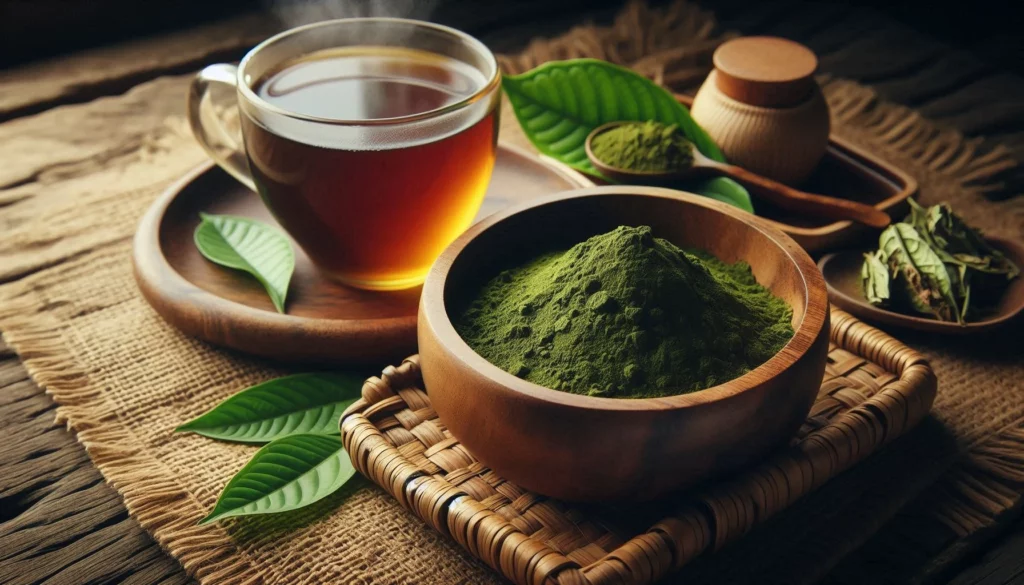
Warm tea paired with vibrant green powder on a woven mat.
Frequently Asked Questions About the Kratom Endocannabinoid Connection
Q: What makes the Kratom Endocannabinoid Connection worth exploring? A: The connection is intriguing because both kratom and the ECS influence mood, discomfort, and balance. Exploring this link helps us understand how natural substances might support wellness holistically, even if the interaction is indirect.
Q: Does kratom act like cannabis in the body? A: No, kratom and cannabis work differently. Cannabis directly targets ECS receptors, while kratom primarily interacts with opioid and serotonin systems. Any connection between the two is likely subtle and indirect, based on overlapping effects.
Q: Can kratom boost endocannabinoid levels like CBD does? A: There’s no evidence that kratom directly increases endocannabinoid levels, as CBD does by inhibiting breakdown enzymes. However, kratom’s mood and relaxation effects suggest it might indirectly support ECS-related functions, though more research is needed.
Q: Is the Kratom Endocannabinoid Connection proven by science? A: Currently, the connection is speculative. Kratom’s alkaloids don’t bind to ECS receptors, but their effects on other systems might overlap with ECS functions. Future studies could clarify this relationship.
Q: How can I learn more about kratom and the ECS safely? A: Start with reputable educational resources on kratom’s history and the ECS’s role in health. Consult wellness professionals and stay updated on emerging research to deepen your understanding of the kratom endocannabinoid connection responsibly.
Conclusion
The kratom endocannabinoid connection is a fascinating puzzle. While kratom’s alkaloids don’t appear to directly target cannabinoid receptors, their effects on mood, energy, and discomfort suggest possible overlap with the ECS’s functions. Indirect pathways, like serotonin modulation or shared wellness outcomes, keep the door open for further inquiry.
For now, the connection remains speculative but compelling. It invites us to appreciate kratom’s complexity and the ECS’s versatility. By exploring this topic, we deepen our respect for the body’s wisdom and nature’s offerings. Whether you’re a kratom enthusiast or simply curious, the kratom endocannabinoid connection offers a window into the art and science of well-being.
Disclaimer
The information provided in this blog is intended for educational and informational purposes only and should not be construed as medical advice, diagnosis, or treatment. Kratom (Mitragyna speciosa) is a plant-based substance with complex effects that vary by dose, strain, and individual physiology, and its safety profile is not fully established. Potential risks include side effects such as nausea, dizziness, or dependency with prolonged use, and its interaction with the endocannabinoid system or other bodily systems is not fully understood due to limited scientific research.
Individuals considering kratom should consult a qualified healthcare professional to discuss potential benefits, risks, and interactions with medications or pre-existing conditions. Kratom’s legal status varies by region, and users must ensure compliance with local regulations. Pregnant or breastfeeding individuals, those with medical conditions, or those taking medications should exercise particular caution and avoid use unless under medical supervision.
Always source kratom from reputable vendors to ensure quality and purity, as unregulated products may pose additional risks. The authors and publishers of this content are not responsible for any adverse effects or consequences resulting from the use of kratom or reliance on this information.
On February 16, 2026, select provinces will observe regional holidays.
Canada Post will operate as normal and all shipments will be processed as usual.
FedEx will be closed in Prince Edward Island (Islander Day); Alberta, British Columbia, Ontario, Saskatchewan, and New Brunswick (Family Day); Manitoba (Louis Riel Day); and Nova Scotia (Heritage Day). FedEx shipments to these provinces will move the next business day.