How Kratom Influences Mu-Opioid Receptors: A Fascinating Insight
Faust
Kratom has sparked curiosity for its ability to interact with the body’s mu-opioid receptors while not being classified as a traditional opioid. This unique characteristic sets kratom apart in the world of plant medicine, offering a compelling alternative for those seeking relief from pain, stress, or opioid withdrawal. For Canadians exploring natural remedies, understanding how kratom affects mu-opioid receptors without fitting the opioid mold is essential. This blog post will look into the science, history, and cultural context of kratom, providing a clear and engaging explanation for enthusiasts and newcomers alike.
What Are Mu-Opioid Receptors?
Mu-opioid receptors are proteins found on the surface of cells in the brain, spinal cord, and digestive system. They act like locks that certain molecules, or keys, can fit into, triggering specific responses in the body. When activated, these receptors influence pain perception, mood, and even breathing. Traditional opioids, like morphine or oxycodone, bind tightly to mu-opioid receptors, producing powerful pain relief but also side effects like sedation or respiratory depression.
Kratom’s interaction with mu-opioid receptors is different. Its primary active compounds, mitragynine and 7-hydroxymitragynine, engage these receptors in a way that mimics some opioid effects but avoids the full profile of opioid activity. This distinction is key to understanding why kratom occupies a unique space in plant-based wellness.
Kratom’s Active Compounds: Mitragynine and 7-Hydroxymitragynine
Kratom leaves, harvested from the Mitragyna speciosa tree, contain over 40 alkaloids, but mitragynine and 7-hydroxymitragynine are the stars of the show. Mitragynine, the most abundant alkaloid, makes up about 60% of kratom’s alkaloid content. It’s responsible for the plant’s stimulating effects at lower doses, boosting energy and focus. At higher doses, mitragynine shifts toward calming, pain-relieving properties.
7-Hydroxymitragynine, though present in smaller amounts, is far more potent. It has a stronger affinity for mu-opioid receptors, contributing significantly to kratom’s analgesic effects. Unlike traditional opioids, these compounds don’t fully activate the receptors, acting instead as partial agonists. This partial activation creates a ceiling effect, limiting the intensity of the response and reducing the risk of severe side effects like respiratory depression.
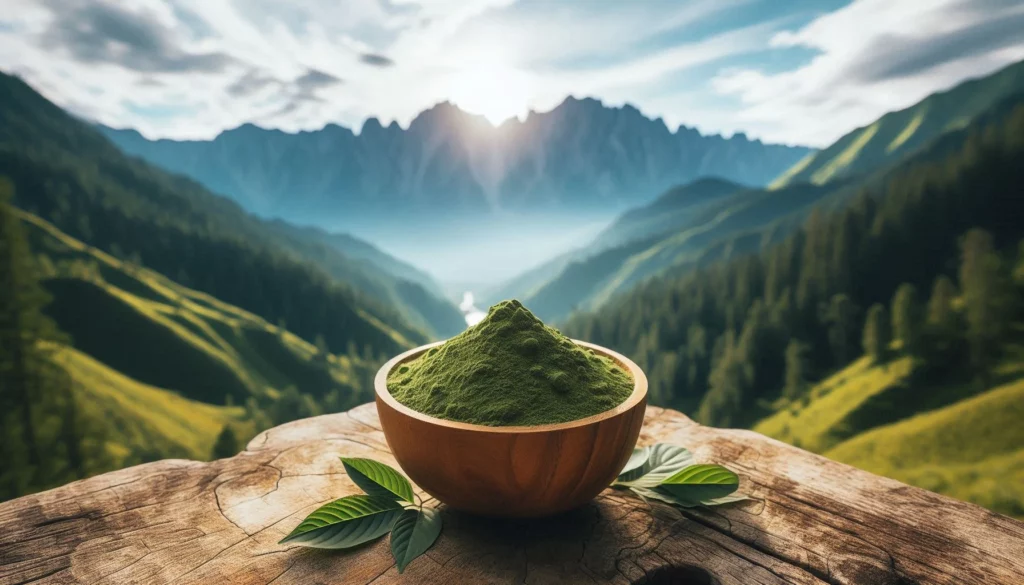
Fresh kratom powder displayed against a scenic mountain landscape.
Why Kratom Isn’t an Opioid
The term “opioid” refers to substances that fully mimic the effects of opiates, which are derived from the opium poppy. Opioids bind to mu-opioid receptors and trigger a cascade of effects, including euphoria, sedation, and, in some cases, addiction. Kratom, however, doesn’t fit this mold for several reasons.
First, kratom’s alkaloids have a unique chemical structure unrelated to opium-derived compounds. This structural difference means kratom doesn’t produce the same level of receptor activation as opioids. Second, kratom’s effects are dose-dependent, offering stimulant-like qualities at low doses and sedative effects at higher ones. This versatility contrasts with the predominantly sedative nature of opioids. Finally, kratom’s interaction with mu-opioid receptors is less aggressive, resulting in a milder, more balanced effect on the body.
How Kratom Interacts with Mu-Opioid Receptors
Kratom’s influence on mu-opioid receptors is a delicate dance. When mitragynine binds to these receptors, it partially activates them, triggering pain relief and mood enhancement without overwhelming the system. This partial agonism is why users often report feeling uplifted or relaxed without the heavy sedation associated with opioids.
7-Hydroxymitragynine, on the other hand, has a stronger binding affinity, making it more effective at higher doses for pain management. However, even this potent alkaloid doesn’t fully activate mu-opioid receptors. Instead, it engages them selectively, avoiding pathways that lead to dangerous side effects. This selective engagement is a hallmark of kratom’s safety profile, particularly when used responsibly.
The Role of G-Protein Signaling
One of the most intriguing aspects of kratom’s interaction with mu-opioid receptors is its preference for G-protein signaling over beta-arrestin pathways. Traditional opioids activate both pathways, but the beta-arrestin pathway is linked to side effects like respiratory depression and tolerance. Kratom’s alkaloids, particularly mitragynine, favour G-protein signaling, which mediates pain relief and euphoria without recruiting beta-arrestin. This bias toward G-protein pathways is a key reason kratom offers opioid-like benefits with a lower risk of severe adverse effects.
For users, this means kratom can provide relief from chronic pain or stress while maintaining a clearer headspace. It’s a significant advantage for those seeking alternatives to prescription opioids, especially in Canada, where plant-based remedies are gaining traction.
Kratom’s Broader Receptor Interactions
Kratom doesn’t limit its effects to mu-opioid receptors. Mitragynine also interacts with other systems, including adrenergic, serotonin, and dopamine receptors. These interactions contribute to kratom’s multifaceted effects, such as increased energy, improved mood, and reduced anxiety. For example, its action on adrenergic receptors mimics the effects of adrenaline, explaining the plant’s stimulating properties at low doses.
This multi-receptor activity sets kratom apart from opioids, which primarily target the opioid system. By engaging a wider range of pathways, kratom offers a more holistic experience, addressing both physical and emotional well-being. For any kratom user, this versatility makes kratom a valuable addition to their wellness toolkit.
Close-up of kratom powder analyzed in a scientific laboratory.
Kratom Strains and Their Effects
Kratom comes in various strains, each with distinct effects based on its alkaloid profile. Red vein strains, like Red Bali, are known for their calming, pain-relieving properties, making them ideal for evening use. Green vein strains, such as Green Maeng Da, offer a balance of energy and relaxation, perfect for daytime. White vein strains, like White Borneo, are energizing and mood-boosting, great for morning routines.
These strain differences stem from variations in mitragynine and 7-hydroxymitragynine concentrations, which influence how each interacts with mu-opioid receptors. Pharmakeia’s diverse selection allows Canadian users to experiment and find the strain that best suits their needs.
Kratom’s Legal Status in Canada
In Canada, kratom is legal for purchase and use, though it’s not approved as a health product by Health Canada. It’s sold as a botanical supplement, and reputable retailers ensure compliance with regulations. This legal status allows Canadians to access kratom for personal use, but it’s important to source it from trusted vendors to ensure purity and quality.
The debate around kratom’s classification continues globally, with some countries labeling it an opioid due to its receptor interactions. However, its distinct chemical profile and milder effects argue against this categorization, positioning kratom as a unique plant medicine.
Comparing Kratom to Traditional Opioids
To fully appreciate kratom’s interaction with mu-opioid receptors, it’s helpful to compare it to traditional opioids. Opioids like fentanyl or hydrocodone bind aggressively to mu-opioid receptors, producing intense effects that can lead to addiction or overdose. Kratom’s partial agonism and G-protein bias result in a gentler, more controlled response.
Additionally, kratom’s multi-receptor activity provides benefits beyond pain relief, such as mood enhancement and energy boosts. This holistic approach contrasts with the narrow focus of opioids, making kratom a compelling alternative for those seeking natural solutions.
The Science Behind Kratom’s Appeal
Kratom’s appeal lies in its sophisticated pharmacology. By selectively engaging mu-opioid receptors and other systems, it delivers a range of effects tailored to the user’s needs. This adaptability, combined with a lower risk profile, makes kratom a standout in the plant medicine world. For those curious about its mechanisms, the interplay of mitragynine, 7-hydroxymitragynine, and G-protein signaling offers a fascinating glimpse into nature’s complexity.
As research continues, kratom’s potential may expand, offering new insights into pain management and mental health. For now, its unique receptor interactions provide a solid foundation for its growing popularity in Canada.
Safety and Responsible Use
While kratom’s interaction with mu-opioid receptors is generally safer than that of opioids, responsible use is crucial. Starting with a low dose allows users to gauge their body’s response. Staying hydrated and avoiding combinations with other substances, like alcohol or sedatives, minimizes risks. Pharmakeia emphasizes education, encouraging customers to research strains and consult with experts before use.
Kratom’s safety profile is enhanced by its ceiling effect, which limits the intensity of its effects even at higher doses. However, regular use can lead to tolerance or mild dependence, so cycling kratom with breaks is recommended. By using kratom mindfully, users can maximize its benefits while minimizing potential drawbacks.
How to Incorporate Kratom into Your Routine
For Canadians new to kratom, starting is simple with Pharmakeia’s guidance. Begin with a low dose, such as 1-2 grams of a green or white strain, to assess its effects. Use a digital scale for accuracy and mix the powder into a smoothie or tea for easy consumption. Track your experience in a journal to identify the strains and doses that work best for you.
Consistency is key, but avoid daily use to prevent tolerance. A schedule of 2-3 times per week allows you to enjoy kratom’s benefits while keeping its effects fresh. Always purchase from reputable sources like Pharmakeia to ensure quality and safety.
Person enjoying a drink with a stunning Canadian lake backdrop.
FAQ
Q: How does kratom’s partial agonism at mu-opioid receptors differ from full agonism seen in opioids? A: Kratom’s alkaloids, like mitragynine, partially activate mu-opioid receptors, producing milder effects such as pain relief and mood enhancement. Full agonists, like morphine, fully activate these receptors, leading to intense effects and higher risks of side effects like respiratory depression. Partial agonism creates a ceiling effect, limiting kratom’s intensity and enhancing its safety profile when used responsibly.
Q: Can kratom’s interaction with mu-opioid receptors lead to addiction? A: While kratom’s milder receptor interaction reduces addiction risk compared to opioids, regular use can lead to tolerance or mild dependence. Responsible use, such as taking breaks and sticking to low doses, minimizes this risk.
Q: Why does kratom affect mu-opioid receptors but isn’t classified as an opioid? A: Kratom’s alkaloids have a unique chemical structure distinct from opium-derived opioids. They partially engage mu-opioid receptors and interact with other systems, like serotonin and dopamine, creating diverse effects. This structural and functional difference excludes kratom from the opioid category, positioning it as a plant-based alternative.
Q: How do different kratom strains influence mu-opioid receptor activity? A: Kratom strains vary in alkaloid content, affecting their receptor interactions. Red strains, high in 7-hydroxymitragynine, strongly engage mu-opioid receptors for pain relief. Green strains balance energy and relaxation, while white strains, with more mitragynine, offer milder receptor activation for stimulation.
Q: Is kratom’s effect on mu-opioid receptors safe for long-term use? A: When used responsibly, kratom’s partial receptor activation is generally safer than opioids. Long-term use requires moderation to avoid tolerance. Users should cycle kratom, stay hydrated, and source high-quality products from trusted vendors like Pharmakeia to ensure safety and efficacy over time.
Q: How does kratom’s G-protein signaling preference impact its effects? A: Kratom favours G-protein signaling over beta-arrestin pathways, which are linked to opioid side effects like respiratory depression. This bias enhances kratom’s safety, providing pain relief and mood benefits with fewer risks. It’s a key reason users experience balanced effects compared to traditional opioids.
Q: Can kratom help with opioid withdrawal due to its mu-opioid receptor interaction? A: Yes, kratom’s partial agonism at mu-opioid receptors can ease withdrawal symptoms by mimicking some opioid effects without full activation. Many users find it helpful for transitioning off opioids, but it should be used under guidance to ensure safe dosing and avoid dependency.
Q: How does kratom’s multi-receptor activity complement its mu-opioid receptor effects? A: Kratom interacts with adrenergic, serotonin, and dopamine receptors, enhancing energy, mood, and focus. These effects complement mu-opioid receptor activity, creating a holistic experience. Unlike opioids, which focus narrowly on pain, kratom supports both physical and emotional well-being.
Conclusion
Kratom’s interaction with mu-opioid receptors is a testament to nature’s ingenuity. By offering pain relief, mood enhancement, and energy boosts without the full opioid profile, kratom provides a unique solution for modern wellness needs. For Canadians, Pharmakeia’s high-quality products and educational resources make it easy to explore this plant medicine safely.
Whether you’re seeking relief from chronic pain, a natural mood lift, or a way to reduce reliance on pharmaceuticals, kratom’s nuanced effects are worth exploring. Its partial agonism, G-protein bias, and multi-receptor activity create a balanced experience that stands apart from traditional opioids. As you embark on your kratom journey, let curiosity and mindfulness guide you toward a healthier, more fulfilling life.
Disclaimer
The information provided in this blog is for informational purposes only. It is not intended to serve as medical advice, diagnosis, or treatment. Kratom (Mitragyna speciosa) is not approved by Health Canada or the U.S. Food and Drug Administration (FDA) as a health product, medication, or treatment for any medical condition. Always consult a qualified healthcare professional before using kratom or any other substance, especially if you have pre-existing medical conditions, are pregnant or breastfeeding, or are taking medications or supplements.
Kratom may carry risks, including potential side effects such as nausea, dizziness, constipation, or, in rare cases, more serious adverse reactions. Regular or excessive use may lead to tolerance, dependence, or withdrawal symptoms. The safety of long-term kratom use has not been fully studied, and its effects can vary based on dosage, strain, individual physiology, and other factors. Combining kratom with other substances, such as alcohol, sedatives, or opioids, may increase the risk of harmful interactions.
Always source kratom from reputable vendors to ensure quality and purity, and use it responsibly by starting with low doses and following recommended guidelines. By reading this content, you acknowledge that you are responsible for your own health and safety decisions regarding kratom use. Neither the author, or publisher assume liability for any adverse effects or consequences resulting from the use of kratom or reliance on the information provided.
On February 16, 2026, select provinces will observe regional holidays.
Canada Post will operate as normal and all shipments will be processed as usual.
FedEx will be closed in Prince Edward Island (Islander Day); Alberta, British Columbia, Ontario, Saskatchewan, and New Brunswick (Family Day); Manitoba (Louis Riel Day); and Nova Scotia (Heritage Day). FedEx shipments to these provinces will move the next business day.