


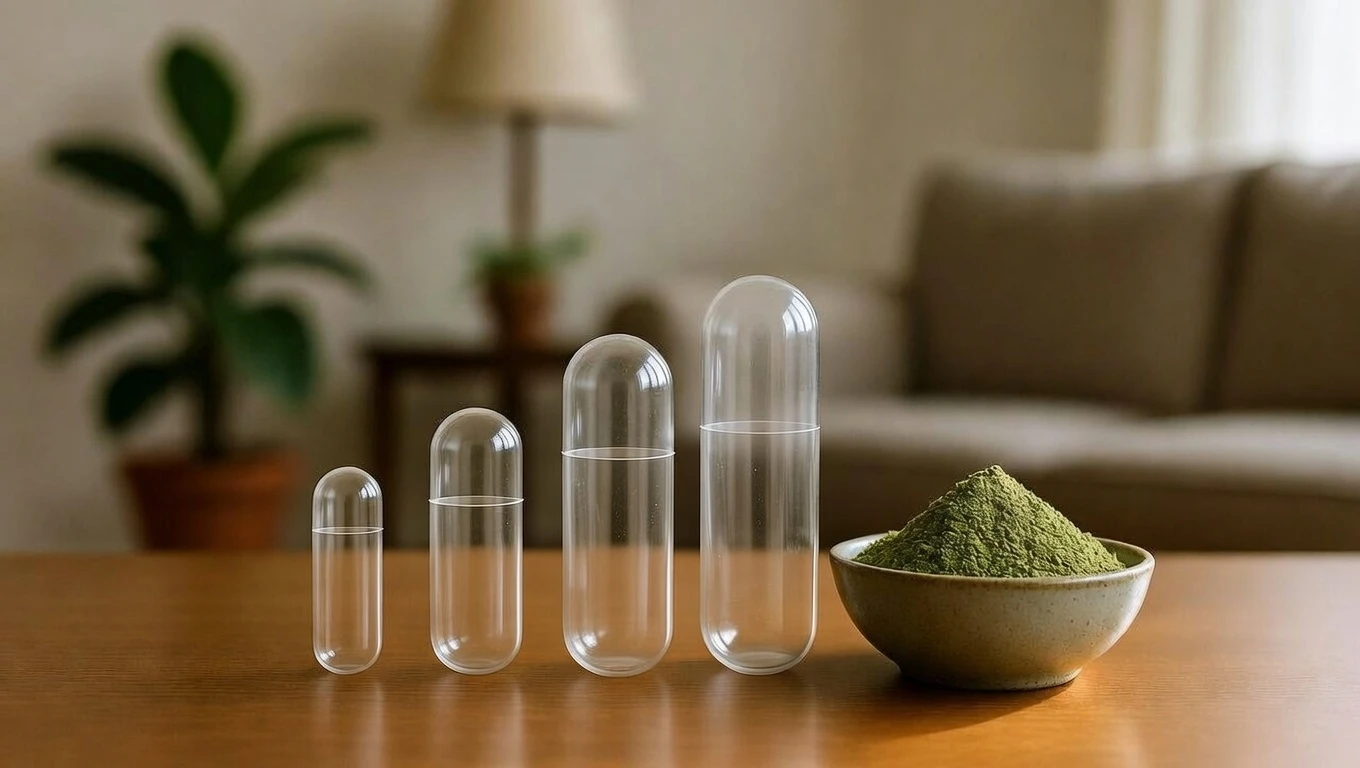

Many kratom users notice that capsules from different brands feel noticeably different in weight, even when the labels look similar and the capsule sizes match. This common observation often leads to questions about consistency and dosing accuracy in the world of plant-based supplements. Variations in kratom capsule fill weight stem from several practical factors in how the product is manufactured, processed, and packaged. Gaining a clear understanding of these differences empowers consumers to make more confident choices about the products they select and how they approach their intake.
What Determines Kratom Capsule Fill Weight?
The amount of kratom powder that ends up in a capsule, known as the fill weight, is not fixed. It results from a straightforward equation: the internal volume of the capsule multiplied by the bulk density of the powder. Capsule volume is standardized based on size, but bulk density changes depending on how the powder is processed and handled.
Capsule Size Standards
Capsule sizes follow an industry numbering system, where lower numbers indicate larger capsules. The most common sizes for kratom include:
- Size 00 (double zero): Typically the go-to choice for many manufacturers, with a volume around 0.91 to 0.95 mL.
- Size 0: Slightly smaller, with about 0.68 mL volume.
- Size 000 (triple zero): Larger, offering more space at around 1.37 mL.
Manufacturers select these sizes based on what they believe suits their customers best. Some prefer size 00 for a balance between capacity and ease of swallowing, while others opt for larger 000 sizes to provide more per capsule.
The Role of Bulk Density in Fill Weight
Even with the same capsule size, fill weight varies because kratom powder is not uniform. Bulk density refers to how much mass fits into a given volume, including the air spaces between particles. Kratom powder, made from dried and ground Mitragyna speciosa leaves, naturally has a fluffy texture due to its fibrous nature. This leads to lower density compared to denser substances like certain vitamins or minerals.
For example, a finely milled kratom powder packs more tightly, resulting in higher fill weight. Coarser grinds leave more air pockets, reducing the weight. Manufacturers who grind their powder to a finer consistency often achieve higher fill weights in the same capsule size.
Why Powder Density Varies Between Batches and Manufacturers
Kratom powder density is influenced by multiple steps in production. The drying process plays a big role. Leaves dried in different conditions, such as full sun versus shaded areas, can retain varying moisture levels before grinding. Slightly higher residual moisture makes the powder clumpier and denser, while very dry powder becomes lighter and more voluminous.
Grinding technique also matters. Some manufacturers use industrial mills that produce consistent, fine particles, allowing better packing. Others might have coarser output, leading to lower density. The vein type (red, green, or white) and strain can subtly affect this too, though the differences are usually minor compared to processing methods.
Another factor is how the powder is handled before encapsulation. If powder sits for a while or is exposed to humidity, it can absorb moisture and become denser. Conversely, fresh, aerated powder stays fluffier. During filling, some manufacturers use tamping or compression to pack the powder more tightly, increasing fill weight. Others fill more loosely to avoid overpacking, which can cause capsules to split.
These variations explain why one manufacturer’s size 00 capsule might contain 0.5 grams, while another’s holds 0.75 grams or even close to 1 gram. The range for standard size 00 kratom capsules often falls between 500 mg and 750 mg, with some reports going up to 950 mg when both halves are fully packed.
Common Capsule Sizes and Their Typical Fill Weights for Kratom
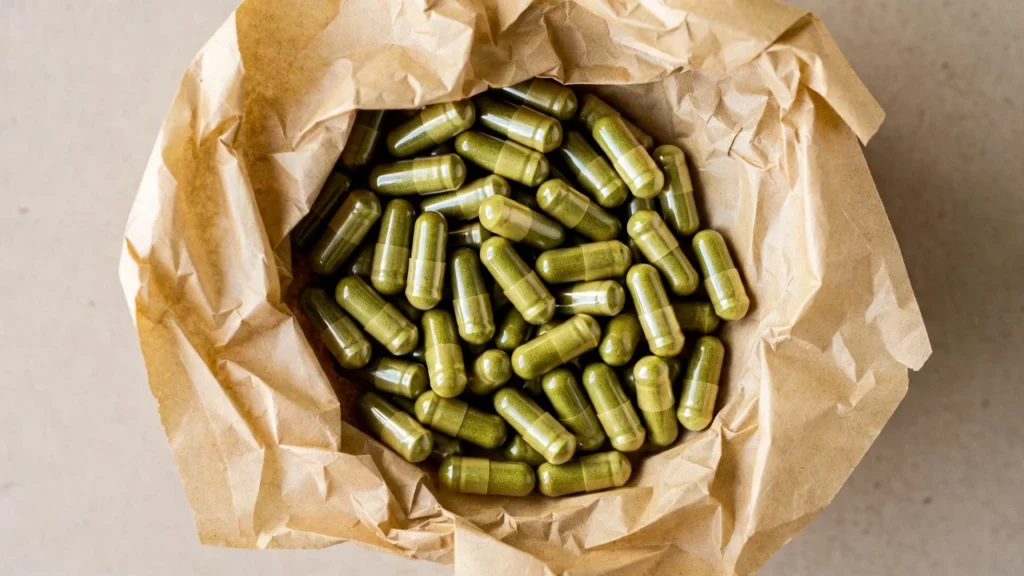
Let’s look at typical fill weights based on widely observed patterns in the kratom community.
Size 00: The Most Common Choice
Size 00 capsules, the most popular, generally hold 500 to 750 mg of average kratom powder. Finer powders or tighter packing can push this toward 800-1000 mg. This size strikes a popular balance: substantial capacity without being overly large to swallow. Many pre-filled products use size 00 as the default.
Size 0: Smaller and Lighter
Size 0 capsules usually contain less, often 400 to 600 mg. This smaller option appeals to users who prefer lighter individual servings or find larger capsules harder to swallow. Fill weights here rarely exceed 700 mg even with dense powder.
Size 000: Maximum Capacity
Larger size 000 capsules can accommodate 750 mg to 1.5 grams, depending on density. These are selected when users want fewer capsules per dose or when manufacturers aim to maximize powder per unit. The extra volume allows for significantly higher fill weights when the powder is packed well.
How Filling Techniques Impact Final Fill Weight
The encapsulation process itself introduces variations. Automated machines fill capsules at high speed, which sometimes leaves room for inconsistency if the powder flow is uneven. Manual or semi-manual filling allows more control but takes longer.
Tamping, where a tool presses the powder down before sealing, increases density and fill weight. Some brands skip heavy tamping to keep the process simple, resulting in lighter capsules. Powder flow aids or anti-caking agents are rarely used in pure kratom products, but any added processing can influence how well the powder settles.
Batch-to-batch differences also occur. Even the same manufacturer might see slight variations if the incoming leaf material changes slightly in texture or if drying conditions shift seasonally. This is why some users notice that capsules from the same brand feel different from one order to the next.
Implications for Users: Dosing and Consistency
These fill weight differences have real implications for daily use. If a user switches brands without realizing the capsules contain different amounts, their effective intake can change unexpectedly. Someone accustomed to 5 capsules equaling 3.5 grams might find the same number from another brand totals only 2.5 grams, or more.
This is why many experienced users recommend weighing capsules or powder when possible, especially when trying a new manufacturer. A simple digital scale provides clarity. For those who prefer capsules for convenience, checking product descriptions or contacting the vendor about average fill weight per capsule can help. Consistency within a single brand is usually better than across brands, as they standardize their process. However, even trusted sources can have minor variations due to the natural origin of the plant material.
Factors Beyond Fill Weight to Consider
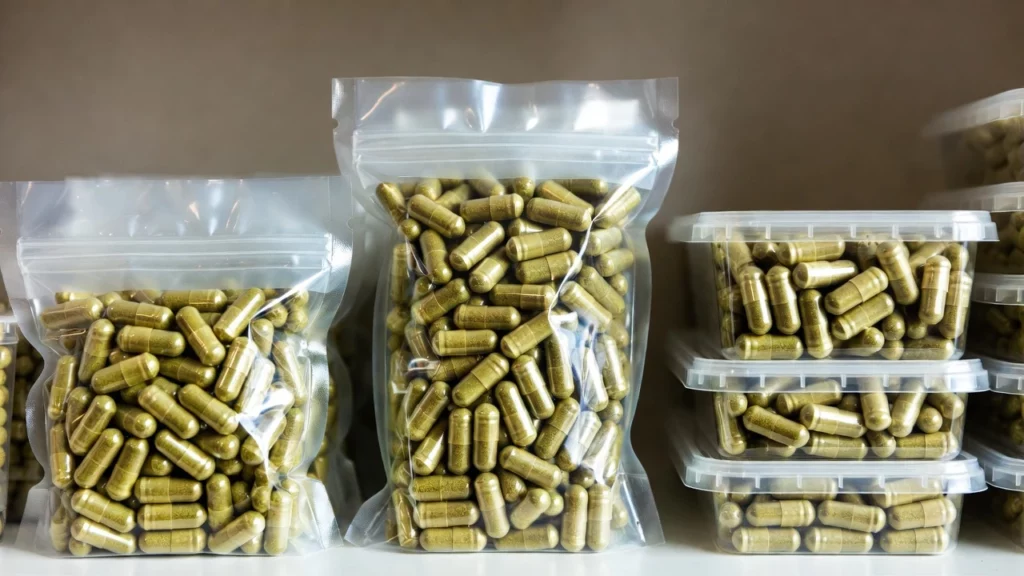
While fill weight is important for understanding quantity, other aspects affect the overall experience. The grind fineness influences not just weight but also how quickly the powder dissolves in the stomach. Finer powders often lead to faster onset, though this depends on individual digestion. Storage conditions matter too. Capsules stored in humid environments can absorb moisture, altering weight slightly over time. Keeping products in cool, dry places helps maintain consistency.
Capsule material (gelatin versus vegetarian options) does not directly affect fill weight but can influence user preference. Some find vegetarian capsules hold powder similarly but offer different swallowability.
Comparing Pre-Filled Capsules to DIY Capsule Filling
Many kratom users eventually face a practical choice: continue purchasing pre-filled capsules from various manufacturers, or invest time and effort into filling their own using bulk powder. This decision often comes down to control over fill weight, cost, consistency, and convenience.
Advantages and Drawbacks of Pre-Filled Capsules
Pre-filled capsules offer immediate convenience. Manufacturers handle the entire process, from grinding and drying the leaf to encapsulation. As explored earlier, this leads to variations in fill weight based on their specific methods. Some brands aim for lighter, more loosely packed capsules (often around 500 mg in size 00), while others use finer grinds and heavier tamping to reach 750 mg or more per capsule. The advantage is zero preparation time; users simply open the bottle and consume. However, the trade-off is limited transparency. Without weighing a sample, it’s difficult to know the exact amount inside each one, especially when switching brands.
Benefits of DIY Filling for Weight Control
On the other hand, DIY capsule filling gives users full control over the final fill weight. By purchasing high-quality bulk powder, individuals can select their preferred grind fineness and adjust packing density themselves. Many use affordable capsule-filling machines (manual trays that handle 50–100 capsules at once) or even hand-fill with a small tamping tool. This approach typically allows for higher fill weights in the same capsule size because users can pack the powder more thoroughly, sometimes achieving 800–1000 mg in a size 00 capsule with careful technique.
Step-by-Step Overview of the DIY Process
The process is straightforward:
- Weigh empty capsules to establish a baseline.
- Fill using a machine or by hand, applying consistent pressure.
- Weigh filled capsules and subtract the empty weight to confirm the kratom content.
- Adjust future batches as needed for desired precision.
This method not only minimizes surprises from manufacturer differences but also often proves more economical. Bulk powder tends to cost significantly less per gram than pre-filled capsules, especially when factoring in shipping and packaging. Over time, the initial investment in empty capsules (gelatin or vegetarian) and a basic filling device pays off quickly.
When to Choose One Over the Other
Of course, DIY has drawbacks. It requires clean workspace conditions to avoid contamination, plus time for preparation. Those who travel frequently or prefer zero hassle may still lean toward pre-filled options despite the variations.
Ultimately, understanding fill weight differences empowers better choices. If consistency and exact dosing matter most, DIY filling offers the greatest precision. If speed and simplicity take priority, selecting a trusted manufacturer with transparent information about their average fill weight per capsule can still provide reliable results.
Practical Tips for Navigating Fill Weight Variations
When exploring different kratom capsule products, consider these approaches:
- Start by noting the capsule size listed on the label: Size 00 is a reliable benchmark for comparison.
- Ask the manufacturer about average fill weight if possible: Reputable sources often provide this information.
- Use a scale for verification when receiving new products: Weighing several capsules and averaging them gives a good idea of consistency.
- Be mindful when switching vendors: Adjust the number of capsules gradually to account for potential differences.
- Remember the goal is a comfortable, consistent experience: Fill weight variations are a natural part of working with ground plant material, much like how coffee grounds from different roasters weigh differently in the same scoop.

Frequently Asked Questions (FAQ)
Q: Why do some size 00 capsules hold 500 mg while others hold more?
A: The difference comes down to bulk density and packing technique. Fluffier, coarser powder leaves more air gaps and results in lower fill weights (around 400–600 mg), while finely ground powder that is tamped tightly can fill the same capsule to 800–1000 mg or more. Manufacturers choose different grinding and filling methods based on their process and goals.
Q: Is there an official standard for how much kratom should go into each capsule size?
A: No, there is no universal standard specifically for kratom capsules. Capsule sizes themselves are standardized by the industry (e.g., size 00 = ~0.91 mL volume), but the actual fill weight depends entirely on the powder’s density and the manufacturer’s filling approach. This is why ranges vary so widely.
Q: Will switching to a different brand always change my effective dose?
A: Not necessarily, but it often does. If the new brand uses a different capsule size or packs the powder more/less densely, the amount of kratom per capsule can differ by 30–50% or more. Always start with fewer capsules when trying a new vendor and adjust based on your experience.
Q: Should I weigh every single capsule I take?
A: Not usually necessary. Weighing a sample of 5–10 capsules from a new bottle and averaging them gives you a reliable idea of that batch’s fill weight. From there, you can use that average for future dosing unless you notice inconsistencies.
Q: Is DIY capsule filling worth the effort if I just want consistent fill weights?
A: Yes, for many people it is. DIY allows you to control the packing density and verify the exact weight of every capsule, which often leads to greater consistency than relying on pre-filled products. It also tends to be more cost-effective over time, though it requires initial setup and clean preparation conditions.
Q: Does capsule material (gelatin vs. vegetarian) affect the fill weight?
A: No, the material of the capsule itself does not change how much powder it can hold. The internal volume is the same regardless of whether the capsule is gelatin or vegetarian (HPMC). Any minor differences in thickness are negligible for fill weight purposes.
Conclusion
Kratom capsule fill weight varies primarily due to capsule size choices, powder bulk density influenced by grinding and drying, and filling techniques like tamping. These factors combine to create differences of 50% or more between manufacturers, even in the same capsule size. By understanding that volume times density equals weight, users gain insight into why one product might contain more or less powder than expected. This knowledge empowers better decisions, whether sticking with a familiar brand or exploring new options.
The herbal supplement world thrives on natural variation, and kratom is no exception. Embracing these differences as part of the product’s character leads to more mindful consumption. Always prioritize reliable sources and personal experimentation to find what works best for individual needs.
Disclaimer
This blog post is provided for informational and educational purposes only and is not intended to diagnose, treat, cure, prevent, or mitigate any disease, condition, or medical symptom. Kratom is an herbal substance that has not been evaluated or approved by Health Canada for any medical use, nor is it authorized as a natural health product, food, or dietary supplement under current Canadian regulations.
Health Canada considers kratom an unauthorized product when marketed or sold for human consumption, and the agency has issued warnings about potential serious health risks associated with its use, including drowsiness, nausea, vomiting, seizures, liver toxicity, excessively rapid heartbeat, dependence, addiction, abuse potential, and effects similar to both narcotics and stimulants.
The information presented here, including discussions of capsule fill weights, dosing considerations, and user experiences, is based on general observations from the kratom community and industry practices, not on clinical evidence, Health Canada approval, or medical endorsement. Individual responses to kratom can vary widely due to factors such as personal health status, tolerance, dosage, product quality, interactions with medications, alcohol, or other substances, and other variables. Use of kratom carries inherent risks, and there is no established safe dosage for any purpose in Canada.
We strongly recommend consulting a qualified healthcare professional before considering kratom or any herbal substance, especially if you have pre-existing medical conditions (such as heart, liver, kidney, or mental health issues), are pregnant, nursing, taking prescription medications, or fall under any age or health restrictions. Do not use kratom as a substitute for professional medical advice, treatment, or prescribed therapies, including for pain management, opioid withdrawal, anxiety, mood support, or any other health concern.
The author and publisher are not liable for any loss, injury, claim, liability, damages, or adverse consequences, direct or indirect, resulting from the use or misuse of information contained in this blog post or from any actions taken or not taken based on this content. Always source products from reputable vendors, be aware of current federal and provincial regulations (which may evolve), and prioritize safety.