




Kratom is a tropical tree that has captured global attention for its unique properties and cultural significance. Understanding the kratom botanical classification offers a window into its biological identity, evolutionary history, and relationship with other plants. By exploring its place in the plant kingdom, we can appreciate the intricate web of life that connects this Southeast Asian species to the broader natural world. Written for those curious about plant science, this journey through kratom’s taxonomy aims to inform and inspire a deeper appreciation for this remarkable botanical.
What Is Botanical Classification?
Botanical classification, or taxonomy, is the science of organizing plants into hierarchical groups based on shared characteristics. This system, formalized by Carl Linnaeus in the 18th century, assigns each plant a place within a structured framework, from broad categories like kingdom to specific designations like species. Taxonomy helps scientists, horticulturists, and enthusiasts understand a plant’s evolutionary relationships, physical traits, and ecological roles. For kratom, its botanical classification reveals not only its biological identity but also its connections to other plants, including some familiar to many, like coffee.
The kratom botanical classification begins with its placement in the kingdom Plantae, the vast domain of multicellular, photosynthetic organisms. From there, it cascades through increasingly specific categories, each shedding light on its unique traits. Let’s embark on a journey through these taxonomic levels to uncover what makes Mitragyna speciosa so distinctive.
Kingdom: Plantae
At the broadest level, kratom belongs to the kingdom Plantae. This kingdom encompasses all plants, from towering trees to delicate mosses, unified by their ability to photosynthesize. Plants in this kingdom produce energy by converting sunlight into chemical energy, a process that sustains life on Earth. Kratom, as a member of Plantae, shares this fundamental trait, using its dark green, glossy leaves to capture sunlight and fuel its growth. This placement sets the stage for understanding kratom as a photosynthetic organism, deeply rooted in the same biological processes as other plants.
Being part of Plantae also means kratom possesses a cell wall made of cellulose, a characteristic that distinguishes plants from animals and fungi. This structural feature supports its growth as a tropical tree, capable of reaching heights of 4 to 16 meters in its native Southeast Asian habitats. The kingdom Plantae is the starting point for kratom’s taxonomic journey, anchoring it within the vibrant world of plant life.
Phylum: Angiosperms
Within the kingdom Plantae, kratom is classified under the phylum Angiospermae, commonly known as angiosperms or flowering plants. Angiosperms are the most diverse group of plants, with over 300,000 species worldwide. They are defined by their production of flowers, which serve as reproductive organs, and seeds enclosed within fruits. Kratom’s inclusion in this phylum highlights its reproductive strategy, which involves flowering to facilitate pollination and seed production.
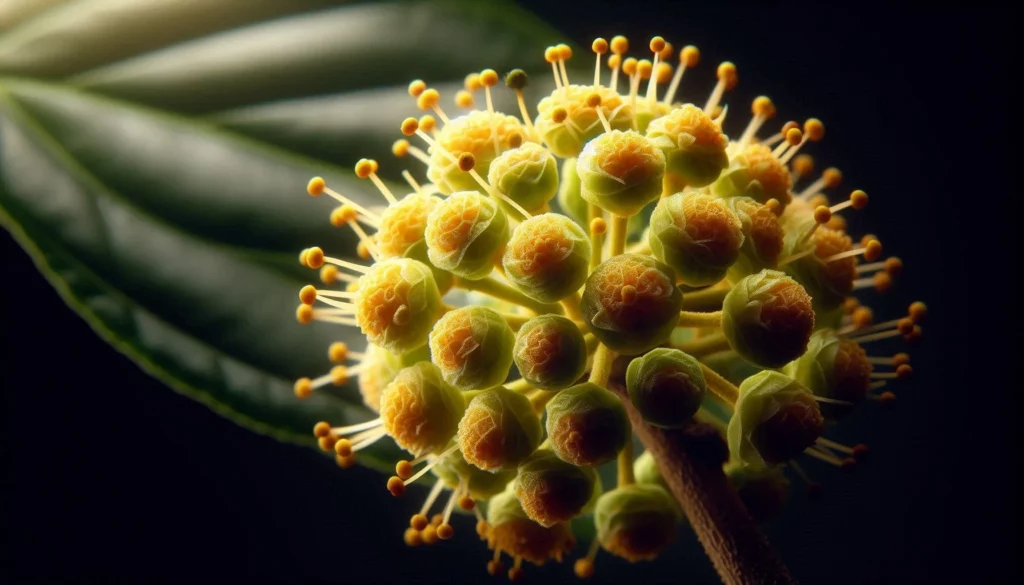
Kratom’s flowers are small, yellowish, and clustered in spherical heads, a trait that aligns with other angiosperms. These flowers attract pollinators, such as insects, which play a crucial role in the plant’s reproductive cycle. The angiosperm classification also underscores kratom’s evolutionary success, as this group dominates terrestrial ecosystems due to its adaptability and diverse reproductive strategies. By belonging to Angiospermae, kratom shares a lineage with plants like roses, oaks, and orchids, showcasing the breadth of this phylum.
Class: Magnoliopsida
Moving down the taxonomic hierarchy, kratom falls within the class Magnoliopsida, also known as dicotyledons or dicots. This class includes plants with two seed leaves (cotyledons) in their embryos, a characteristic that distinguishes them from monocots, which have a single cotyledon. Kratom’s dicot classification is evident in its early growth stages, where its seedlings emerge with two embryonic leaves.
Magnoliopsida plants often have net-like leaf venation, taproot systems, and floral parts in multiples of four or five. Kratom exhibits these traits, with its broad, oval leaves displaying a network of veins and its flowers typically arranged in patterns consistent with dicot characteristics. This class includes a wide range of plants, from sunflowers to maples, and kratom’s placement here highlights its shared structural features with these familiar species. The Magnoliopsida classification provides a deeper understanding of kratom’s growth patterns and physical attributes.
Order: Gentianales
Kratom’s botanical classification continues with its placement in the order Gentianales. This order encompasses plants that share specific floral and chemical characteristics, often producing alkaloids or other secondary metabolites. Gentianales includes about 17,000 species, many of which are known for their medicinal or ecological significance. Kratom’s inclusion in this order reflects its chemical complexity, as its leaves contain over 40 alkaloids, compounds that contribute to its unique properties.
Plants in Gentianales typically have opposite leaves, a trait kratom displays with its paired, glossy leaves arranged along its branches. The order also includes families like Apocynaceae (dogbane family) and Loganiaceae (strychnine family), but kratom’s closest relatives lie within its own family, Rubiaceae. The Gentianales classification underscores kratom’s chemical and structural similarities with other plants in this group, setting the stage for its family-level classification.
Family: Rubiaceae
At the family level, kratom belongs to Rubiaceae, commonly known as the coffee family. This family is one of the largest among flowering plants, with over 13,000 species across 600 genera. Rubiaceae is renowned for its economically and culturally significant members, including coffee (Coffea arabica), gardenia (Gardenia jasminoides), and quinine (Cinchona species). Kratom’s placement in this family highlights its shared traits with these plants, such as its tropical distribution and alkaloid-rich composition.
Rubiaceae plants are often characterized by opposite leaves, stipules (small leaf-like structures at the base of leaves), and a preference for tropical or subtropical climates. Kratom fits this profile, thriving in the humid, warm environments of Southeast Asia. Its leaves, like those of coffee, contain bioactive compounds that have drawn human interest for centuries. The Rubiaceae connection also hints at kratom’s ecological role, as many family members are pollinated by insects or birds, contributing to thriving tropical ecosystems.
Genus: Mitragyna
Within the Rubiaceae family, kratom is classified under the genus Mitragyna. This genus includes about 10 species, most of which are native to Southeast Asia and parts of Africa. The name Mitragyna derives from the Greek word for “mitre,” referring to the shape of the flower stigmas, which resemble a bishop’s headdress. This genus was established by Dutch botanist Pieter Korthals in 1839, who first described kratom under the name Stephegyne speciosa before it was reclassified.
Other species in the Mitragyna genus, such as Mitragyna hirsuta and Mitragyna parvifolia, share similar habitats and morphological traits with kratom but differ in their chemical profiles and uses. The genus Mitragyna is notable for its alkaloid content, which varies among species but is particularly pronounced in Mitragyna speciosa. This classification level highlights kratom’s close relatives and its unique position within a small but chemically diverse group of plants.
Species: Mitragyna speciosa
At the species level, kratom is designated as Mitragyna speciosa, a name formalized by botanist George Darby Haviland in 1859. The species name speciosa comes from Latin, meaning “showy” or “splendid,” likely referring to the plant’s attractive leaves and flowers. This specific epithet distinguishes kratom from other Mitragyna species, encapsulating its unique characteristics as a tropical evergreen tree.
Mitragyna speciosa is native to countries like Thailand, Indonesia, Malaysia, Myanmar, and Papua New Guinea, where it grows in lowland tropical forests. Its dark green, glossy leaves are the primary source of its bioactive compounds, which have been used traditionally in its native regions. The species classification is the most precise level of kratom’s taxonomy, pinpointing its identity as a distinct plant with specific ecological and chemical traits.
Varieties and Chemotypes
While Mitragyna speciosa is a single species, it exhibits variations known as chemotypes, which are plants with the same physical characteristics but differing chemical compositions. These variations often arise due to environmental factors, such as soil composition or climate, and are commonly referred to as “strains” in kratom communities. For example, red, green, and white vein kratom are not distinct species but rather variations within Mitragyna speciosa, distinguished by leaf vein colour and alkaloid profiles.
These chemotypes add complexity to kratom’s botanical classification, as they reflect the plant’s adaptability to different environments. While taxonomically they remain Mitragyna speciosa, their chemical diversity influences their traditional and modern uses. Understanding these variations enhances our appreciation of kratom’s versatility within its species designation.

Evolutionary Context of Kratom
The kratom botanical classification also provides insight into its evolutionary history. As a member of Rubiaceae, kratom shares a common ancestor with coffee, likely diverging millions of years ago in tropical regions. Its placement in Gentianales suggests it evolved alongside other alkaloid-producing plants, developing chemical defenses to deter herbivores and thrive in competitive ecosystems. The Mitragyna genus likely emerged as a specialized group within Rubiaceae, adapting to Southeast Asia’s unique environmental conditions.
Kratom’s evolutionary adaptations, such as its glossy leaves and alkaloid-rich chemistry, reflect its survival strategies in humid, nutrient-rich forests. These traits have enabled it to flourish in regions with intense competition for light and resources. Exploring its evolutionary context enriches our understanding of why kratom developed its distinctive characteristics.
Ecological Role and Habitat
Kratom’s taxonomic classification also sheds light on its ecological role. As a tropical tree in the Rubiaceae family, Mitragyna speciosa thrives in the warm, humid climates of Southeast Asia. It prefers lowland forests with rich, well-drained soils, often growing near rivers or in swampy areas. Its flowers attract pollinators like bees and butterflies, contributing to the biodiversity of its habitat.
In its native range, kratom plays a role in forest ecosystems, providing shade and organic matter through its fallen leaves. Its alkaloid content may deter herbivores, allowing it to compete effectively with other vegetation. Understanding kratom’s ecological niche enhances our appreciation of its place within its taxonomic group and its contributions to tropical ecosystems.
Cultural and Historical Significance
While this blog focuses on the kratom botanical classification, it’s worth noting the plant’s cultural significance, which is tied to its taxonomic identity. In Southeast Asia, Mitragyna speciosa has been used for centuries in traditional practices, often as a tea or chewed fresh. Its classification within Rubiaceae aligns it with other culturally significant plants like coffee and quinine, which have shaped human history through their chemical properties.
The name “kratom” itself varies by region, with local names like “biak-biak” in Malaysia and “thom” in Thailand reflecting its deep cultural roots. These names, while not part of its formal taxonomy, highlight the human connection to this plant, which its botanical classification helps us understand scientifically.
Challenges in Studying Kratom’s Taxonomy
Studying the kratom botanical classification presents challenges due to its chemical complexity and regional variations. The presence of over 40 alkaloids in its leaves complicates efforts to standardize its classification, as chemotypes can differ significantly. Additionally, historical taxonomic debates, such as Korthals’ initial classification as Stephegyne speciosa, reflect the difficulty of accurately placing kratom within the broader plant kingdom.
Modern taxonomic studies use DNA analysis to clarify relationships within Rubiaceae and the Mitragyna genus, but gaps remain. For example, the precise evolutionary relationships between Mitragyna speciosa and other species like Mitragyna hirsuta are still being explored. These challenges highlight the dynamic nature of taxonomy and the ongoing quest to refine our understanding of kratom.
Why Taxonomy Matters
Understanding the kratom botanical classification is more than an academic exercise; it has practical implications. Taxonomy informs conservation efforts, helping identify regions where Mitragyna speciosa is native and potentially at risk. It also guides cultivation practices, as growers can use knowledge of kratom’s Rubiaceae traits to optimize growing conditions. For researchers, taxonomy provides a framework for studying kratom’s chemical properties and ecological roles.
For enthusiasts and consumers, knowing kratom’s place in the plant kingdom fosters a deeper appreciation for its uniqueness. It connects kratom to familiar plants like coffee, making its biology more relatable. Taxonomy also demystifies the plant, grounding its cultural and traditional uses in a scientific context.

FAQ
Q: What is the scientific name for kratom in its botanical classification?
A: The scientific name for kratom is Mitragyna speciosa, which identifies it at the species level within the kratom botanical classification.
Q: Why is kratom classified in the Rubiaceae family?
A: Kratom is in the Rubiaceae family due to its opposite leaves, stipules, and alkaloid content, traits shared with plants like coffee and gardenia.
Q: How does the kratom botanical classification relate it to coffee?
A: Both kratom (Mitragyna speciosa) and coffee (Coffea arabica) belong to the Rubiaceae family, sharing traits like tropical habitats and alkaloid production.
Q: Are red, green, and white vein kratom different species?
A: No, these are chemotypes of Mitragyna speciosa, not separate species, differing in alkaloid profiles within the same kratom botanical classification.
Q: What role does taxonomy play in understanding kratom’s ecology?
A: Taxonomy reveals kratom’s place in tropical ecosystems, showing how its Rubiaceae traits support pollination and competition in its native habitats.
Conclusion
The kratom botanical classification, from kingdom Plantae to species Mitragyna speciosa, reveals a fascinating story of evolution, adaptation, and diversity. As a member of the Rubiaceae family, kratom shares traits with coffee and other tropical plants, yet its unique alkaloid profile and cultural significance set it apart. By tracing its taxonomic hierarchy, we uncover its connections to the broader plant world and gain insight into its ecological and chemical complexity.
This journey through kratom’s taxonomy highlights the beauty of botanical classification, which organizes the vast diversity of plant life into a coherent framework. For those intrigued by kratom, understanding its place in the natural world deepens our respect for this remarkable tree. Whether you’re a plant enthusiast, a researcher, or simply curious, the kratom botanical classification offers a compelling glimpse into the intricate tapestry of life.
Disclaimer
The information provided in this blog about the botanical classification of kratom is intended for educational and informational purposes only. It is not intended to serve as medical advice, diagnosis, or treatment recommendations. Kratom is a complex plant with bioactive compounds, including alkaloids, that may have varying effects on individuals. The use of kratom carries potential health and safety risks, including but not limited to side effects, interactions with medications, and the possibility of dependency or adverse reactions.
Always consult a qualified healthcare professional before using kratom or any herbal supplement, especially if you have pre-existing medical conditions, are pregnant or breastfeeding, or are taking other medications. The safety and efficacy of kratom have not been fully evaluated by regulatory authorities such as Health Canada, and its legal status varies by region. Any decision to use kratom should be made with caution and under professional guidance. The author and publisher are not responsible for any adverse effects or consequences resulting from the use of kratom or reliance on the information provided in this blog.