Kratom and Vitamin C: Does Potentiation Really Work?
Faust
Curious about whether combining kratom and vitamin C can enhance your wellness routine? This idea, often discussed in online wellness communities, suggests that vitamin C, like that found in orange juice, might boost kratom’s effects through pH chemistry. It’s an intriguing topic for those exploring natural ways to support their daily routine.
Exploring Kratom, Vitamin C, and Potentiation
Kratom comes from the leaves of the Mitragyna speciosa tree, grown in Southeast Asia, where it’s been used for centuries. Some take it to ease discomfort, others for a mood lift or energy boost. Vitamin C, or ascorbic acid, is a nutrient we get from foods like citrus fruits or supplements, widely known for supporting immunity and more. The talk about mixing kratom and vitamin C centers on potentiation, the idea that vitamin C could help your body absorb more of kratom’s active compounds or make them work better.
Potentiation, in this case, means improving kratom’s bioavailability, which is how much of its active ingredients reach your bloodstream and stay active. The theory often points to pH, which measures acidity or alkalinity on a scale of 0 to 14. Your stomach is acidic, around 1.5 to 3.5, while your blood stays near-neutral at 7.4. These pH levels can affect how substances like kratom’s alkaloids behave. Let’s break it down step by step, starting with kratom’s journey through your body, then vitamin C’s, before connecting them with pH science.
How Kratom Moves Through Your Body
Digestion and Absorption
When you take kratom, whether as powder, tea, or capsules, it starts in your digestive system. Kratom leaves contain over 40 alkaloids, the natural compounds behind its effects. The main ones are mitragynine, which makes up the bulk, and 7-hydroxymitragynine, a byproduct formed as your body processes mitragynine, often linked to stronger effects.
In your stomach, acids and enzymes begin breaking down kratom. It then moves to the small intestine, where most absorption occurs. Here, alkaloids pass through the intestinal lining into your bloodstream, binding loosely to proteins for transport.
Effects on the Brain
They eventually cross the blood-brain barrier, a protective layer around your brain, and interact with mu-opioid receptors. These receptors help regulate pain and mood, but kratom’s action is milder than pharmaceutical alternatives. This explains why low doses often feel energizing, while higher doses lean toward relaxation.
Kratom’s half-life, which is the time it takes for half to clear from your system, is about three hours for mitragynine. Your liver processes it using enzymes like CYP3A4 and CYP2D6, and your kidneys flush out the remnants through urine. Factors like food, metabolism, or hydration can influence this process. A full stomach slows absorption, extending effects, while an empty one speeds things up for a quicker onset.
Beyond the Brain: Other Systems
Beyond the brain, kratom affects other systems. It slightly boosts serotonin, which can improve mood, and stimulates adrenergic receptors, contributing to energy at lower doses. It also influences gut motility, which some find helpful for digestion. This broad action makes kratom versatile, prompting people to test add-ons like vitamin C to see if they can enhance or fine-tune its effects.
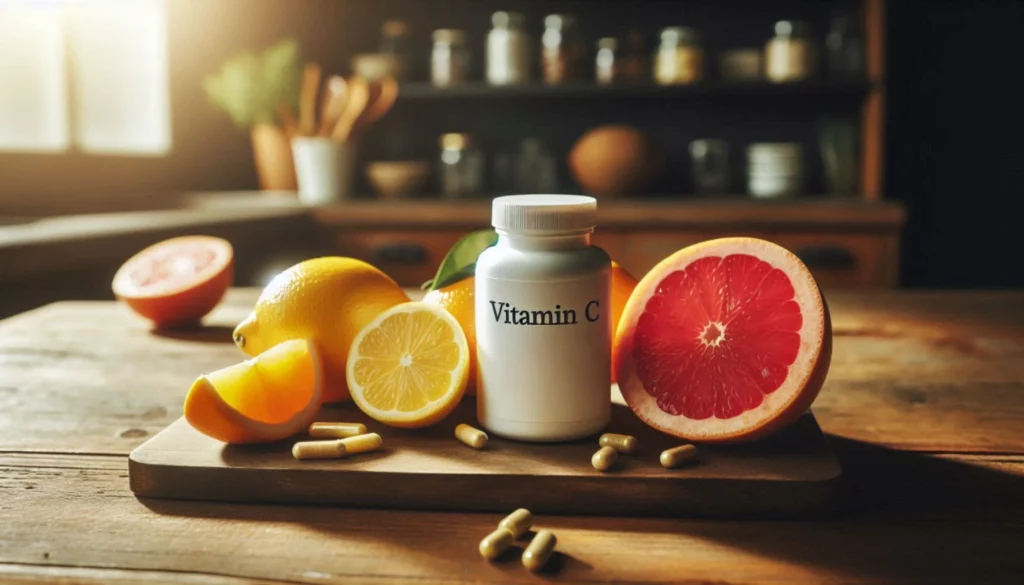
Vitamin C bottle and pills alongside fresh lemon and grapefruit slices on a wooden surface.
Vitamin C’s Role in Your System
Absorption and Distribution
Vitamin C is a water-soluble nutrient we need from diet or supplements, as humans can’t produce it. You’ll find it in foods like oranges, strawberries, or bell peppers. It’s absorbed mainly in the small intestine through transporters called SVCT1 and SVCT2. At doses up to 200 milligrams, your body absorbs 70-90% of it. At higher doses, like a gram, absorption drops to 50% or less because these transporters get saturated.
Once in your bloodstream, vitamin C peaks in about two to three hours. Excess is cleared through urine, with a half-life that depends on the dose, shorter for small amounts and longer for larger ones due to recycling in the body. It’s distributed to tissues like the brain, adrenal glands, and eyes, where it’s in high demand.
Key Functions in Metabolism
Vitamin C plays many roles. It helps form collagen for healthy skin and blood vessels, supports carnitine production for turning fat into energy, and aids in making neurotransmitters like norepinephrine. As an antioxidant, it neutralizes free radicals, protecting cells from damage. This supports benefits like better blood vessel function and reduced inflammation.
Its acidic nature, with a pKa of 4.1, matters in the stomach’s low pH, where it stays stable. In the blood’s neutral pH, it becomes ascorbate, its active form. This pH shift might affect how other substances, like kratom, are absorbed.
Benefits Beyond Immunity
Beyond immunity, where it boosts white blood cell function, vitamin C improves iron absorption, reduces histamine to ease allergies, and supports mood through neurotransmitter production. It also recycles vitamin E, another antioxidant, and strengthens joints via collagen.
The pH Connection with Kratom and Vitamin C
Let’s take a look into the pH science behind the potentiation question. Kratom’s alkaloids are mildly basic, meaning they’re more stable in neutral or slightly alkaline settings. The stomach’s acidic environment can make them less soluble or more likely to break down. Vitamin C, being acidic, might change this dynamic. When you mix them, for example by adding kratom to citrus juice or taking a vitamin C supplement, the extra acidity could help dissolve alkaloids from the plant material, potentially making more available for absorption in the small intestine.
This is where the potentiation idea comes in. A slightly more acidic gut might free up more mitragynine before it’s broken down by enzymes, increasing what reaches your bloodstream. Some users take 500 milligrams of vitamin C about 20-30 minutes before kratom, reporting effects that hit faster or feel a bit stronger. This tracks with vitamin C’s quick absorption, which could briefly lower stomach pH to aid alkaloid release.
Once in the blood, pH levels normalize, but vitamin C’s antioxidant properties might protect kratom’s alkaloids from oxidative damage, potentially preserving their potency. Unlike grapefruit, which slows liver metabolism by inhibiting enzymes, vitamin C’s role seems more about improving gut-level solubility. There’s no direct evidence quantifying this effect, for example saying it boosts absorption by 20%, but the chemistry makes sense, drawing on how acids enhance extraction in herbal preparations.
There’s a limit, though. Too much vitamin C, like over 2 grams, could make the gut too acidic, risking alkaloid breakdown or causing digestive discomfort. Plus, vitamin C absorption plateaus at high doses, so more isn’t always better. The pH effect is likely subtle and varies based on your gut health, diet, or even kratom batch.
Hand pouring kratom powder into a glass of water on a sunlit table.
Does Potentiation Hold Up?
So, does combining kratom and vitamin C really potentiate effects? Much of the evidence comes from user reports rather than lab studies. Some say taking vitamin C with kratom, for example mixing powder with orange juice, makes effects kick in 10-15 minutes faster or last an hour longer. The acidity also helps mask kratom’s bitter taste, which is a practical bonus. Others notice a smoother, more consistent experience, possibly because vitamin C’s antioxidants protect alkaloids in the gut.
The theory checks out: better solubility could mean more alkaloids absorbed before the liver processes them. Vitamin C might also reduce oxidative stress, allowing kratom’s compounds to work longer. But not everyone feels a difference. Variables like kratom strain, dosage, or tolerance can overshadow any boost. If potentiation happens, it’s probably modest, meaning a slight efficiency boost, not a dramatic overhaul.
Some argue it’s placebo or due to inconsistent kratom quality. Without studies directly testing the combo, we’re left with anecdotes and basic chemistry. On the safety side, vitamin C is generally safe up to 2 grams daily, but paired with kratom, watch for stomach upset from the combined acidity. Drinking water helps, as both can be mildly dehydrating.
Additional Benefits of the Combo
Supporting Energy and Mood
For energy, low-dose kratom offers a lift, while vitamin C aids energy production through carnitine synthesis. Mood-wise, kratom’s slight serotonin boost pairs with vitamin C’s role in norepinephrine, potentially stabilizing emotions.
Aiding Recovery and Digestion
In the gut, kratom’s effect on motility combines with vitamin C’s support for healthy bacteria, which may improve digestion. For those with active lifestyles, vitamin C reduces oxidative stress after workouts, while kratom might ease muscle soreness. Kratom’s action on receptors can reduce inflammation, helping with minor aches. Vitamin C supports this by lowering inflammatory markers, useful for stress or post-exercise recovery.
Promoting Skin and Sleep
Skin health benefits from vitamin C’s collagen production, and kratom’s calming effects can reduce tension-related issues. For sleep, vitamin C supports melatonin production, and certain kratom strains promote restful relaxation. Together, they could offer a balanced approach to wellness, supporting energy, recovery, and overall resilience without being a magic bullet.
How to Try Kratom and Vitamin C Safely
If you want to test the combo, consider these steps:
Start with a modest dose: Take 500 milligrams of vitamin C (a supplement or two oranges) about 20-30 minutes before 2-3 grams of kratom.
Track your experience: Log when effects start, their strength, and duration to personalize your approach.
Consider citrus juice: Mix kratom with orange or lemon juice to mask its bitter taste while adding natural vitamin C.
Stay hydrated: Drink plenty of water, as both kratom and vitamin C can draw water from your system.
Mind your stomach: Take on an empty stomach for faster effects, or with a small fatty snack (like nuts) for smoother absorption.
Cycle usage: Try a few days on, a couple off, to avoid building a routine.
Check with a doctor: If you’re on medications, consult a professional, as kratom may interact with liver enzymes.
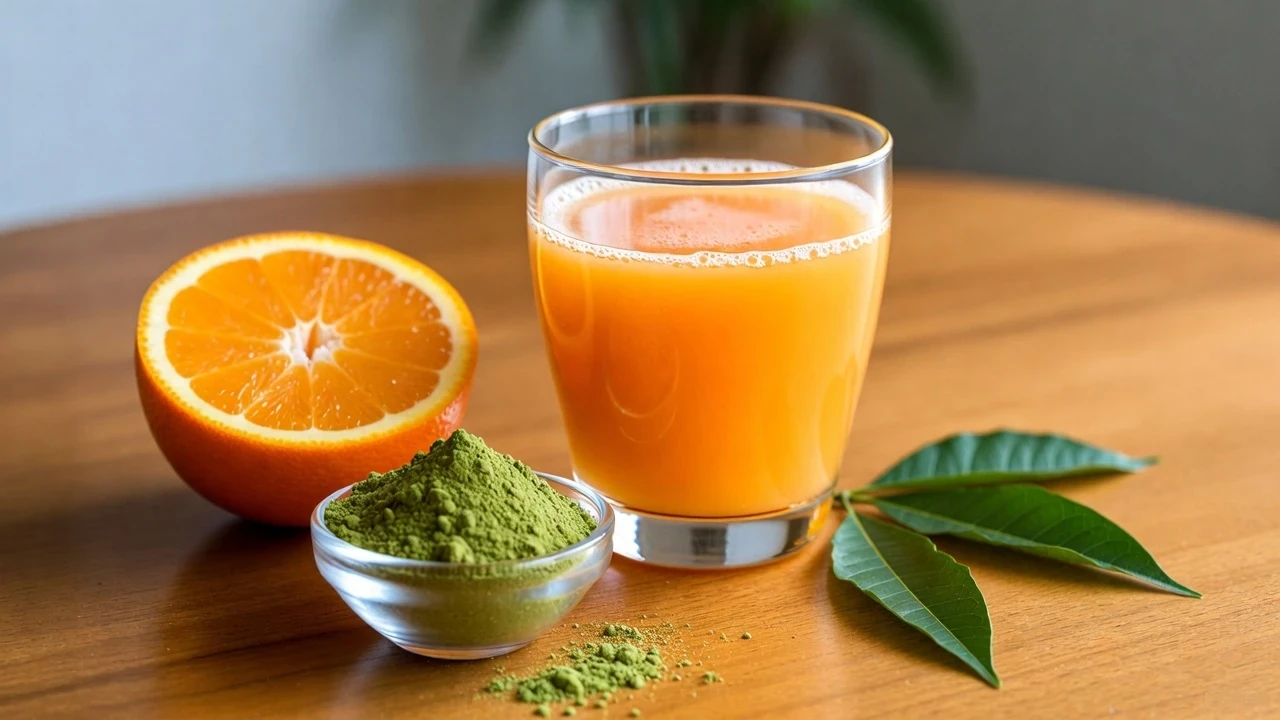
Orange juice alongside a bowl of kratom capsules and a book on a rustic table.
Frequently Asked Questions About Kratom and Vitamin C
Q: Can I take kratom and vitamin C at the same time? A: Yes, you can take them together, such as mixing kratom powder with orange juice containing vitamin C. Taking vitamin C 20-30 minutes before kratom may enhance absorption slightly due to its acidity, but start with small amounts to monitor how your body responds.
Q: Does the type of kratom strain affect the vitamin C combination? A: Different kratom strains (e.g., red for relaxation, green for balance, white for energy) may influence how you perceive any potentiation. Vitamin C’s effect on absorption should be similar across strains, but your experience may vary based on the strain’s alkaloid profile and your sensitivity.
Q: Are there specific foods or drinks that work best with this combo? A: Citrus juices like orange or lemon are popular, as they provide natural vitamin C and mask kratom’s bitter taste. Avoid high-fat meals, which may slow absorption, but a light snack with healthy fats, like almonds, can smooth out effects.
Q: How long should I wait to feel the effects of the combo? A: Effects typically start within 20-40 minutes on an empty stomach, potentially faster with vitamin C due to improved solubility. Timing varies based on your metabolism, dose, and whether you’ve eaten, so track your experience to adjust.
Q: Can I use vitamin C supplements instead of food sources? A: Yes, a 500-milligram vitamin C supplement works just as well as food sources like oranges for potential potentiation. Ensure the dose stays moderate to avoid stomach upset, and pair with water to stay hydrated.
Conclusion
Does kratom and vitamin C potentiation really work? The pH science suggests it might, as acidity could improve alkaloid absorption and antioxidants may help preserve them, but it’s not guaranteed. Effects depend on the individual, and any boost is likely small. Still, both kratom and vitamin C offer solid benefits on their own and may work well together for energy, recovery, or mood support. Try it thoughtfully, stay informed, and see what works for you.
Disclaimer
The information provided about combining kratom and vitamin C is for informational and educational purposes only and should not be considered medical advice. Kratom and vitamin C have not been extensively studied together in clinical settings, and their combined effects are not fully understood. Kratom may interact with medications or health conditions, as it affects liver enzymes like CYP3A4 and CYP2D6, potentially altering drug metabolism. Vitamin C, while generally safe up to 2,000 milligrams daily, may cause digestive discomfort in high doses or when combined with kratom’s acidity.
Individuals with medical conditions, those taking medications, or pregnant or breastfeeding individuals should consult a healthcare professional before using kratom, vitamin C, or their combination. Always start with low doses, monitor your body’s response, and stay hydrated to minimize risks. The safety and efficacy of this combination vary by individual, and users assume responsibility for any adverse effects. The author and publisher are not liable for any adverse effects or consequences resulting from the use of this information. Seek immediate medical attention if you experience unusual symptoms.
On February 16, 2026, select provinces will observe regional holidays.
Canada Post will operate as normal and all shipments will be processed as usual.
FedEx will be closed in Prince Edward Island (Islander Day); Alberta, British Columbia, Ontario, Saskatchewan, and New Brunswick (Family Day); Manitoba (Louis Riel Day); and Nova Scotia (Heritage Day). FedEx shipments to these provinces will move the next business day.