Kratom and Solo Retreats: 5 Ways to Boost Reflection
Faust
In the hustle of modern life, finding moments of stillness can feel like a luxury. Yet, carving out time for introspection is vital for personal growth and mental clarity. Kratom and solo retreats offer a unique synergy, blending the calming properties of a natural plant with the solitude of self-directed retreats. This combination can deepen self-awareness, foster emotional healing, and spark creative insights. In this comprehensive guide, explore how kratom and solo retreats can transform your reflective practice, with practical tips to inspire your journey.
What Are Solo Retreats?
A solo retreat is a purposeful period of solitude, often in a serene environment, dedicated to self-reflection, mindfulness, or creative exploration. Unlike group retreats, solo retreats allow complete control over the experience, from setting intentions to choosing activities. They can last a few hours, a day, or even a week, depending on your needs and schedule.
Solo retreats are not about escaping reality but engaging with it more deeply. They provide space to process emotions, reconnect with personal values, or simply rest. Whether in a forest cabin, a quiet beach, or a cozy corner of your home, the solitude fosters clarity and renewal.
Understanding Kratom’s Role
Kratom, derived from the leaves of the Mitragyna speciosa tree native to Southeast Asia, has been used for centuries in traditional practices. Its leaves contain compounds that interact with the body’s receptors, producing effects that vary by strain and dosage. Some strains promote relaxation, others enhance focus, and some uplift mood, making kratom a versatile tool for introspection.
In the context of solo retreats, kratom can serve as a gentle aid to ease into mindfulness or creative flow. A calming strain might help quiet a restless mind during meditation, while an energizing strain could support journaling or problem-solving. The key is using kratom mindfully, respecting its effects, and aligning it with your retreat goals.
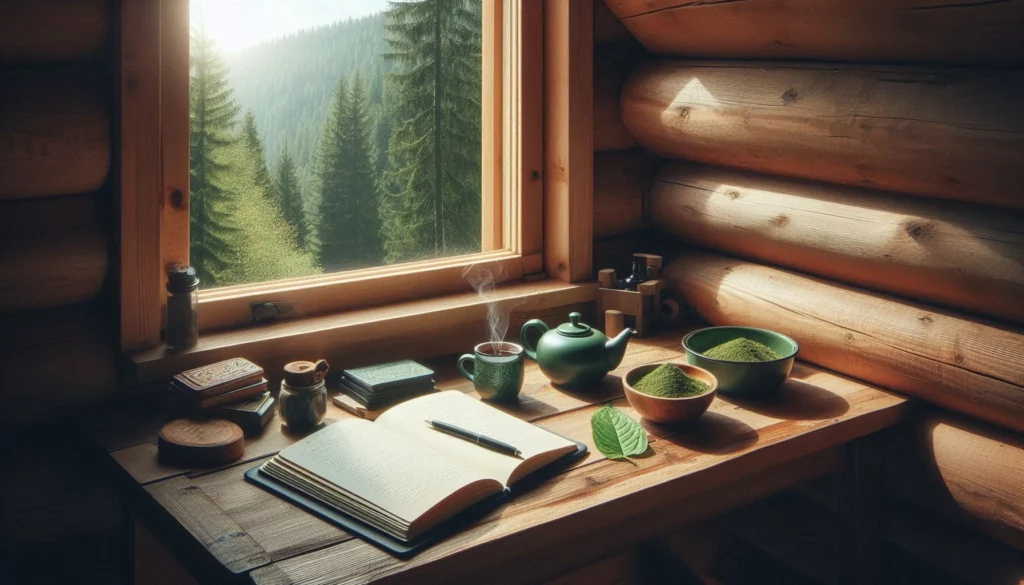
A serene workspace in a log cabin featuring a steaming teapot, open journal, and lush forest scenery outside
Why Combine Kratom and Solo Retreats?
The fusion of kratom and solo retreats creates a powerful framework for personal reflection. Solitude provides the space to listen to your inner voice, while kratom can enhance focus, relaxation, or emotional openness. Together, they amplify the potential for meaningful insights. Here are five ways this combination can elevate your retreat experience.
1. Deepening Mindfulness and Presence
Mindfulness is the cornerstone of any reflective retreat. It involves staying fully present, observing thoughts and sensations without judgment. For many, achieving this state is challenging, especially when distractions or anxiety arise. Kratom can help by promoting a sense of calm, allowing you to settle into the moment.
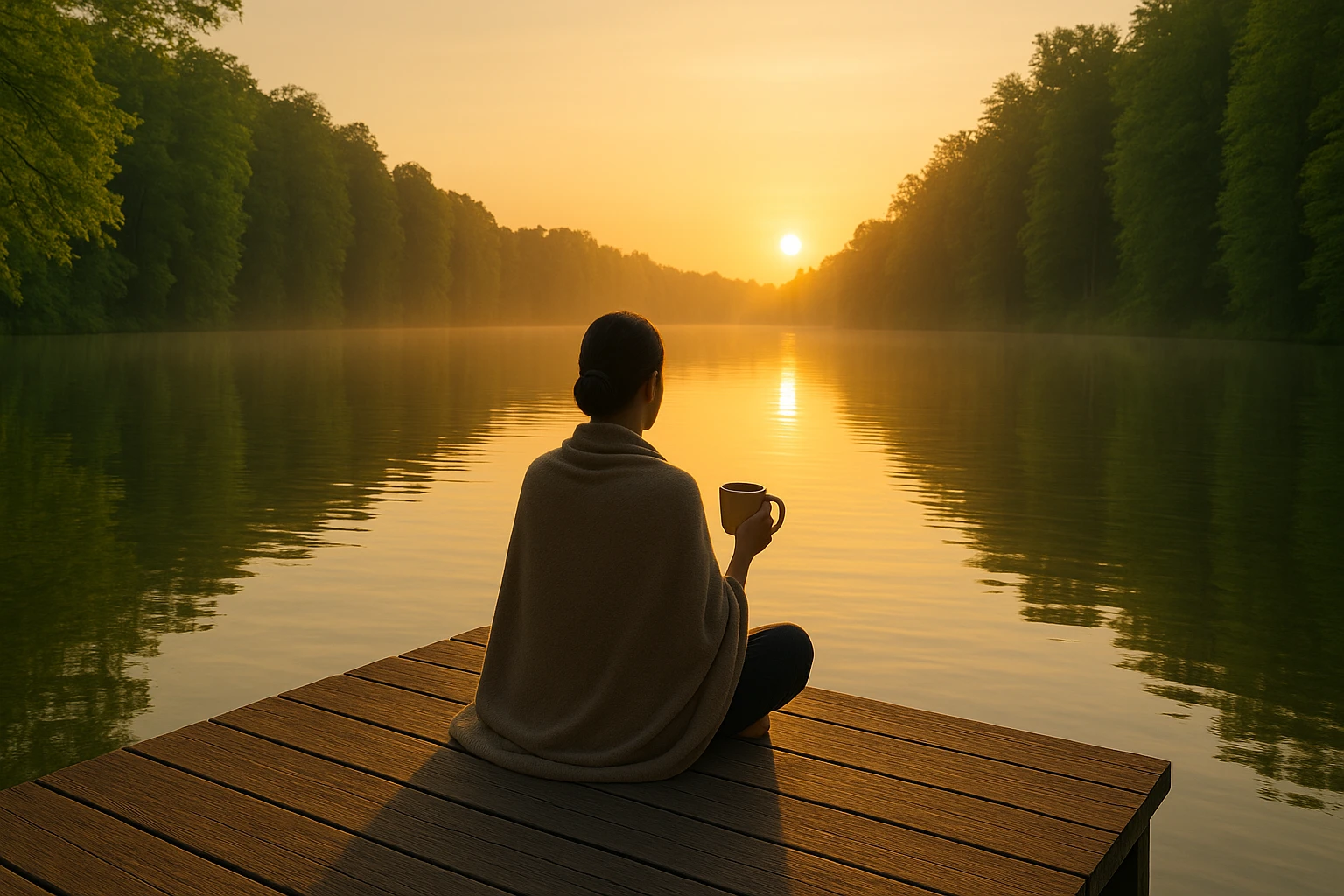
Imagine sitting by a lake, the water still and the air crisp. You’ve brewed a cup of tea infused with a small amount of a soothing kratom strain. As you sip, your racing thoughts slow, and you notice the rhythm of your breath, the rustle of leaves, and the warmth of the cup in your hands. This heightened awareness anchors you in the present, making mindfulness more accessible.
To incorporate this, choose a quiet setting for your retreat. Set an intention to focus on your senses for 20 minutes. A low dose of a relaxing kratom strain can ease you into this practice, helping you stay grounded as you observe your surroundings and inner world.
2. Enhancing Emotional Exploration
Solo retreats are ideal for processing emotions, whether it’s grief, joy, or uncertainty. Journaling, meditation, or simply sitting with your feelings can unearth insights about your life’s direction. Kratom’s mood-enhancing properties can create a safe space for this exploration, softening emotional barriers and fostering openness.
Picture a retreat in a mountain cabin. You’re reflecting on a recent life change, perhaps a career shift. After preparing a kratom tea with a mood-lifting strain, you feel a gentle warmth that eases self-criticism. You begin writing in your journal, and words flow freely, revealing gratitude for the change rather than fear. This emotional clarity helps you embrace the transition.
To try this, dedicate part of your retreat to journaling or meditative reflection. Use prompts like, “What am I holding onto?” or “What brings me joy?” A moderate dose of an uplifting kratom strain can support this process, encouraging emotional honesty without overwhelming you.
3. Boosting Creative Expression
Creativity thrives in solitude, where external pressures fade, and imagination takes center stage. Whether painting, writing, or brainstorming life goals, solo retreats are a canvas for self-expression. Kratom’s energizing strains can spark inspiration, helping you overcome creative blocks and tap into your inner vision.
Envision a day-long retreat in your home studio. You’ve set up a space with art supplies and a notebook. After taking a small dose of an energizing kratom strain, you feel a surge of motivation. Ideas for a short story pour out, and you spend hours sketching and writing, lost in the joy of creation. The kratom keeps your energy steady, preventing the mid-afternoon slump.
To harness this, plan a retreat with creative activities. Bring tools like sketchpads, instruments, or a laptop for writing. A low dose of a stimulating kratom strain can sustain your focus, allowing you to explore ideas deeply. Set a timer for 90-minute creative sessions to maintain momentum.
4. Supporting Rest and Rejuvenation
Rest is often overlooked in personal growth, yet it’s essential for mental and physical renewal. Solo retreats offer a chance to unplug and prioritize relaxation, whether through naps, gentle yoga, or quiet contemplation. Kratom’s calming strains can enhance this restorative process, promoting deep relaxation without sedation.
Consider a weekend retreat at a seaside cottage. Your goal is to rest and recharge the mind and your well-being in nature. In the afternoon, you prepare a kratom-infused smoothie with a relaxing strain. As you lounge on the porch, listening to waves, your body softens, and tension melts away. You drift into a restful nap, waking refreshed and clear-headed.
5. Facilitating Goal Setting and Clarity
Solo retreats are perfect for reflecting on life’s direction and setting meaningful goals. Whether planning a career move or redefining personal values, solitude sharpens focus. Kratom’s focus-enhancing strains can aid this process, helping you think clearly and prioritize effectively.
Imagine a retreat in a forest cabin, surrounded by towering pines. You’ve brought a notebook to map out your goals for the next year. After a cup of kratom tea with a focus-enhancing strain, your mind feels sharp. You outline steps to launch a passion project, breaking it into actionable tasks. The clarity feels empowering, and you leave the retreat with a concrete plan.
A breathtaking sunset view of a river carving through a misty mountain valley
Planning Your Kratom and Solo Retreat
Creating a successful solo retreat requires intention and preparation. Here’s a step-by-step guide to ensure a transformative experience with kratom and solo retreats.
Step 1: Define Your Purpose
Before starting, clarify your retreat’s purpose. Are you seeking emotional healing, creative inspiration, or life planning? A clear intention shapes your activities and kratom use. For example, a retreat for relaxation might include calming strains and restorative practices, while a creative retreat could involve energizing strains and art supplies. Write your intention in a sentence, such as, “I want to process recent changes and find peace.” Refer to this throughout the retreat to stay focused.
Step 2: Choose a Setting
The environment plays a crucial role in your retreat’s success. Select a space that feels safe and inspiring, whether it’s a nature spot, a rented cabin, or a quiet room at home. Ensure minimal distractions by turning off notifications and informing others of your plans. For example, a park with a secluded bench can work for a day retreat, while a weekend retreat might call for a rural Airbnb. Bring essentials like water, snacks, and a journal to stay comfortable.
Step 3: Select the Right Kratom Strain
Kratom’s effects vary by strain, so choose one that aligns with your retreat’s purpose. Red vein strains are typically calming, ideal for relaxation or meditation. Green vein strains balance energy and calm, suitable for journaling or emotional work. White vein strains are stimulating, great for creativity or goal setting. Start with a low dose to gauge its effects, especially if you’re new to kratom. For example, 1-2 grams of a red vein strain might suffice for relaxation, while 2-3 grams of a white vein could support creative tasks. Always source high-quality kratom from reputable vendors and follow safe usage guidelines.
Step 4: Plan Activities
Structure your retreat with a mix of activities to balance reflection, creativity, and rest. A sample day-long retreat might include:
Morning: 30 minutes of meditation with a calming kratom strain, followed by journaling.
Midday: A nature walk to clear your mind, paired with a light snack.
Afternoon: 90 minutes of creative work (e.g., writing or drawing) with an energizing kratom strain.
Evening: Reflective goal setting or gentle yoga, winding down with a relaxing strain.
Keep the schedule flexible to honor your needs. Allow time for spontaneous moments, like watching a sunset or reading poetry.
Step 5: Reflect and Integrate
At the retreat’s end, reflect on your experience. Journal about insights gained, emotions processed, or goals set. Consider how to integrate these into daily life. For instance, if you discovered a love for journaling, commit to writing 10 minutes daily. If kratom helped you relax, explore its mindful use in routine self-care. Share your insights with a trusted friend or revisit them in a future retreat to track growth. This integration ensures your retreat’s benefits endure.
Practical Tips for a Safe and Effective Retreat
To maximize the benefits of kratom and solo retreats, keep these tips in mind:
Stay Hydrated: Kratom can be dehydrating, so drink plenty of water. Herbal teas or electrolyte-rich drinks also work well.
Eat Lightly: A light meal before using kratom prevents discomfort. Opt for fruits, nuts, or yogurt during the retreat.
Set Boundaries: Inform others you’ll be unavailable to maintain solitude. Silence your phone or use airplane mode.
Practice Moderation: Use kratom sparingly to avoid tolerance or dependency. Limit use to the retreat or occasional reflective practices.
Listen to Your Body: If you feel overwhelmed, pause kratom use and rest. Adjust activities to match your energy levels.
Document Insights: Keep a journal or voice recorder handy to capture thoughts and ideas as they arise.
The Long-Term Benefits of Kratom and Solo Retreats
Regular solo retreats, enhanced by mindful kratom use, can profoundly impact your life. They cultivate self-awareness, helping you understand your needs and desires. Over time, this clarity strengthens decision-making and emotional resilience. Someone who retreats quarterly might notice patterns in their stress triggers, leading to healthier coping strategies. Another person might use retreats to refine a creative project, eventually publishing a novel or launching a business. The combination of solitude and kratom’s supportive effects creates a fertile ground for growth.
Moreover, these retreats foster a deeper connection to nature and self. Spending time alone in a forest or by a river, with kratom easing you into reflection, reminds you of life’s simple joys. This connection can reduce anxiety and increase gratitude, enriching daily life.
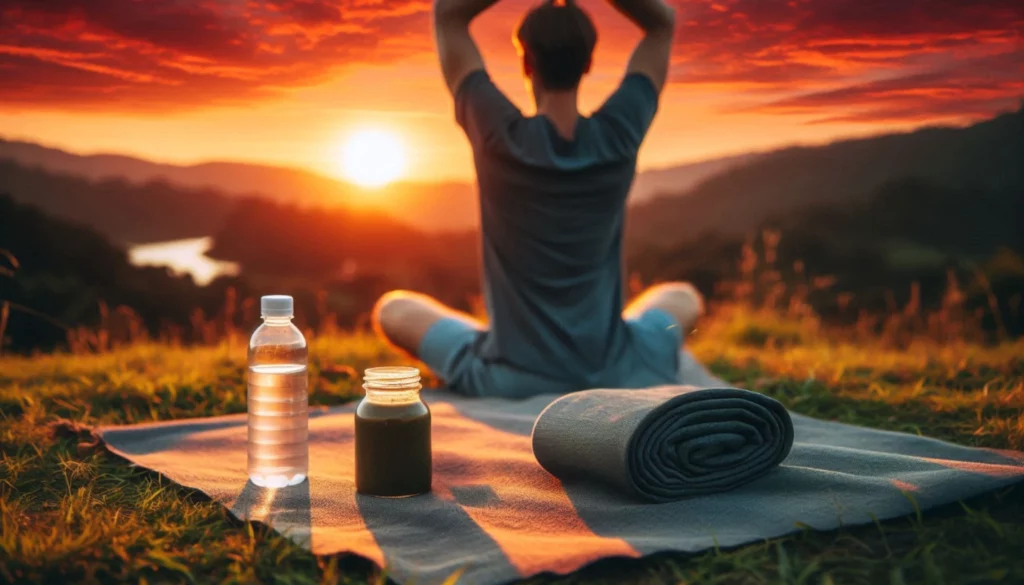
A serene meditation moment on a hilltop blanket during a beautiful sunset
FAQ
Q: How do I choose the right kratom strain for my solo retreat? A: Select a strain based on your retreat’s purpose. Red vein strains promote relaxation, ideal for meditation or rest. Green vein strains offer balance, suitable for journaling or emotional reflection. White vein strains are energizing, great for creative tasks or goal setting. Start with a low dose, like 1-2 grams, to assess effects.
Q: Can beginners use kratom during a solo retreat? A: Yes, beginners can use kratom if they start with a low dose and source it from reputable vendors. Research strains and their effects beforehand, and pair kratom with activities like meditation or journaling to enhance the retreat experience safely.
Q: How long should a solo retreat last? A: A solo retreat can last a few hours, a day, or a weekend, depending on your goals and availability. A half-day retreat suits quick reflection, while a weekend allows deeper exploration. Plan activities to match the duration for a balanced experience.
Q: What if I feel anxious or overwhelmed during my retreat? A: If anxiety arises, pause and engage in grounding activities like deep breathing or a short walk. A calming kratom strain can help ease tension, but avoid overusing it. Adjust your schedule to include lighter activities, like listening to music, to restore calm.
Q: Can I combine kratom with other retreat activities like yoga or art? A: Absolutely. Kratom complements activities like yoga, art, or writing by enhancing relaxation or focus. For example, a relaxing strain pairs well with gentle yoga, while an energizing strain supports creative projects. Align the strain with the activity’s purpose.
Q: How often should I plan solo retreats with kratom? A: Plan retreats based on your needs, such as monthly for regular reflection or quarterly for deeper work. Use kratom sparingly to maintain its effectiveness and avoid dependency. Integrate insights from each retreat to sustain long-term benefits.
Final Thoughts
Kratom and solo retreats offer a transformative path to personal reflection, blending solitude’s introspective power with kratom’s supportive effects. Whether seeking mindfulness, emotional clarity, creativity, rest, or goal setting, this combination creates a rich, rewarding experience. By planning thoughtfully, choosing the right kratom strain, and embracing solitude, you can unlock profound insights and lasting growth.
Take the first step today. Set aside a few hours or a weekend for your own solo retreat. Experiment with kratom mindfully, aligning it with your intentions. The journey inward is one of the most rewarding you’ll ever take, and with kratom and solo retreats, it’s within your reach.
Disclaimer
This blog on kratom and solo retreats is for informational purposes only and is not medical, legal, or professional advice. Kratom (Mitragyna speciosa) may pose health risks, including nausea, dizziness, dependency, or interactions with medications. Consult a healthcare provider before use, especially if you have medical conditions, are pregnant, or take medications. Use low doses from reputable sources, stay hydrated, and avoid combining with alcohol or other substances.
Kratom is not approved by Health Canada to treat, cure or diagnose ailments, and its legal status varies by region; verify local laws. Solo retreats may evoke strong emotions or require a safe environment; ensure your setting is secure and inform someone of your plans. This blog is not a substitute for professional medical or mental health care. The author or publisher are not liable for any adverse effects or consequences from kratom use or retreats. Always prioritize safety and consult professionals for health concerns.
On February 16, 2026, select provinces will observe regional holidays.
Canada Post will operate as normal and all shipments will be processed as usual.
FedEx will be closed in Prince Edward Island (Islander Day); Alberta, British Columbia, Ontario, Saskatchewan, and New Brunswick (Family Day); Manitoba (Louis Riel Day); and Nova Scotia (Heritage Day). FedEx shipments to these provinces will move the next business day.