Kratom has sparked curiosity for its complex effects on the human body. Known scientifically as Mitragyna speciosa, this botanical has been used for centuries in traditional medicine for its variety of abilities and effects. One intriguing aspect of kratom’s action is its potential interaction with adrenaline, a hormone central to the body’s stress and energy responses. Understanding how kratom and adrenaline interact from a biochemical perspective offers a window into how this plant affects our physiology, particularly in moments of stress or heightened alertness.
What Is Kratom? A Brief Overview
Kratom grows in the lush rainforests of countries like Thailand, Malaysia, and Indonesia. Its leaves contain a variety of active compounds called alkaloids, with mitragynine and 7-hydroxymitragynine being the most prominent. These alkaloids interact with receptors in the brain and body, producing effects that range from stimulating to calming, depending on the dose and strain. At lower doses, kratom often boosts energy and focus, while higher doses may promote relaxation and pain relief.
Adrenaline, also known as epinephrine, is a hormone and neurotransmitter produced by the adrenal glands, located just above the kidneys. It plays a starring role in the body’s response to stress, preparing us for immediate action in challenging situations. When you face a threat, whether it’s a looming deadline or a physical danger, adrenaline surges through your bloodstream, triggering a cascade of physiological changes.
This hormone increases heart rate, dilates airways, and redirects blood flow to muscles, ensuring you’re ready to act. It sharpens focus, heightens alertness, and mobilizes energy stores, allowing you to respond swiftly. These effects are part of the body’s fight-or-flight response, a survival mechanism that prioritizes quick reactions over long-term processes like digestion or rest.
Adrenaline works by binding to specific receptors, primarily alpha and beta adrenergic receptors, found on cells throughout the body. These receptors translate adrenaline’s signal into action, amplifying the body’s readiness for stress. But how does kratom, with its own receptor-binding properties, influence this finely tuned system? To answer this, we need to examine kratom’s alkaloids and their pharmacological effects.
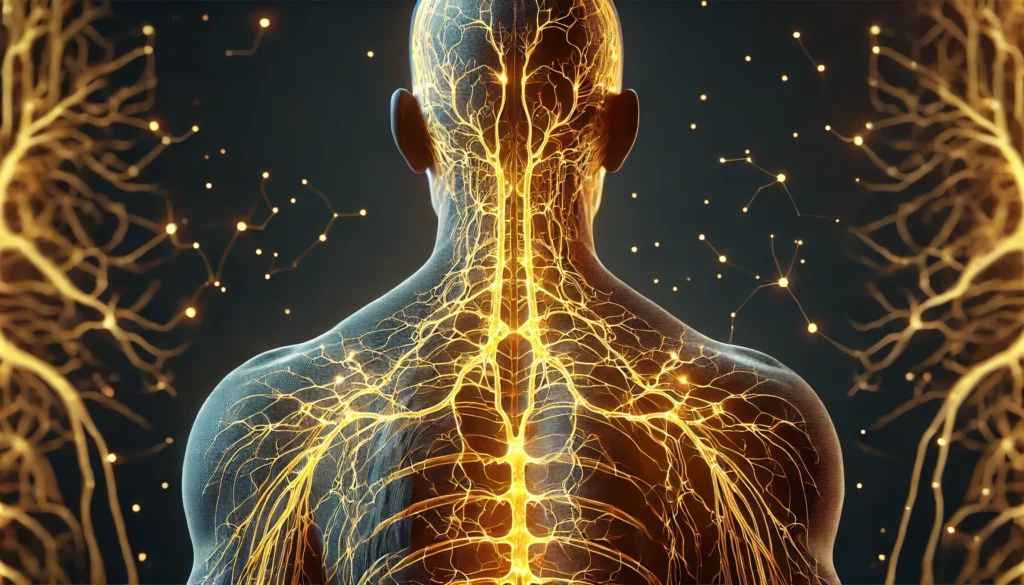
Human figure showcasing a neural network across the back of the body
Kratom’s Alkaloids and Receptor Interactions
Kratom’s effects stem from its alkaloids, which interact with a variety of receptors in the brain and body. Mitragynine, the most abundant alkaloid, is known for its partial agonist activity at mu-opioid receptors, which are involved in pain relief and mood regulation. Unlike traditional opioids, mitragynine’s action is more selective, contributing to its unique profile of effects.
Beyond opioid receptors, mitragynine also interacts with adrenergic receptors, particularly alpha-2 adrenergic receptors. These receptors are part of the same family that adrenaline targets, suggesting a potential overlap in how kratom and adrenaline influence the body. Additionally, kratom’s alkaloids may engage with serotonin and dopamine receptors, further complicating its effects on mood, energy, and stress responses.
7-Hydroxymitragynine, though present in smaller amounts, is more potent at opioid receptors and may amplify kratom’s calming effects at higher doses. Other alkaloids, like corynantheidine, have been shown to interact with adrenergic receptors as well, potentially modulating the body’s stress response in ways that intersect with adrenaline’s actions.
How Kratom and Adrenaline Might Interact
The interaction between kratom and adrenaline is not a simple one-to-one relationship but rather a complex interplay of biochemical pathways. Kratom’s alkaloids, particularly mitragynine, have a dual nature, producing stimulant-like effects at low doses and sedative effects at higher doses. This duality suggests that kratom may modulate adrenaline’s effects differently depending on the context.
At low doses, kratom’s stimulation may enhance adrenaline’s natural effects. Users often report increased alertness, energy, and sociability, which align with adrenaline’s role in boosting focus and physical readiness. This could occur because mitragynine’s interaction with alpha-2 adrenergic receptors amplifies the signaling pathways that adrenaline activates, leading to heightened arousal and energy.
Conversely, at higher doses, kratom’s sedative properties might counteract adrenaline’s stimulating effects. By engaging opioid receptors, kratom can promote relaxation and reduce the perception of stress, potentially dampening the fight-or-flight response. This calming effect could modulate the intensity of adrenaline surges, creating a sense of calm even in situations that might typically trigger a stress response.
The balance between these effects depends on factors like dosage, individual physiology, and the specific strain of kratom. For example, strains like Maeng Da are often associated with stronger stimulant effects, while Bali or Borneo strains may lean toward sedation. Understanding these nuances is key to predicting how kratom and adrenaline might interact in different scenarios.
Kratom’s Influence on the Fight-or-Flight Response
The fight-or-flight response is the body’s rapid reaction to perceived threats, orchestrated by adrenaline and other stress hormones like cortisol. This response prepares you to either confront or flee from danger, increasing heart rate, sharpening senses, and mobilizing energy. Given kratom’s effects on adrenergic and opioid receptors, it has the potential to influence how this response unfolds.
At low doses, kratom may enhance the fight-or-flight response by amplifying adrenaline’s effects. Mitragynine’s interaction with alpha-2 adrenergic receptors could heighten alertness and energy, making you feel more prepared to tackle challenges. For some, this can manifest as improved focus during stressful tasks or increased physical stamina during demanding activities. This synergy might explain why kratom has been traditionally used by laborers in Southeast Asia to boost endurance and productivity.
However, at higher doses, kratom’s opioid-like effects may temper the fight-or-flight response. By promoting relaxation and reducing anxiety, kratom could blunt the intensity of adrenaline-driven reactions. This might be beneficial in situations where an overactive stress response leads to panic or overwhelm, allowing users to approach challenges with a calmer mindset. For instance, someone experiencing social anxiety might find that kratom helps them stay composed during a high-pressure event, potentially by modulating adrenaline’s effects on the nervous system.
The exact mechanisms by which kratom influences the fight-or-flight response are not fully understood, but they likely involve a combination of receptor interactions and downstream effects on neurotransmitter systems. For example, kratom’s ability to increase dopamine and serotonin levels may contribute to a sense of well-being, further counteracting the anxiety often associated with adrenaline surges.
A person practicing meditation in a peaceful forest with a glowing sunrise over the water
Factors Influencing Kratom and Adrenaline Interactions
Several factors influence how kratom and adrenaline interact, making the experience highly individualized. Dosage is perhaps the most critical variable. Low doses (1-5 grams) typically produce stimulant effects, potentially amplifying adrenaline’s actions, while higher doses (5-10 grams or more) lean toward sedation, which may counteract adrenaline’s effects.
Individual physiology also plays a role. People with different sensitivities to adrenaline or variations in receptor density may experience kratom’s effects differently. For example, someone with a naturally high baseline of adrenaline activity might find kratom’s calming effects more pronounced, while others might notice stronger stimulation.
The strain of kratom matters as well. Different strains contain varying ratios of alkaloids, which can tilt the balance toward stimulation or relaxation. White vein strains, for instance, are often associated with energy and focus, while red vein strains are more calming. These differences can influence how kratom interacts with adrenaline-driven processes.
Finally, the context of use is significant. Taking kratom in a high-stress environment might amplify its stimulant effects, aligning with adrenaline’s role in preparing the body for action. In a calm setting, the same dose might feel more relaxing, as the body’s adrenaline levels are lower to begin with.
The Biochemical Dance: A Closer Look
To understand the biochemical dance between kratom and adrenaline, we need to zoom in on the molecular level. Adrenaline exerts its effects by binding to adrenergic receptors, which are part of the G-protein-coupled receptor family. These receptors activate signaling pathways that increase cyclic AMP (cAMP), a molecule that drives cellular responses like increased heart rate and energy mobilization.
Mitragynine’s interaction with alpha-2 adrenergic receptors likely modulates these pathways. Alpha-2 receptors typically act as a brake on adrenaline’s effects, reducing the release of norepinephrine (a close cousin of adrenaline) and calming the nervous system. By acting on these receptors, mitragynine may fine-tune the body’s response to stress, either amplifying or dampening adrenaline’s effects depending on the dose.
At the same time, kratom’s effects on opioid receptors add another layer of complexity. Mu-opioid receptor activation can reduce the perception of stress and pain, which may indirectly influence how adrenaline-driven responses are experienced. For example, by lowering stress perception, kratom might reduce the intensity of adrenaline’s physiological effects, creating a more balanced response to challenging situations.
This interplay extends to other neurotransmitter systems as well. Kratom’s effects on serotonin and dopamine can enhance mood and motivation, potentially complementing adrenaline’s role in boosting alertness. However, excessive stimulation of these systems could lead to overstimulation or, conversely, a crash when the effects wear off.
Practical Implications for Users
For those considering kratom, understanding its interaction with adrenaline can inform how and when to use it. If you’re seeking a boost in energy and focus for a demanding task, a low dose of a stimulating strain might align well with adrenaline’s natural effects, enhancing your ability to perform under pressure. This could be useful for tasks requiring mental clarity or physical endurance, such as a challenging workout or a busy workday.
On the other hand, if you’re looking to manage stress or anxiety, a higher dose of a calming strain might help temper adrenaline’s effects, promoting relaxation without completely dulling your alertness. This could be beneficial for situations like public speaking or navigating social settings where stress might otherwise take over. It’s crucial to start with a low dose and observe how your body responds, as individual reactions to kratom can vary widely. Keeping track of the strain, dose, and context can help you fine-tune your use to achieve the desired effects while minimizing risks.
Intricate molecular model floating in a space with hexagonal patterns and scientific annotations
FAQ
Q: How does kratom affect adrenaline levels in the body? A: Kratom’s alkaloids, like mitragynine, interact with adrenergic receptors, which may influence adrenaline’s effects. At low doses, kratom can enhance adrenaline’s stimulating effects, boosting energy and alertness. At higher doses, its calming properties may reduce the intensity of adrenaline-driven stress responses, promoting relaxation.
Q: Can kratom amplify the fight-or-flight response? A: At lower doses, kratom may enhance the fight-or-flight response by amplifying adrenaline’s effects through alpha-2 adrenergic receptor interactions. This can lead to heightened focus and energy, useful for demanding tasks. However, individual responses vary based on dosage and physiology.
Q: Is kratom safe to use for managing stress-related adrenaline surges? A: Kratom’s calming effects at higher doses may help temper stress-related adrenaline surges, promoting a sense of calm. However, safety depends on dosage, individual health, and potential interactions with other substances. Always start with a low dose and consult a healthcare professional.
Q: Does the strain of kratom matter for its interaction with adrenaline? A: Yes, different kratom strains have varying alkaloid profiles, affecting their interaction with adrenaline. White vein strains often boost energy, aligning with adrenaline’s effects, while red vein strains are more calming, potentially counteracting adrenaline surges.
Q: Can kratom interact with medications that affect adrenaline? A: Kratom’s interaction with adrenergic receptors could potentially affect medications targeting adrenaline pathways, such as those for blood pressure. The extent of these interactions is not fully understood, so caution and medical advice are recommended when combining kratom with such medications.
Q: Why do kratom’s effects on adrenaline vary between individuals? A: Individual differences in physiology, such as receptor sensitivity and baseline adrenaline levels, influence how kratom and adrenaline interact. Factors like dosage, strain, and context of use also play a role, making effects highly personalized.
Conclusion: A Balanced Perspective
Kratom’s interaction with adrenaline offers a fascinating glimpse into the biochemical interplay between a traditional plant and one of the body’s most dynamic hormones. From enhancing alertness to modulating stress responses, kratom’s alkaloids engage with adrenergic and opioid systems in ways that can profoundly influence how we experience energy and stress. By understanding these mechanisms, users can better navigate kratom’s effects, tailoring their use to specific needs while remaining mindful of potential risks.
This blog is not just about a single plant or hormone but about the broader dance of biology that shapes our experiences. Whether you’re curious about kratom’s effects or seeking to understand your body’s stress responses, the interplay between kratom and adrenaline serves as a reminder of the intricate connections within our physiology. As science continues to unravel these mysteries, we move closer to a clearer picture of how natural compounds can support our health and well-being.
Disclaimer
The information provided in this blog intended for educational purposes only and should not be considered medical advice. Kratom (Mitragyna speciosa) is a complex botanical with effects that vary based on dosage, strain, individual physiology, and other factors. Its safety and efficacy have not been fully established by comprehensive clinical research, and its use carries potential risks, including side effects such as nausea, dizziness, dependency, or interactions with medications, particularly those affecting adrenergic or opioid pathways.
Kratom is not approved by regulatory bodies like Health Canada for any medical use, and its legal status varies by region. Individuals considering kratom should consult a qualified healthcare professional before use, especially if they have pre-existing health conditions, are pregnant or breastfeeding, or are taking medications. The interaction between kratom and adrenaline described here is based on current pharmacological understanding and may not fully reflect individual experiences or outcomes.
The author and publisher of this blog are not liable for any adverse effects, consequences, or damages resulting from the use of kratom or reliance on the information provided. Always prioritize safety by starting with low doses, monitoring effects, and seeking professional guidance to avoid potential health risks.
On February 16, 2026, select provinces will observe regional holidays.
Canada Post will operate as normal and all shipments will be processed as usual.
FedEx will be closed in Prince Edward Island (Islander Day); Alberta, British Columbia, Ontario, Saskatchewan, and New Brunswick (Family Day); Manitoba (Louis Riel Day); and Nova Scotia (Heritage Day). FedEx shipments to these provinces will move the next business day.