


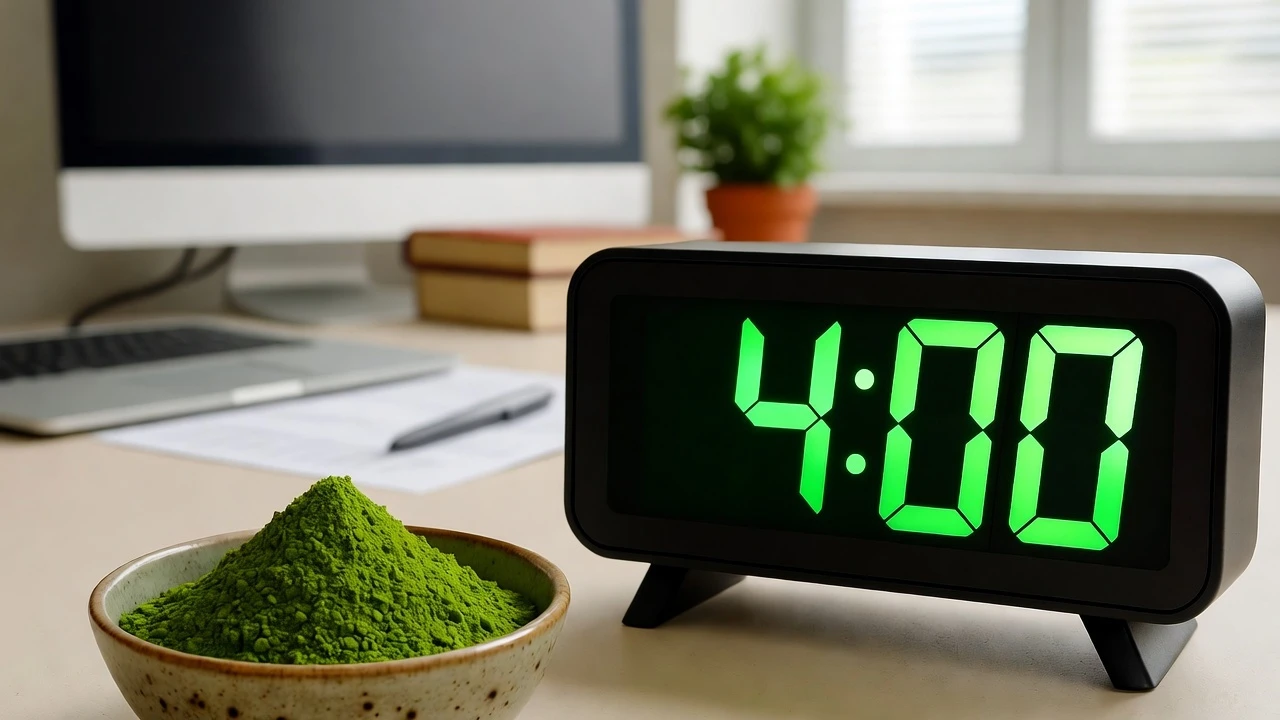

The 4-hour rule kratom is nothing complicated. It is just a four-hour gap between doses that keeps the plant working the way it should, day after day. It works because kratom’s main alkaloids, mitragynine and 7-hydroxymitragynine, clear the body on a predictable schedule. Wait four hours, and the next dose hits a system that’s mostly reset. Skip the wait, and effects weaken fast. That’s the entire principle in one sentence, but the details behind it explain why the rule holds up for beginners and long-term users alike.
How Kratom Works in the Body
Kratom reaches peak blood levels in about an hour and a half. From there, the body cuts the amount in half every three to four hours. By the four-hour mark, three-quarters of the alkaloids are gone, processed by the liver and flushed by the kidneys. Receptors in the brain (mu-opioid sites that drive stimulation, mood lift, or relaxation) get a chance to resurface and regain sensitivity. The 4-hour rule kratom simply matches human biology instead of fighting it.
The Mechanics of Tolerance
Tolerance creeps in when those receptors stay occupied. Constant alkaloid presence tells the body to pull receptors inside the cell, where they can’t be reached. The result: the same 3-gram dose that once delivered sharp focus now feels flat, and the only fix seems to be more powder. Spacing doses four hours apart breaks that cycle. Each new serving meets a cleaner slate, so the same amount keeps delivering the same result.
Why Four Hours, Not Three or Five?
The number isn’t random. Studies on mitragynine pharmacokinetics in healthy adults show an average elimination half-life of 3.5 hours. After two half-lives (roughly seven hours), less than a quarter remains, but most people don’t want to wait that long between sessions. Four hours strikes the balance: enough clearance to prevent overlap, short enough to fit three or four doses into a normal day. Faster metabolizers clear closer to three hours; slower ones need closer to five. The 4-hour rule kratom gives everyone a workable middle ground that can be tweaked with experience.
Take a typical workday. A 3-gram green vein at 7:30 AM kicks in by 8:00, peaks around 9:00, and fades by 11:00. The body has processed most of it by 11:30. A second dose at noon lands on receptors that are ready again, not still recovering. That second session feels as crisp as the first. Cut the gap to two hours, and the noon dose piles onto lingering alkaloids. Receptors downregulate faster, and by day four the user is chasing yesterday’s effects.
Reading the Early Warning Signs
Tolerance rarely announces itself with a bang. It starts small: onset takes ten minutes longer, the energy plateau lasts thirty minutes less, or a familiar strain suddenly needs an extra half-gram. Track these shifts in a notebook or phone app (date, time, amount, strain, and a 1–10 effect score). A consistent drop of two points over three days is the cue to double-check intervals. The 4-hour rule kratom stops the slide before it requires a full reset.

Turning the Rule into a Daily Rhythm
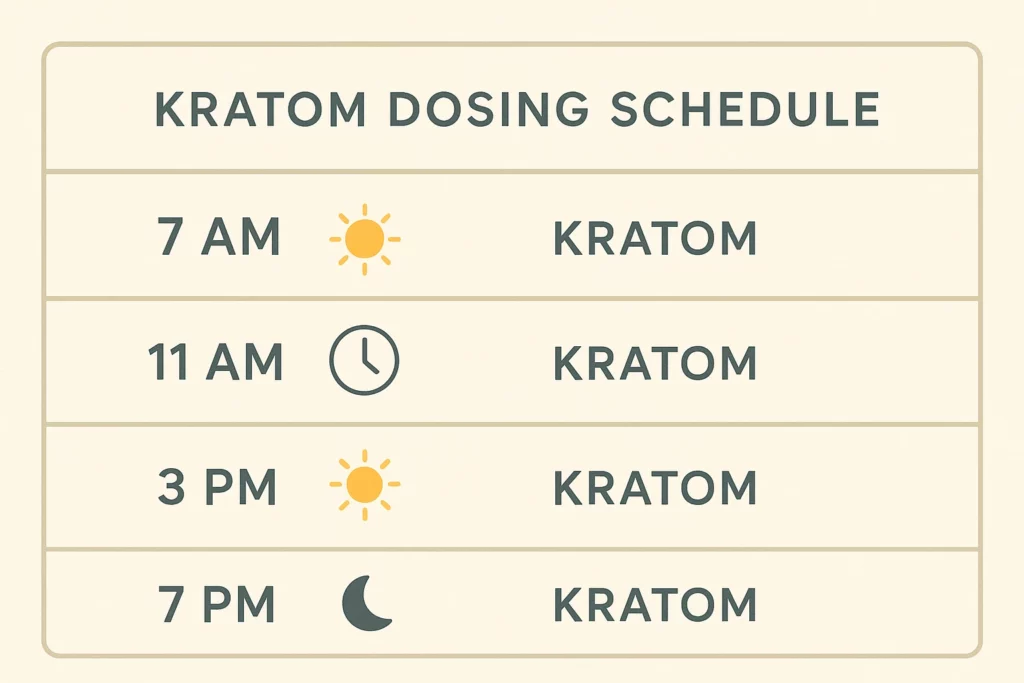
Most schedules fit three doses comfortably. Wake at 6:30, dose at 7:00, again at 11:00, and once more at 3:00. A fourth at 7:00 PM is optional for evening wind-down. The gaps are exact, the routine predictable. Set phone alarms labeled “Dose 1,” “Dose 2,” etc., and silence them after use. Within ten days the body anticipates the clock; the alarms become backup, not the driver.
Enjoying kratom on the weekends doesn’t need to derail the pattern. Keep the same four-hour cadence even if the start time shifts. A late riser can begin at 9:00 AM and still finish by 9:00 PM. The key is consistency across seven days. Random days off are fine (one full break per week actually sharpens sensitivity), but erratic timing undoes progress faster than high doses.
Dose Size and Spacing Work Together
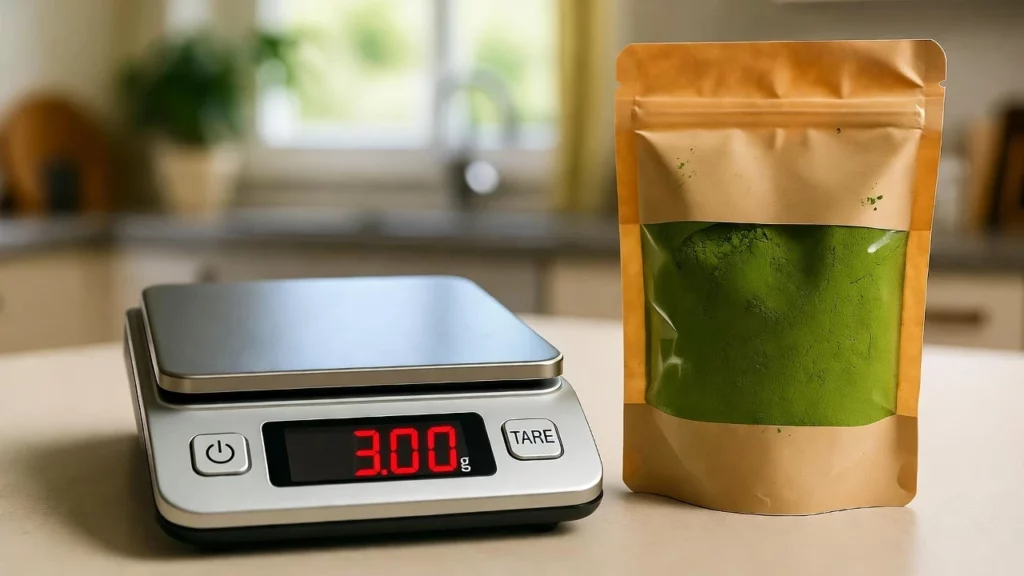
A 2–4 gram range per session pairs best with four-hour spacing. Lower amounts reduce receptor load; proper timing prevents overlap. Measure with a 0.01 g digital scale every time. Eyeballing leads to unexpected effects that can be avoided. An empty stomach speeds onset by 20–30 minutes; a light meal stretches the curve without pushing clearance past the four-hour window. Either approach works as long as the clock starts at ingestion.
Hydration matters more than most realize. Two liters of water spread through the day keeps kidneys filtering metabolites efficiently. Add a pinch of salt or an electrolyte packet if sweating heavily; plain water alone can dilute sodium and slow excretion.
Strain Rotation as a Force Multiplier
Alkaloid profiles differ slightly between red, green, and white veins. Rotating them exposes receptors to varied ratios, slowing adaptation the way crop rotation prevents soil depletion. A simple weekly plan might look like this:
- Monday–Wednesday: green vein morning, white vein midday
- Thursday–Saturday: red vein evening, green vein reset
- Sunday: off or single low-dose white
The 4-hour rule kratom stays the backbone; rotation is the reinforcement.
What Happens When You Stick to It
After two weeks of strict four-hour gaps, users notice stability. The same 3 grams that felt weak on a two-hour schedule now delivers full focus or relaxation. Mood stays even, sleep improves, and there’s no urge to nudge the scale upward. Money stretches further (one 250 g bag lasts a month instead of two weeks). Side effects like morning fog or afternoon jitters fade because the body isn’t juggling overlapping waves. Every four to six weeks, insert a 36–48 hour break. Effects return sharper, often at half the pre-break dose. Think of it as scheduled maintenance, not punishment.
Common Stumbling Blocks and Fixes
Travel disrupts the rhythm more than any other factor. The solution starts with preparation. Pre-measure every dose into capsules or carry a compact 0.01 g travel scale. TSA allows kratom powder in its original labeled packaging, so keep the vendor seal intact and a receipt accessible. Upon landing, immediately adjust phone alarms to local time and lock in the day’s final dose before leaving the airport. When evening plans stretch longer than expected, skip the extra serving entirely. Sacrificing one session protects the four-hour window far better than cramming it in and triggering overlap.
Long-term plateaus, though uncommon after months of strict spacing, do surface occasionally. The fix is straightforward. Extend the interval to five hours for seven consecutive days or reduce total daily intake by 20 percent. Most users feel sensitivity return within 96 hours, a clear signal that the body recalibrates quickly once the pattern shifts.
The Cellular Story in Plain Terms
Think of receptors as living docks that constantly cycle in and out of service. When an alkaloid binds, the cell pulls that receptor inside for recycling or breakdown. A four-hour gap without new stimulation gives fresh receptors time to travel back to the surface and restore full availability. Continuous exposure keeps the supply depleted.
Measured spacing maintains a steady replenishment cycle. The same principle applies downstream. Enzymes that break down alkaloids ramp up with frequent use, but four-hour discipline holds them at baseline efficiency and prevents the need for escalating doses. Picture the cell like a busy kitchen. If dishes (receptors) keep piling up dirty, the chef can’t plate new meals. Four hours is the dishwasher cycle that keeps the line moving.
Preparation Methods That Fit the Clock
Toss-and-wash remains the quickest route. Place powder on the tongue, chase with water, and the process finishes in ten seconds flat. Brewing tea demands fifteen minutes of steeping yet yields the most even extraction and a gentler curve. Capsules push onset back by roughly 45 minutes, creating the illusion of extra runway.
Always start the four-hour timer at the moment of ingestion, not when effects peak. Regardless of method, store product in airtight containers shielded from heat and light. Oxidation is silent but relentless, degrading potency and quietly driving consumption upward over weeks. A pro tip: swirl the last sip of tea to catch the fine sediment. It holds the heaviest alkaloids. Many users notice a 10-minute stronger tail when they stop wasting that last bit.
Mental Game
Approach the four-hour rule with the same automatic commitment reserved for brushing teeth. It is a non-negotiable pillar of daily hygiene. After fourteen consecutive days, mark the milestone with a reward that has nothing to do with kratom. Choose a new novel, a favourite restaurant, or anything that reinforces the habit loop. Daily variation is inevitable. Weather, sleep quality, or stress can nudge perception slightly. The four-hour average absorbs those fluctuations and delivers reliable outcomes over the long arc.
Lifestyle Levers
Seven hours of restorative sleep each night rebuilds receptor expression and creates a stable platform for the next day. Thirty minutes of zone-2 cardio three times weekly elevates baseline endorphins, shrinking the gap between natural mood and external support. Chronic stress floods the system with cortisol that competes for the same neural pathways.
A ten-minute box-breathing session between doses lowers that interference and keeps every serving crisp and effective. A cold shower first thing in the morning spikes norepinephrine in a way that mimics a micro-dose of white vein. Pair it with the 7 AM slot and many users swear the combo cuts their starter gram by half a scoop.
Advanced Tweaks After Six Months
Once the four-hour rhythm becomes second nature, long-term users often introduce subtle variations to stay ahead of adaptation. One popular move alternates full weeks at four-hour spacing with seven-day stretches at five hours. The body never settles into a single prediction window, which keeps receptor density stable and total weekly grams lower than expected. Another approach locks onto a single strain for two solid weeks before flipping abruptly to a different vein. That sharp contrast wakes up the system and sharpens the next cycle’s response without touching dose size.
Genetic testing for CYP3A4 variants can reveal whether someone clears alkaloids lightning-fast or on the slower side, but most veterans skip the lab and fine-tune by feel alone. External factors like soil quality, harvest timing, and drying technique quietly shift minor alkaloid ratios from batch to batch. Sticking with one reputable vendor eliminates those wild cards and lets the timing rule do the heavy lifting. Users who embrace these micro-cycles routinely report holding the same effective range for years, proof that small, deliberate tweaks outmaneuver rigid habituation every time.
Sample Seven-Day Blueprint
Day 1–5 (Workweek)
7:00 AM – 3 g green (focus)
11:00 AM – 2.5 g white (sustained energy)
3:00 PM – 3 g green (afternoon reset)
7:00 PM – 3.5 g red (evening calm, optional)
Day 6 (Active Saturday)
9:00 AM – 3 g white
1:00 PM – 2.5 g green
Skip evening or cap at 2 g red
Day 7 (Rest)
Single 2 g white at 10:00 AM or full day off
Adjust start times to personal wake-up; keep gaps exact. This is a sample framework. Adjust grams, strains, and total doses based on your body’s response and always start lower when testing a new batch.
Reset Protocol If Tolerance Slips
- Cut every dose by 1 g.
- Extend gaps to six hours for 72 hours.
- Take 48 hours completely off.
- Resume at original amounts and four-hour spacing.
This 5-day taper-and-break sequence typically restores 80–90 % of original sensitivity by allowing full receptor externalization and CYP enzyme downregulation, confirmed in user logs across forums. The process also flushes residual metabolites that can linger in fat tissue, creating a cleaner baseline for the next cycle.
Getting Started Today
- Buy a $15 digital scale accurate to 0.01 g.
- Set four recurring alarms 4:00 apart.
- Open a note on your phone: columns for date, time, grams, strain, score.
- Fill every row for fourteen days.
- Review on day 15. Adjust one variable if needed.
After the 14-day log, export the data to a simple spreadsheet and calculate your personal clearance curve; most users discover their true half-life lies within ±30 minutes of the population average, letting them lock in a permanent custom interval. Plotting the curve against hydration levels or meal timing often reveals micro-adjustments that shave another 10–15 % off long-term consumption without sacrificing impact.
FAQ
Q: Can the 4-hour rule kratom work with only two doses per day?
A: Absolutely. Many users cap at two sessions and still avoid tolerance. The rule scales down; just keep the four-hour minimum between any doses and insert full rest days weekly.
Q: What if I accidentally dose 15 minutes early?
A: One minor slip rarely triggers adaptation. Log it, extend the next interval by the same amount, and resume the clock. Consistency over weeks matters far more than perfect minutes.
Q: Does the 4-hour rule kratom apply to extracts or enhanced products?
A: Extracts concentrate alkaloids, so clearance can take longer. Start with six-hour gaps for anything above 20x potency and track effects closely; revert to four hours only when response stabilizes.
Q: Is it safe to combine the 4-hour rule with caffeine or other supplements?
A: Moderate caffeine poses no conflict, but avoid potentiators like grapefruit juice that inhibit CYP3A4. They extend alkaloid presence and shrink the effective window. Stick to plain spacing for predictable results.
Q: How soon will I notice tolerance dropping after starting the rule?
A: Most report sharper effects within 72 hours of strict four-hour adherence. Full reset from heavy prior use takes the 36–48 hour break every four to six weeks.
Q: Can I apply the 4-hour rule kratom while tapering off higher daily amounts?
A: Yes. Drop total grams first, then lock intervals. A common taper: cut 0.5 g per dose every three days while holding four-hour gaps; sensitivity often returns before reaching the target low dose.
Conclusion
The 4-hour rule kratom distills years of community trial-and-error into one non-negotiable interval that outsmarts tolerance at its root. From the 3.5-hour half-life that sets the clock to the receptor recycling that rewards every gap, the science aligns with the schedule. Pair exact spacing with modest doses, weekly rotation, and periodic breaks, and the same gram delivers the same payoff month after month.
Begin with the 14-day log outlined above; the data you collect becomes the blueprint no vendor label can match. Consistency at four hours is not restraint. It is the lever that keeps kratom effective, affordable, and sustainable for the long haul.
Disclaimer
The information presented in this guide is for educational and informational purposes only and is not intended to serve as medical advice, diagnosis, or treatment. Kratom (Mitragyna speciosa) is an unregulated botanical substance with opioid-like effects, and its safety profile remains incompletely studied; potential risks include dependence, withdrawal symptoms, liver toxicity, cardiovascular effects, seizures, and interactions with medications metabolized by CYP3A4 enzymes. Individual responses vary widely due to factors such as genetics, metabolism, dosage, frequency, and concurrent health conditions.
Always consult a qualified healthcare professional before starting, adjusting, or discontinuing kratom use, especially if you have pre-existing medical conditions, are pregnant, breastfeeding, or taking prescription drugs. Do not operate vehicles or machinery while under the influence of kratom, as it may impair judgment and coordination. The “4-hour rule” and related practices are anecdotal strategies derived from user experiences and limited pharmacokinetic data; they do not guarantee prevention of tolerance, adverse effects, or addiction.
Start with the lowest possible dose from a reputable, lab-tested source, monitor your body’s signals closely, and discontinue use immediately if you experience unusual symptoms. The authors, publishers, and distributors assume no liability for any outcomes resulting from the application of this information.