



Chewing plant-based materials has evolved into a fascinating modern practice that combines ancient traditions with contemporary convenience. People have long used leaves, resins, and other botanicals in their mouths for flavour, stimulation, or subtle effects, and today this habit takes a new form through thoughtfully formulated products.
Herbal chewing gums stand out as an intriguing delivery mechanism for plant-derived compounds. These items blend time-honoured chewing customs with advanced formulation techniques, allowing active elements to interact with the oral cavity. Unlike standard gums designed primarily for breath freshening, they leverage the mouth’s rich mucosal surfaces to facilitate absorption and localized contact, creating a unique way to experience various botanical substances.
Tree Resin Chewing Gums: The Original Herbal Delivery from Nature’s Sap
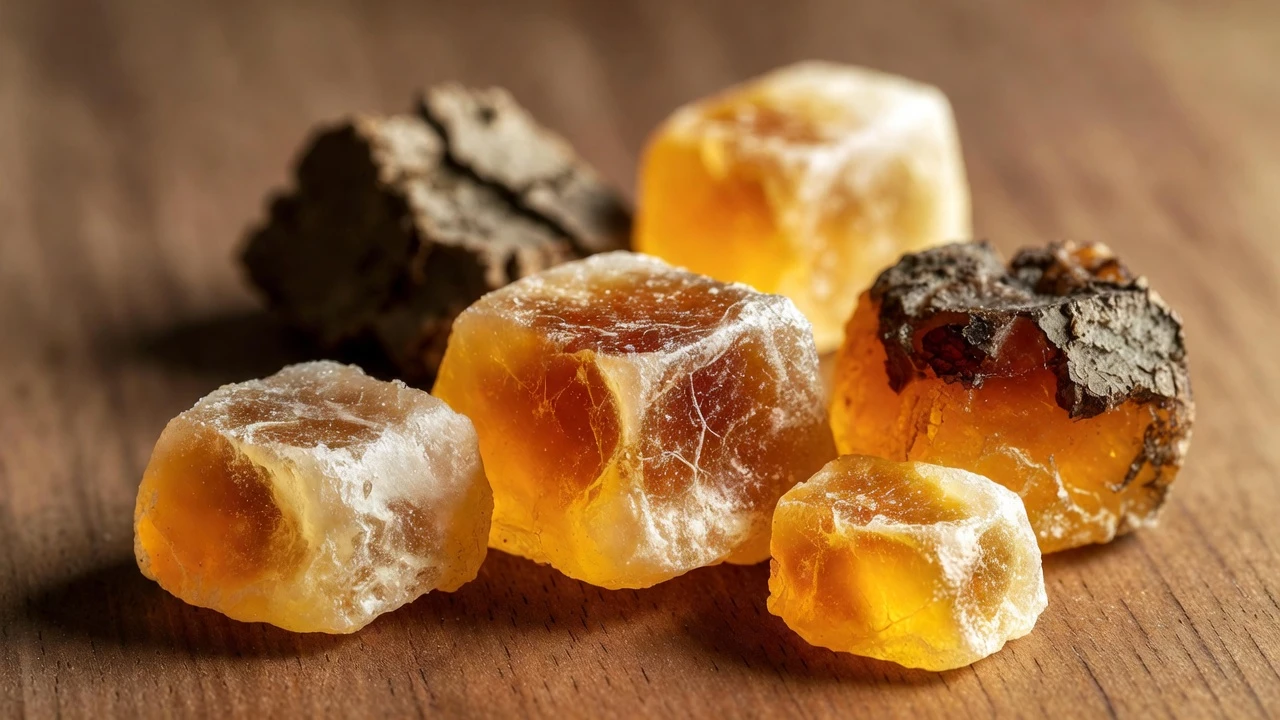
Among the purest forms of herbal chewing gums are those derived directly from tree resins or saps, chewed in their natural state for millennia before any synthetic bases existed. These resins, exuded from tree wounds as protective substances, harden into chewable pieces that release compounds slowly through mastication and saliva interaction. This direct contact with oral tissues makes them exemplary of the buccal delivery mechanism central to herbal chewing gums.
Mastic Gum: Ancient Mediterranean Tradition
The most renowned example is mastic gum, harvested from the mastic tree (Pistacia lentiscus) primarily on the Greek island of Chios. Known as the “tears of Chios” for its droplet-like hardened form, mastic has been chewed since ancient Greek times, documented as far back as the writings of Hippocrates. Users would place the resin in the mouth, where it softens from brittle and translucent to opaque white, initially bitter but evolving into a refreshing, pine-like flavour reminiscent of cedar. Traditional Mediterranean cultures valued it for freshening breath, supporting oral cleanliness, and providing mild digestive comfort through prolonged chewing. Today, pure mastic resin remains available as a chewable product, and some modern natural gums incorporate it for its authentic herbal profile.
Spruce Gum: North American Indigenous and Settler Practice
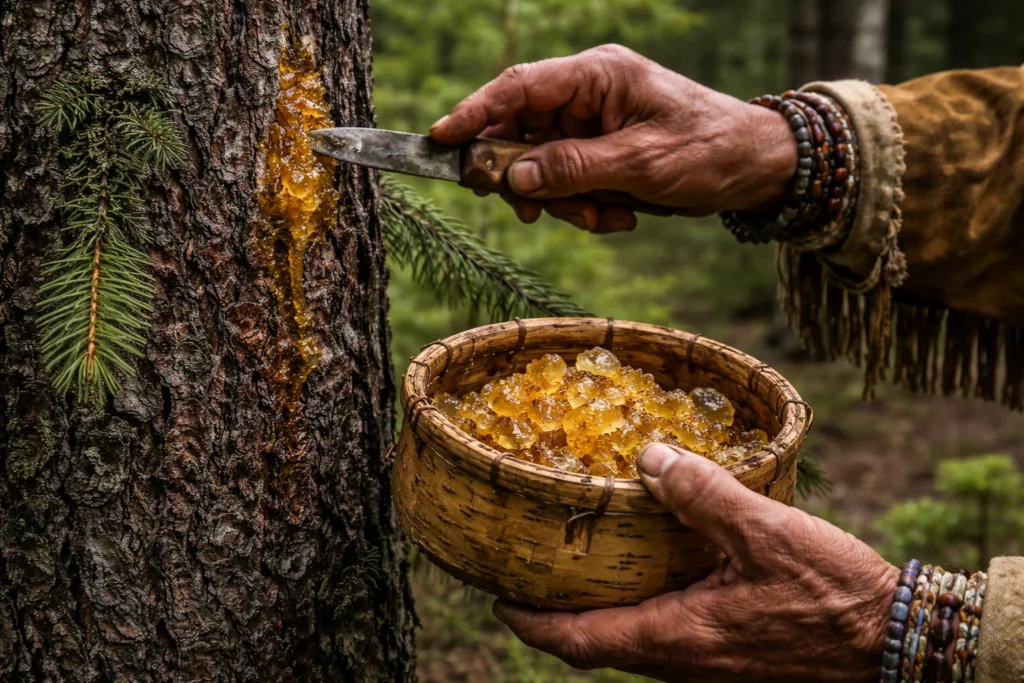
In North America, spruce gum holds a parallel place in history. Indigenous peoples of the northeastern regions, including those in what is now Canada and the United States, chewed the hardened resin from spruce trees (particularly black spruce, Picea mariana, as well as white spruce and Sitka spruce). This practice was adopted by early European settlers, who found the resin’s woody, slightly sweet taste invigorating. By the mid-19th century, spruce gum became commercialized. The resin’s antimicrobial qualities were appreciated for soothing minor mouth irritations and maintaining oral freshness during long journeys or labour.
Other Notable Tree Resins in Chewing Traditions
Other tree resins have gained popularity in various traditions, broadening the scope of natural chewing practices:
- Pine resins from species such as pinyon pine (Pinus edulis), ponderosa pine (Pinus ponderosa), lodgepole pine (Pinus contorta), and sugar pine (Pinus lambertiana) were chewed by Indigenous groups in the western and southwestern United States. These resins offer a strong, aromatic flavour and were used not only for enjoyment but also for their traditional roles in supporting respiratory comfort and wound healing when applied or chewed.
- Fir resins, including those from grand fir (Abies grandis) and subalpine fir (Abies lasiocarpa), provided similar chewable material in forested regions, valued for their milder, balsamic notes.
- Frankincense (from Boswellia trees) and myrrh (from Commiphora species) in the Middle East and Africa have been chewed alongside their ceremonial uses. These resins release complex aromatic compounds during chewing, contributing to breath freshening and a sense of calm in traditional contexts.
- Chicle, the latex sap from the sapodilla tree (Manilkara zapota) in Central America, deserves mention as it transitioned ancient Mayan chewing into the basis for modern gum. While technically a latex rather than a true resin, it shares the plant-origin chewing heritage and was boiled into a chewable form long before synthetic bases dominated.
These resin-based chewing practices highlight a universal human ingenuity: using what trees naturally produce as portable, functional herbal aids. The chewing action allows gradual release of terpenes, phenolics, and other volatile compounds directly into the oral environment, setting the stage for later innovations in formulated herbal chewing gums.
Historical Roots of Chewing Plant Materials
Building on these resin traditions, chewing herbs and plants predates modern gums by centuries. Indigenous groups in various parts of the world have used leaves, barks, and resins for stimulation, oral hygiene, or relief. For instance, in parts of eastern Africa and the Arabian Peninsula, people have chewed fresh leaves from a specific flowering shrub to experience mild euphoria and increased alertness during social or labour-intensive activities. This practice involves tucking portions in the cheek, where prolonged contact allows gradual release of stimulating alkaloids.
In South America, certain communities have chewed coca leaves mixed with alkaline substances to enhance effects, though this differs from gum formats. Similarly, betel nut preparations in South Asia combine areca nut with lime and betel leaf, chewed for their cultural and physiological roles. These traditions highlight the mouth as a site for direct plant interaction, where chewing facilitates both enjoyment and uptake.
In North America and other regions, native plants like certain mints or aromatic herbs have been chewed for freshening the mouth or soothing minor irritations. These historical uses, combined with the resin examples above, laid the groundwork for today’s interest in formulated herbal chewing gums, adapting ancient methods into portable, standardized products.
Modern Innovations in Herbal Chewing Gum Formulations
Contemporary development focuses on creating gums that incorporate plant extracts effectively. Researchers and manufacturers explore ways to embed bioactive compounds from herbs into chewable matrices. Common approaches include using essential oils, powdered extracts, or concentrated forms of plants known for their aromatic or functional properties.
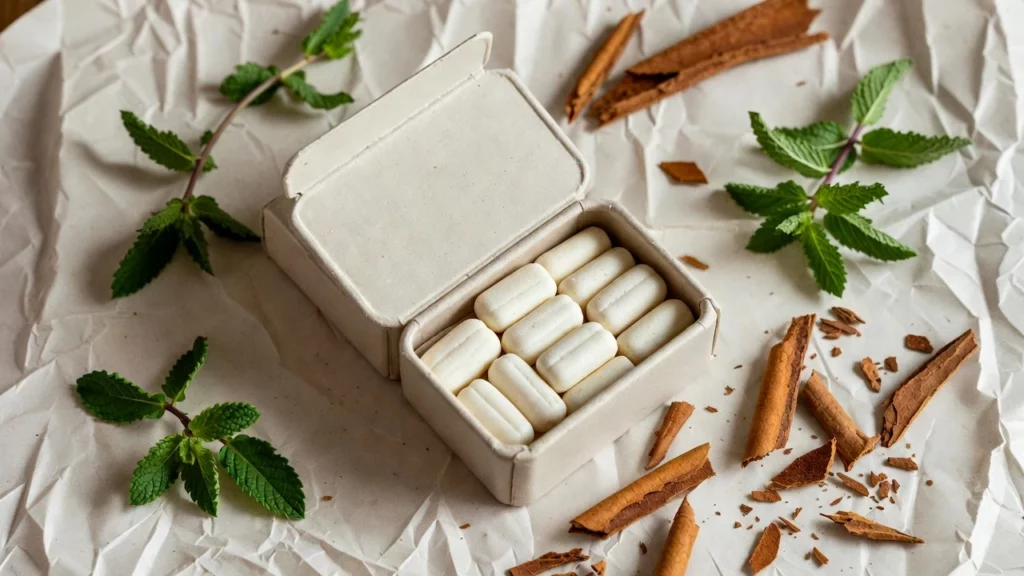
For example, gums featuring cinnamon oil draw on the plant’s natural compounds like eugenol, which contribute to flavour and potential oral interactions. Cinnamon has a long history in herbal traditions for supporting mouth freshness. Similarly, formulations with peppermint or spearmint provide cooling sensations while delivering herbal volatiles.
Some products incorporate extracts from plants like Scutellaria or Cistus species, explored for their potential in supporting gum health through anti-inflammatory pathways. These gums aim for localized effects, where chewing allows compounds to contact oral tissues directly. Biodegradable gum bases represent another advancement. Traditional synthetic bases contribute to environmental concerns, but plant-derived alternatives break down more readily. This shift aligns with growing interest in sustainable plant medicine options, reducing waste while maintaining chew quality.
Medicated or functional chewing gums often include sweeteners like xylitol, derived from plants, which support oral health by not promoting bacterial growth. Herbal versions build on this by adding botanicals that complement such benefits.
Advantages of Chewing as a Delivery Method for Herbal Compounds
Chewing offers several practical benefits over other ingestion methods. It provides controlled release, as users can chew for desired durations, adjusting exposure. The format is user-friendly, requiring no water or preparation, making it suitable for on-the-go use. Localized delivery suits oral concerns. Compounds can interact with mouth tissues before systemic absorption, potentially offering targeted support for breath, gum comfort, or minor irritations. The mechanical action of chewing stimulates saliva flow, which naturally cleanses the mouth and buffers pH.
For systemic effects, buccal absorption allows some compounds to enter circulation quickly. This route avoids gastrointestinal breakdown, beneficial for sensitive botanicals. It also bypasses first-pass metabolism, preserving more of the active elements. The enjoyable aspect encourages consistent use. Flavours mask bitter herbal tastes, improving palatability. Socially acceptable chewing makes it easier to incorporate plant medicine discreetly.
Scientific Insights into Buccal Delivery and Oral Health Benefits of Herbal Chewing Gums
The effectiveness of herbal chewing gums as a novel delivery mechanism stems from the biology of the oral cavity itself. The buccal (inner cheek) and sublingual (under the tongue) areas have a thin, richly vascularized mucosal lining that permits certain compounds to pass directly into the bloodstream. This pathway contrasts with swallowed substances, which must travel through the digestive tract.
The Role of the Oral Mucosa in Absorption
During chewing, the repeated mechanical action gradually releases plant-derived compounds such as volatiles from essential oils or resins into saliva. Saliva serves as a natural medium, dissolving these elements and creating a favourable environment for diffusion across the mucosal membranes. Lipophilic (fat-soluble) compounds, common in many herbal sources like pine resin, mastic, cinnamon, or peppermint, tend to cross this barrier more readily than highly water-soluble ones. This can lead to relatively quick uptake for some botanicals.
How Chewing and Saliva Facilitate Release
The process supports both localized and potential systemic outcomes. For local effects, released compounds remain in prolonged contact with oral tissues, where they may interact directly to contribute to freshness, reduce minor discomfort, or support a balanced oral environment through natural aromatic and cleansing properties. Chewing further enhances this by increasing saliva production, which helps flush debris, neutralize acids, and maintain moisture, key factors in everyday oral comfort.
Localized vs. Systemic Effects
For any systemic contribution, absorbed compounds enter facial veins and join general circulation without initial processing by the liver (first-pass metabolism), a benefit for certain plant elements sensitive to stomach acid or enzymes. Chewing duration plays a role here: longer sessions allow more sustained release and contact, while users can self-regulate based on preference.
Key Factors Influencing Buccal Delivery
Several factors influence how well this works in practice. Molecular characteristics (size, solubility, and charge) determine permeability. Formulation details like the gum base’s texture, exact distribution, and any pH adjusters affect release consistency. Individual differences, such as saliva volume, oral pH, chewing vigour, and mucosal health, also shape outcomes. These variables explain why experiences with herbal chewing gums can feel personalized.
Overall, this buccal-focused mechanism underscores why chewing has endured as a practical way to engage with plant materials. It combines mechanical simplicity with the mouth’s natural absorptive capabilities, offering an accessible bridge between traditional resin chewing and contemporary plant-based options.
Challenges and Considerations in Herbal Chewing Gums
Despite their promise, herbal chewing gums come with several practical considerations:
- Absorption and permeability limitations: Not all herbal compounds absorb efficiently through the mucosa. Lipophilic (fat-soluble) elements penetrate better than highly hydrophilic ones, while molecular size, charge, and formulation affect overall permeability.
- Variability in release profiles: Some compounds deplete quickly during chewing, while others sustain longer. Achieving uniform distribution in the gum base requires careful processing to prevent separation or uneven dosing.
- Individual and physiological differences: Saliva composition, chewing vigour, and oral pH vary among people, influencing absorption rates. Conditions or habits like dry mouth may reduce effectiveness.
- Regulatory and sustainability factors: Herbal products fall under different global categories depending on claims and ingredients; users should stay aware of local guidelines. Responsible sourcing of herbs ensures ecological balance, while biodegradable bases help minimize environmental impact.
Examples of Herbal Components in Chewing Gums
Many herbal chewing gums feature mint family plants for their refreshing qualities. Peppermint and spearmint provide menthol-related compounds that create cooling and support oral sensation. Cinnamon appears frequently, with its warm profile and essential oil components. Wintergreen offers methyl salicylate for a distinctive herbal note.
Some explore less common botanicals. Formulations with ashwagandha root extract aim to deliver adaptogenic properties through chewing, though absorption dynamics differ from traditional preparations. Guava leaf extracts have been studied in experimental gums for potential oral benefits. Polyherbal blends combine multiple plants for synergistic flavours and effects. These examples illustrate diversity, from simple flavour enhancements to more complex functional designs.
Frequently Asked Questions about Herbal Chewing Gums
Q: What exactly are herbal chewing gums?
A: Herbal chewing gums are chewable products that incorporate plant-derived extracts, essential oils, or natural resins to deliver botanical compounds through the oral cavity. Unlike regular breath-freshening gum, they focus on using the mouth’s mucosal surfaces as a delivery pathway for herbal elements, often drawing from traditional plant-chewing practices.
Q: How do herbal chewing gums differ from regular chewing gum?
A: Regular chewing gum typically prioritizes flavour, sweetness, and breath freshening using synthetic bases and artificial ingredients. Herbal chewing gums emphasize natural plant sources (resins, extracts, or oils), often with biodegradable or plant-based bases, and aim to leverage chewing for gradual release and potential localized or buccal absorption of botanical compounds.
Q: Are tree resin gums like mastic and spruce still used today?
A: Yes. Pure mastic resin is widely available and chewed in its traditional form for its flavour and oral effects. Spruce gum is less common commercially but can still be found in niche natural products or harvested traditionally. Many modern herbal chewing gums incorporate these resins or draw inspiration from them.
Q: Can herbal chewing gums deliver compounds systemically, or are the effects only local?
A: Both are possible. Some compounds interact locally with oral tissues for freshness or comfort during chewing. Others, particularly lipophilic ones, can absorb through the buccal mucosa into the bloodstream, potentially bypassing initial liver metabolism for quicker systemic effects, though the extent varies by compound, formulation, and individual factors.
Q: Why might someone choose herbal chewing gums over other plant medicine forms like teas or capsules?
A: Chewing gums offer convenience with no preparation or water needed, plus controlled release based on chewing duration. The enjoyable, discreet format and mechanical stimulation of saliva make them appealing for on-the-go use, while the buccal route can suit certain botanicals that are sensitive to digestion.
Q: Are there any downsides or limitations to using herbal chewing gums?
A: Yes. Absorption efficiency depends on the compound’s properties and individual physiology. Release may not be uniform, and effects can vary widely from person to person. Regulatory status differs by region, and sustainable sourcing is important to avoid ecological harm.
Q: Is chewing herbal gum environmentally better than conventional gum?
A: Many herbal chewing gums use biodegradable or plant-derived bases (chicle, natural resins), which break down more readily than synthetic plastic-based gums. However, this depends on the specific product. Responsible sourcing and minimal processing further improve the environmental profile.
The Future of Herbal Chewing Gums in Plant Medicine
Interest in novel delivery mechanisms grows as people seek convenient plant-based options. Advances in nanotechnology or mucoadhesive enhancements could improve bioavailability of tricky compounds. Sustainability drives innovation toward fully plant-based, compostable gums. Personalized formulations might emerge, tailoring herb blends to individual preferences. As understanding of buccal pathways deepens, herbal chewing gums could expand in plant medicine applications, offering an accessible bridge between tradition and modernity.
Herbal chewing gums stand out as a creative intersection of culture, science, and daily life. They revive ancient chewing practices, especially the timeless appeal of tree resins, while introducing efficient ways to experience plant benefits. Whether for flavour, oral comfort, or broader wellness exploration, this format invites curiosity about how simple acts like chewing can deliver nature’s offerings effectively.
Disclaimer
The information provided in this discussion about herbal chewing gums, including their historical uses, traditional practices, formulation approaches, potential localized or buccal delivery mechanisms, and any referenced benefits such as oral freshness, comfort, or support for minor irritations, is intended for educational and informational purposes only.
In Canada, natural health products (NHPs), including those in formats like chewing gums that incorporate herbal or plant-derived ingredients and make health-related claims, are regulated under the Food and Drugs Act and the Natural Health Products Regulations administered by Health Canada. These products are not intended to diagnose, treat, cure, mitigate, or prevent any disease, condition, or health issue.
Individual responses to herbal substances can vary widely due to factors such as personal physiology, existing health conditions, medications, allergies, or other variables. Some herbal ingredients may interact with medications, pose risks during pregnancy, nursing, before surgery, or in individuals with certain medical conditions (e.g., allergies to plant families, oral sensitivities, or gastrointestinal issues).
Always consult a qualified healthcare professional before incorporating any herbal product, including chewing gums, into your routine, especially if you have pre-existing health concerns, are taking prescription or over-the-counter medications, are pregnant, breastfeeding, or planning medical procedures. Discontinue use immediately if any adverse reactions occur, such as irritation, allergic responses, or discomfort, and seek medical advice. This content does not constitute medical advice, a substitute for professional healthcare guidance, or an endorsement of any specific product or practice.
The author and publisher are not liable for any loss, injury, claim, liability, or damage related to the use of the information contained herein or reliance on any statements made about herbal chewing gums. Users are encouraged to rely on evidence-based sources, verify product licensing status with Health Canada, and prioritize responsible sourcing when exploring plant-based options.