
Skip to content
Black Canadian flag.
Pharmakeia logo, click to return to homepage
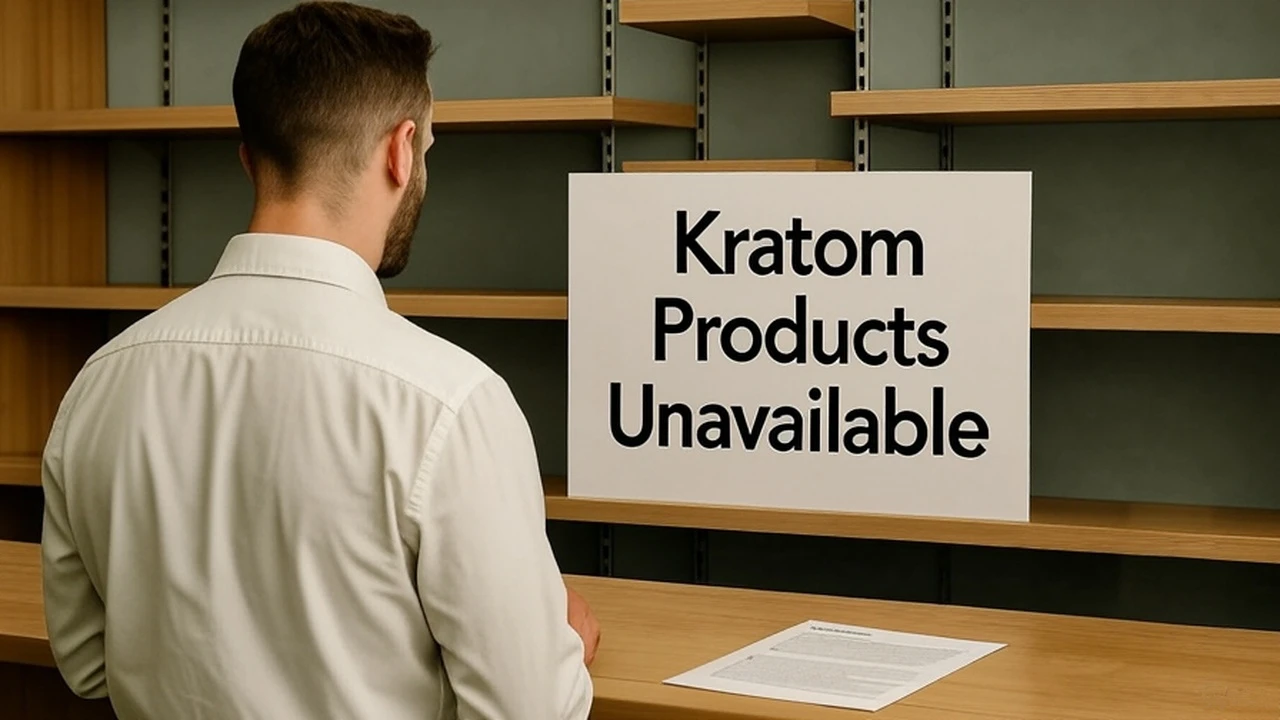
Man in white shirt facing empty shelves with a "Kratom Products Unavailable" sign due to nationwide kratom ban

The Economic Impact of a Nationwide Kratom Ban in North America

Imagine waking up one day to find that a product millions of people rely on for daily relief has vanished from shelves across the continent. Stores shutter overnight, families lose their livelihoods, and entire supply chains crumble. This is not a dystopian novel; it is the stark reality that could unfold with a nationwide kratom ban in North America. As debates rage over the plant’s future, the economic ripples would extend far beyond individual users, striking at the heart of small businesses, local economies, and even government coffers.


The Stakes of a Nationwide Kratom Ban

Kratom, derived from the leaves of the Mitragyna speciosa tree native to Southeast Asia, has woven itself into the fabric of North American commerce over the past decade. Sold primarily through online retailers, specialty shops, and wellness outlets, it supports a vibrant ecosystem of vendors and producers. A nationwide kratom ban would dismantle this network with brutal efficiency, erasing billions in revenue and displacing workers who have built their careers around ethical sourcing and distribution.

Industry analyses estimate the United States alone accounts for a kratom market valued at approximately $2 billion in 2024, fueled by 10 to 16 million regular users. This surge reflects not just curiosity but a steady demand for natural alternatives amid rising health awareness. Extending this to Canada, where kratom enjoys a growing presence despite regulatory gray areas, the combined North American footprint easily surpasses an estimated $2.5 billion annually. Such figures underscore why a ban would trigger immediate and cascading economic shocks, from evaporated sales taxes to widespread unemployment.

The conversation around a nationwide kratom ban often centers on health and safety concerns, yet its economic underbelly deserves equal scrutiny. Proponents of prohibition point to isolated risks, but history shows that sweeping bans rarely contain problems without collateral damage. Look to the alcohol Prohibition era in the early 20th century, when the U.S. government estimated losses exceeding $500 million in today’s dollars from lost jobs and tax revenue, not to mention the black market boom that drained legitimate economies.

Kratom’s story echoes this pattern on a modern scale, with digital sales amplifying the fallout. As e-commerce platforms host thousands of vendors, a federal clampdown would not only halt transactions but also erode trust in related wellness sectors.


The Thriving Kratom Economy: A Snapshot Before the Storm

Before exploring the devastation of a ban, it helps to understand the ecosystem kratom has nurtured. North America’s kratom trade is a tale of grassroots innovation, where small-scale importers partner with ethical farmers in Indonesia and Thailand to bring leaves stateside. These partnerships ensure sustainable harvesting, preserving rainforests while generating steady income for overseas growers.

Once here, the product transforms into powders, capsules, and teas, distributed through a web of over 10,000 retail points. From cozy head shops in Seattle to active online hubs serving rural Ontario, this chain employs everyone from fulfillment specialists to graphic designers crafting eye-catching labels.

Quantifying this vitality reveals impressive scale. Industry estimates suggest U.S. kratom sales generated around $1.8 billion in 2024, with projections climbing to $7.8 billion globally by 2032 if trends hold. Canada’s slice, though smaller at an estimated $200-300 million, punches above its weight due to high per-capita interest in natural remedies. Consumers drive this growth, spending an average of $800 to $900 per year on kratom products.

This equates to roughly 15 million transactions annually across the border, each one injecting funds into local economies. Picture a typical user: a middle-aged professional in Chicago blending kratom into morning routines for focus, or a retiree in Vancouver using it to ease joint discomfort. Their purchases sustain not just vendors but also ancillary services like packaging firms and logistics drivers. This commerce extends to innovation. Entrepreneurs have pioneered lab-tested strains, ensuring purity and potency that build consumer loyalty. In turn, this reliability boosts repeat business long term.


 

Wooden gavel on a stand next to a bowl of green kratom powder on a dark wooden surface
Gavel resting beside a wooden bowl filled with kratom powder on a smooth table.


Direct Revenue Losses: Billions Wiped from the Balance Sheets

At the epicenter of a nationwide kratom ban lies the brutal evaporation of sales. Overnight, that $2.5 billion North American market would grind to a halt, leaving vendors staring at empty inventories and zeroed-out ledgers. Small businesses, which comprise 90 percent of kratom sellers, would bear the brunt. The following subsections detail the scope of these losses across various facets of the industry.

Impact on Small Businesses from a Nationwide Kratom Ban

Consider a family-run online store in Texas pulling in $500,000 yearly from kratom; a ban would slash this to nothing, forcing owners to pivot or close. Precedents abound: when Alabama banned kratom in 2016, local vendors reported 70 percent revenue drops within months, many folding entirely. These businesses often lack the capital to weather such shocks, as their margins depend heavily on steady kratom sales. The loss of this income stream would force owners to lay off staff, default on leases, or liquidate assets, dismantling years of hard-won stability.

E-commerce Fallout Under a Nationwide Kratom Ban

E-commerce platforms, which handle 60 percent of kratom sales, face existential threats. Online platforms that host hundreds of kratom pages, would delist them, erasing digital footprints built over years. With 10-16 million U.S. users and a growing Canadian base of 500,000-1 million, annual spending totals $15-20 billion in potential economic activity. A ban would reclaim none of this through offsets; instead, it funnels dollars underground or to unregulated imports, siphoning value from taxed channels. This shift not only devastates online vendors but also undermines the broader e-commerce ecosystem, as consumer trust in alternative wellness products wanes.

Global Supply Chain Losses Triggered by a Ban

Beyond immediate sales, the global kratom trade faces severe disruption. The industry’s $2.19 billion global valuation in 2024 relies heavily on North American demand; a ban here could depress international prices, hurting Southeast Asian farmers who depend on these exports for 20-30 percent of village incomes. In Canada, where kratom skirts food regulations by labeling as “not for human consumption,” a ban would amplify compliance costs beforehand, squeezing margins further.

Innovation stalls as companies investing in sustainable sourcing or product diversification lose R&D funds, stifling growth that could have expanded the market ethically. Ultimately, these losses compound: a $2.5 billion hole in 2025 grows to $10 billion by decade’s end, absent intervention. This is not abstract; it is the quiet erosion of entrepreneurial spirit that defines North American commerce.


Government Revenue Shortfall: Taxes That Feed Public Services

A nationwide kratom ban would strip governments of millions in tax revenue that fund essential public services, such as roads, schools, and health initiatives. Kratom sales, taxed as supplements or general retail, contribute significantly through multiple channels:

  • U.S. Sales Tax: An estimated 7 percent average sales tax on $2 billion in U.S. kratom sales generates approximately $140 million annually.
  • U.S. Income Tax: Federal income taxes from 15,000 workers earning an average of $50,000 contribute roughly $100 million yearly.
  • Canada’s GST/HST: A 13 percent GST/HST on an estimated $250 million in Canadian sales adds $32.5 million, plus additional provincial shares.
  • Import Duties: Estimated national import duties on 50,000 kilograms of kratom annually, valued at $10,000 per kilogram, yield approximately $50 million in collected tariffs.


State-level precedents highlight the gap. West Virginia’s kratom tax, enacted in 2019, funnels proceeds to substance abuse programs; a ban would dry this up, straining budgets. Unlike cannabis, where legalization unlocked billions, kratom’s unregulated status means bans yield no compensatory revenue, only enforcement costs estimated at $50-100 million yearly for DEA oversight.

This shortfall cascades: reduced funds mean higher property taxes or service cuts, hitting the very communities bans aim to protect. In opioid-ravaged Appalachia, kratom taxes could offset treatment gaps; banning it starves these efforts. Policymakers must weigh this against vague safety gains, as past bans like Rhode Island’s 2017 measure (later reversed in 2025, effective 2026) showed no revenue rebound, only black market growth.


A man stands with hands in pockets outside a shop with a "CLOSED" sign, shelves of kratom jars and packets visible inside
Man standing outside a closed shop displaying kratom products on wooden shelves.


Broader Economic Ripples: From Supply Chains to Consumer Confidence

A ban’s shockwaves extend to interconnected sectors, reshaping markets and communities in unforeseen ways. The following subsections outline the far-reaching consequences of a nationwide kratom ban.

Supply Chain Disruptions Across Borders

Southeast Asian exporters, reliant on North American orders for 40 percent of volume, face farm closures, depressing global prices and U.S. import values. This ripple effect destabilizes rural economies in Indonesia and Thailand, where kratom farming sustains entire villages. Domestically, logistics firms lose $200 million in shipments, idling trucks and warehouses. The interconnected nature of global trade means these disruptions amplify, affecting unrelated sectors like packaging and freight.

Consumer Spending Shifts and Black Market Growth

Consumer spending shifts uneasily under a ban. Displaced dollars chase alternatives, but black market premiums inflate costs by 30-50 percent, eroding household budgets. This shift fuels unregulated markets, where illicit sales spiked 25 percent. Such trends not only undermine legitimate commerce but also increase risks for consumers, as untested products flood the underground economy.

Wellness Industry Fallout from a Nationwide Kratom Ban

Confidence erodes in the broader wellness sector. Wellness shops, tainted by association, see 10-20 percent traffic drops, as observed in Florida counties post-local bans. This chills investment in natural products, stunting a $50 billion sector. Rural economies suffer most: kratom hubs in Mississippi or Manitoba lose anchor businesses, accelerating depopulation. The loss of consumer trust reverberates, discouraging innovation in related fields like herbal supplements.


Consumer Impacts: Disrupting Energy and Pain Relief Needs

A nationwide kratom ban would profoundly affect millions of consumers who rely on the plant for energy and pain relief, disrupting daily routines and economic stability. Industry estimates suggest 10-16 million Americans and 500,000-1 million Canadians use kratom, with many turning to it as a natural alternative to pharmaceuticals. For these individuals, the ban would force a costly and often challenging shift to other options, impacting personal budgets and well-being.

Workers in physically demanding jobs, such as construction or warehousing, often use kratom for its stimulating effects at low doses, typically 1-5 grams, to sustain focus and stamina during long shifts. A ban would push these users toward alternatives like caffeine or energy drinks, which may cause jitters or crashes, reducing productivity.

Chronic pain sufferers, such as retirees or post-surgical patients, rely on kratom’s red vein strains for relief, often spending money yearly to manage discomfort without opioids. A ban would drive them toward prescription medications, which can cost $1,200-$2,000 annually, even with insurance, or unregulated markets with unreliable quality.

In Canada, where access to pain management is strained, this shift could overwhelm healthcare systems, with wait times for specialists already exceeding six months in some provinces. The loss of kratom would thus erode financial stability for users, forcing reliance on costlier or less accessible alternatives, while amplifying economic pressures on individuals and communities.


A worker labels cardboard boxes with shipping details, surrounded by stacked packages in a warehouse
Warehouse worker diligently labelling kratom packages in a well-organized storage area with orange and blue shelving


Frequently Asked Questions About a Nationwide Kratom Ban

Q: How much economic activity does the kratom industry generate in North America?
A: The kratom industry contributes an estimated $2.5 billion annually, with $2 billion from the U.S. and $200-300 million from Canada, driven by 10-16 million U.S. users and 500,000-1 million Canadian users.

Q: How would a nationwide kratom ban disrupt daily routines for users?
A: A ban would disrupt routines for 10-16 million U.S. and 500,000-1 million Canadian users, forcing workers to seek less effective energy alternatives and pain sufferers to rely on costlier or inaccessible medications, impacting productivity and well-being.

Q: How many jobs could a nationwide kratom ban affect?
A: Approximately 35,000 jobs are at risk, including 15,000 direct roles (e.g., retail, distribution) and 20,000 indirect roles (e.g., logistics, packaging), with rural communities facing significant economic and social disruption.

Q: How would a nationwide kratom ban affect healthcare systems?
A: A ban could overwhelm healthcare systems, particularly in Canada, where pain management access is limited, pushing users toward strained medical services and increasing wait times for specialists, already exceeding six months in some areas.

Q: What consumer safety risks would arise from a nationwide kratom ban?
A: A ban would drive users to unregulated black markets, where products face 30-50 percent price hikes and lack quality testing, increasing health risks, as seen in Alabama’s 2016 ban with a 25 percent illicit sales spike.

Q: How would a nationwide kratom ban affect individuals who rely on it?
A: A nationwide kratom ban would disrupt 10-16 million U.S. and 500,000-1 million Canadian users, forcing them to spend $1,000-$2,000 annually on costlier alternatives like pharmaceuticals or risky black market products, reducing productivity and straining household budgets.


Navigating the Future: Calls for Balanced Policy

As North America teeters on this edge, alternatives shine. Regulatory models like Utah’s kratom Consumer Protection Act ensure safety without prohibition, preserving $1 billion in economic value. Education on ethical sourcing and quality testing could expand the market responsibly, benefiting all stakeholders.

In closing, a nationwide kratom ban promises not protection but profound economic peril: $2.5 billion lost, 35,000 jobs threatened, and communities unmoored. By prioritizing dialogue over decree, leaders can safeguard prosperity while addressing concerns. The choice is clear: build growth or invite decline. North America’s resilient spirit deserves the former.


Disclaimer

The information presented in this blog is intended for informational and educational purposes only, focusing on the economic implications of a potential nationwide kratom ban in North America. It is not intended to provide medical advice, endorse the use of kratom, or dismiss health and safety concerns associated with its consumption. Kratom (Mitragyna speciosa) is a controversial substance, and its safety profile remains under debate.

Regulatory bodies, such as the U.S. Food and Drug Administration (FDA) and Health Canada, have raised concerns about potential risks, including addiction, adverse reactions, and interactions with other substances. Consumers should consult qualified healthcare professionals before using kratom or any related products, especially if they have pre-existing medical conditions or are taking medications.

The economic data and projections cited are based on industry estimates and historical precedents, which may vary and are subject to change. The author and publisher are not liable for any actions taken based on this information, and readers are encouraged to conduct their own research and consider multiple perspectives, including scientific studies and regulatory guidelines, when evaluating kratom’s role in health, wellness, and economic contexts.

📢 News & Announcements

Last Updated: December 6th, 2025, 9:50 AM PST

📦 Shipping Update: Canada Post Operations Normalized

Rotating strikes have ended and Canada Post is now operating at full capacity with normal delivery timelines.

Negotiations continue, but services are fully restored with no current disruptions.

We will post updates only if significant changes occur. Thank you for your patience.