


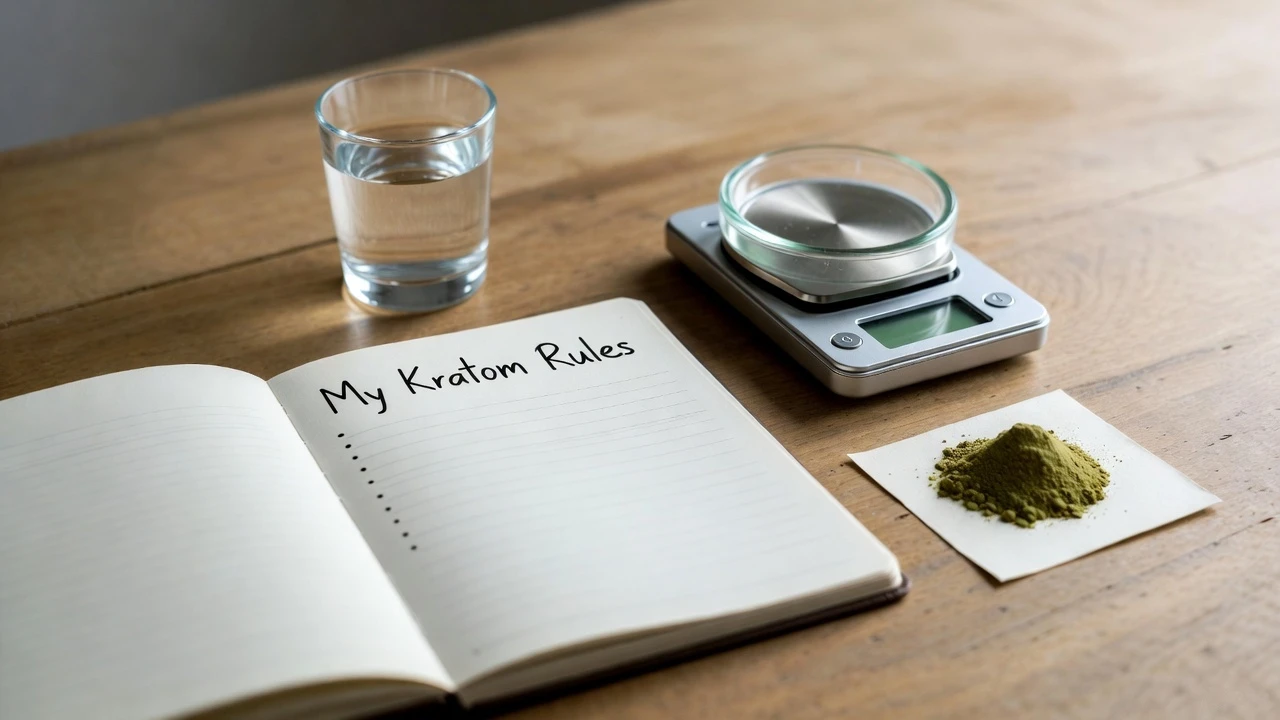

Most people who get into trouble with kratom never started out planning to break every common-sense guideline. They simply never bothered to create their own. The truth is, safe kratom use isn’t about following someone else’s rigid protocol, it’s about setting a handful of short, clear personal boundaries that fit your body, your lifestyle, and your goals. When those boundaries are in place and actually respected, most people find they can enjoy kratom’s effects for years the same way responsible coffee drinkers enjoy caffeine: as a deliberate enhancement rather than a daily necessity.
The real difference between long-term satisfaction and creeping problems almost always comes down to whether someone paused to define their own rules before life got stressful. This blog provides you with ten practical, personal rules that users of this plant medicine can implement daily. You don’t need to adopt all ten at once; even three or four of them will dramatically improve your relationship with the plant.
Why Personal Rules Beat Generic Advice Every Time
General guidelines floating around forums are useful starting points, but they rarely account for the fact that people differ widely in body chemistry, pain levels, work schedules, and emotional triggers. Someone who weighs 110 lbs and sits at a desk all day processes kratom very differently from a 220-lb construction worker. A parent with young children has different “danger times” than a single university student. Your rules have to pass the reality test of your actual life.
Rule 1: Keep an Honest Log (The Foundation of Everything Else)
A log is non-negotiable for safe kratom use. Memory is notoriously unreliable when it comes to tracking subtle shifts. Write down the date, exact amount weighed on a scale (not spoonfuls), time of day, strain colour, reason for taking it, and how you felt 90 minutes later plus the next morning. After 30 entries you’ll spot trends you never noticed: maybe white veins make your heart race, or doses over 6 g always give you the “kratom wobbles,” or you feel sharper when you skip weekends entirely. Once you see the pattern in black and white, adjusting becomes obvious instead of emotional.
Rule 2: Set a Hard Dose Ceiling and Treat It Like a Brick Wall
Choose the highest single dose you’re ever willing to take, no matter how bad the day is. For many responsible users this lands between 4–8 grams depending on body size and tolerance. Write that number in several places: on the jar, in your phone notes, even as a sticky note on your scale. The moment you tell yourself “just this once I’ll go higher” is the moment the ceiling starts moving. A fixed ceiling is the single most cited reason long-term users give for never developing serious dependence.
Some people take it further and create two ceilings: a normal-day ceiling (e.g., 5 g) and an absolute-emergency ceiling (e.g., 8 g) that they have never once touched in five years. The psychological power of an untouched emergency ceiling is surprisingly strong.

Rule 3: Decide Your Weekly Rhythm Before You Need It
Daily use is the fastest way to lose the magic and gain tolerance. Almost every user who says “kratom stopped working” or “I can’t function without it” was taking it morning and night, seven days a week. Pick a rhythm you can live with forever and start there. Popular sustainable patterns include:
- Monday / Wednesday / Friday only
- Four days on, three days off
- Weekdays only, weekends completely off
- Two days on, one day off (repeated)
The key is deciding when you’re calm, not when you’re already deep in a streak and bargaining with yourself.
Rule 4: Schedule Longer Breaks Whether You Think You Need Them or Not
Even with perfect weekly spacing, sensitivity slowly declines over months. A planned 7–14 day complete break every 10–12 weeks resets your receptors and proves to yourself that you’re still in the driver’s seat. Most people who follow moderate dosing and regular days off report only mild fatigue, some leg restlessness, and slightly worse sleep during the break; nothing compared to what daily heavy users experience. Use the time to load up on magnesium, black seed oil, vitamin C, and exercise. You’ll come back noticing that 3 grams feels like 6 used to.
Rule 5: Create a Strict “No Mixing” Policy and Actually Follow It
Kratom’s risk profile changes dramatically when combined with other depressants. Alcohol, benzodiazepines, prescription opioids, phenibut, high-dose gabapentin, and even strong sleep aids all increase the chance of dangerous respiratory slowing. The few documented kratom-related deaths almost always involved multiple substances. Make a rule you can explain to a skeptical doctor: “I never combine kratom with anything that slows breathing or causes heavy sedation.” If you do choose to have a drink, wait at least six hours after your last kratom dose and keep alcohol to one or two standard drinks maximum.
Rule 6: Make Hydration and Fibre Non-Negotiable Daily Habits
Kratom is drying and notoriously constipating. Chronic low-grade dehydration and constipation quietly erode mood, energy, and motivation; many users then take more kratom to “fix” how they feel, creating a vicious cycle. Counter it proactively:
- Drink a full 500 ml glass of water with every dose
- Aim for 3.5–4.5 litres total daily water intake
- Eat at least 30 g of fibre (chia, psyllium, vegetables, oats)
- Keep magnesium citrate or glycinate on hand for the days nature needs a nudge
When hydration and digestion are handled, 80 % of the “I feel off” days disappear.
Rule 7: Choose an Accountability System That Works for You
Some people tell a spouse or close friend and give them permission to ask hard questions. Others join one of the private kratom communities and post weekly check-ins. A few use habit-tracking apps and share screenshots with a friend. The method matters less than the knowledge that someone else will notice if you start sliding. External perspective cuts through rationalisation faster than anything else. The simple act of knowing you’ll have to report your log next Sunday is often enough to stop you from taking “just one extra dose” on Thursday night.
Rule 8: Protect Your Sleep Architecture Like It’s Sacred
Many strains, especially faster ones, can suppress REM sleep and leave you feeling flat the next day even if you slept eight hours. Create a hard cutoff time; most people find nothing after 3–4 p.m. works best. If you have chronic pain that flares at night, consider switching to a milder red strain taken earlier, or explore non-kratom sleep tools (magnesium glycinate, l-theanine, apigenin, tart cherry) so you’re not forced to choose between pain and sleep quality. Poor sleep is the hidden accelerant of tolerance and mood swings; once you protect it, almost every other rule suddenly becomes easier to follow.
Rule 9: Treat Strain Rotation as Cheap Insurance
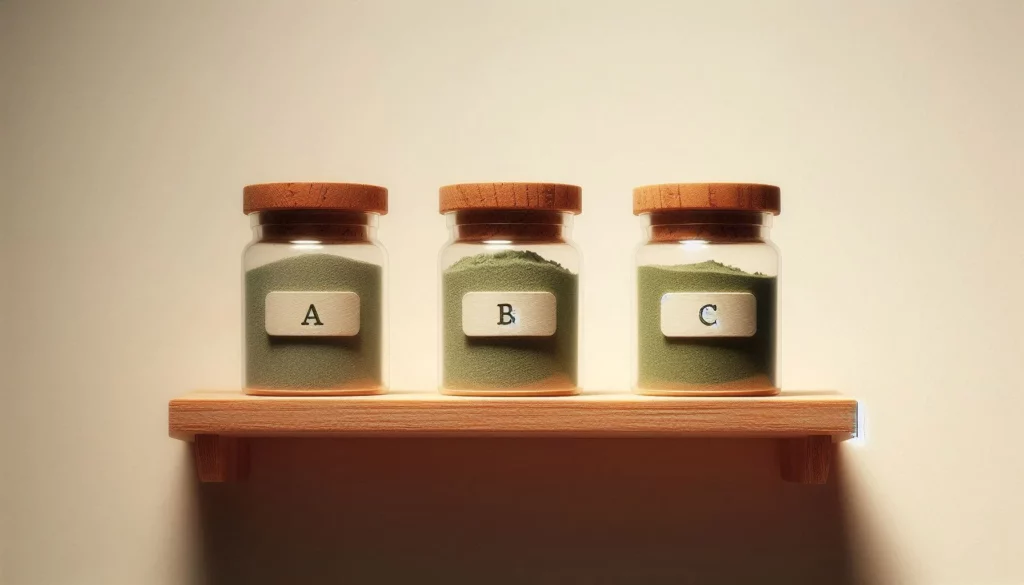
While marketing hype about specific strains is often overstated, regularly switching between red, green, and white vein powders does appear to slow tolerance development for most users. Keep three or four different bags and cycle them every few days or weekly. Smaller 100–250 g bags make this affordable and keep your stash fresh. Rotation also prevents you from unconsciously associating one particular powder with “the strong one,” which is exactly how quiet dose creep starts.
Rule 10: Build in Regular “Relationship Checkups”
Every 90 days, block out 30 minutes with your log and ask yourself five questions:
- Am I still within my dose ceiling 99 % of the time?
- Are my scheduled days off truly off, or am I cheating?
- How is my natural mood and energy when I haven’t taken kratom for 48 hours?
- Am I still getting the original benefits that made me start?
- If a close friend described my exact pattern, would I think it was sustainable?
Be brutally honest. If the answers trend worse than last quarter, tighten one rule before things slide further. Users who do this simple review stay in control for decades; those who don’t eventually wish they had.

Frequently Asked Questions About Safe Kratom Use
Q: Is it possible to use kratom every day and still be safe?
A: Very few people manage true daily use long-term without tolerance and mild dependence creeping in. Most who stay in control for years limit themselves to 2–4 days per week maximum. Daily use is the single biggest risk factor for losing benefits and developing withdrawal symptoms when you try to stop.
Q: How do I know if my dose has become too high?
A: Common signs are eye wobbles, nausea, dizziness, excessive sedation the next day, or noticing that your usual amount no longer gives the same effect. If you ever feel “stuck” to the couch or get a headache the morning after, those are clear signals to drop your dose immediately and take several days off.
Q: How long does it normally take for tolerance to build?
A: Most people notice the first drop in effects after 2–4 weeks of daily or near-daily use. With a 3–4 days on / 3–4 days off schedule, tolerance rises very slowly and often stays manageable for years.
Q: Is it safe to drive after taking kratom?
A: Low to moderate doses (under 5 g) taken several hours earlier rarely impair driving for most people. Higher doses, newer batches, or combining with anything sedating can slow reaction time. The only responsible rule is: if you feel drowsy, spacey, or overly relaxed, do not get behind the wheel; treat it exactly like cold medicine or alcohol.
Q: Can I take kratom with coffee, energy drinks, or pre-workouts?
A: Small to moderate amounts together are usually fine, but pairing strong stimulating strains (whites or maeng da) with high caffeine can cause jitters, rapid heartbeat, or anxiety in sensitive people. Start very low when combining and pay attention to how your body reacts.
Q: Is it safe to use kratom while on antidepressants or other prescription medications?
A: Kratom is metabolized by the same liver enzymes (CYP3A4 and CYP2D6) as many antidepressants, statins, blood-pressure meds, and others. Interactions range from mild to potentially serious. The only truly safe approach is to tell your doctor or pharmacist openly; never assume “natural” means no interaction.
Conclusion
The deepest shift happens when these rules stop feeling like restrictions and start feeling like who you are: “I’m the kind of person who never goes over 6 grams,” or “I’m someone who always takes three days off.” Once the identity clicks, decisions make themselves. Start with the three rules that feel easiest today. Master them for a month. Then add another. Within a few months you’ll have a personalised system that protects your health, your wallet, and your enjoyment longer than you thought possible.
Years from now, when someone asks how you managed to keep kratom helpful instead of harmful, you’ll realise the answer is simple: you decided, early and deliberately, that you were going to stay the one in charge. That single choice is what separates the people who still look forward to their occasional dose from the ones who quietly wish they could walk away. Safe kratom use isn’t about perfection; it’s about having clear lines you simply don’t cross. Draw those lines while everything is calm, and they’ll hold when life gets stormy.
Disclaimer
The information presented in this blog is for educational and informational puposes only and does not constitute medical advice, diagnosis, or treatment. Kratom (Mitragyna speciosa) is not approved by the U.S. Food and Drug Administration (FDA) or Health Canada for any medical use, and its safety profile, long-term effects, and potential for dependence, tolerance, and withdrawal are still incompletely understood. Individual responses to kratom vary widely due to differences in body chemistry, dosage, frequency of use, strain potency, product quality, and concurrent health conditions or medications.
Kratom carries known risks, including but not limited to nausea, constipation, dizziness, sedation, dependence, withdrawal symptoms, liver toxicity (in rare cases), seizures (particularly when combined with other substances), and potentially life-threatening respiratory depression when mixed with alcohol, benzodiazepines, opioids, or other central nervous system depressants. Kratom can interact with numerous prescription and over-the-counter medications, especially those metabolized by CYP3A4 and CYP2D6 liver enzymes potentially leading to reduced drug efficacy or increased side effects.
Pregnant or breastfeeding individuals, people with liver or kidney disease, cardiovascular conditions, mental health disorders, or a history of substance dependence should avoid kratom entirely. Always consult a qualified healthcare professional before starting, stopping, or modifying kratom use, particularly if you are taking any medications or have underlying health conditions. The author and publisher assume no liability for any consequences arising from the use or misuse of kratom based on the information provided. Ultimately, each individual is solely responsible for their own health and safety decisions regarding kratom.